
https://www.hkwujin.com
I. Product Overview
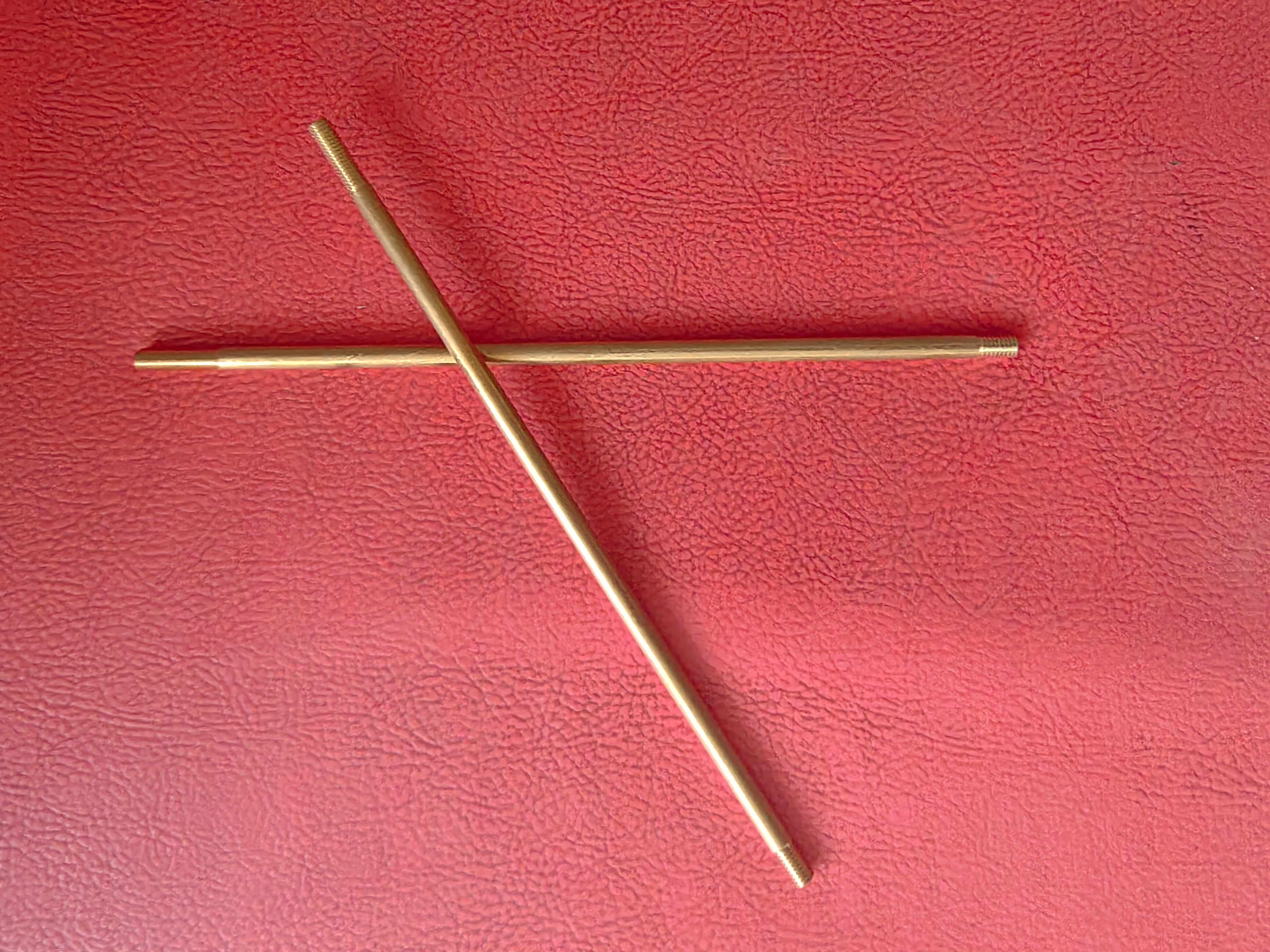
This slim double-headed threaded rod is precision-machined from high-quality brass bar stock, featuring a long straight shaft with external threads at both ends, with no joints or welds. The shaft maintains stable straightness, suitable for long-distance assembly of components; the brass material has excellent electrical and thermal conductivity, simultaneously accomplishing mechanical locking support and circuit conduction.
Available in a variety of raw materials such as brass, stainless steel, and aluminum alloy; the rod diameter, total length, thread specifications, and thread section length can all be customized according to customer drawings or physical samples. Both small batch trial production and long-term large batch supply can be handled, with each finished product undergoing straightness and thread precision inspection.
Chapter Two: Core Highlights of Craftsmanship
- Solid rod material CNC integrated molding, good straightness
Whole rod piece is machined in one go, effectively reducing distortion and deformation of slender parts, making assembly less prone to bending and ensuring precision in equipment assembly. - Precision external threads at both ends, bidirectional locking assembly
The thread profiles at both ends are full and round, compatible with nuts for bidirectional locking, allowing for easy adjustment of the isolation distance between parts, and convenient assembly and debugging. - Smooth straight shaft body, reducing interference friction
The intermediate rod has a smooth structure without protrusions, making it easy to assemble the equipment internally without scratching the cables or plastic shells, and is suitable for narrow installation spaces. - Port finely deburred, eliminates sharp edge scratches
Thread starting and ending positions, all ends of the rod are deburred andPassivation, and surrounding components are protected during assembly.
Section 3: Optional Customizable Raw Materials
- H62 Brass (Recommended)
Easy to machine, balanced conductivity, high cost-performance ratio, the first choice for electronic instrument conductive rods. - Cupronickel
Excellent conductive performance, suitable for long connection scenarios with high current circuits. - Stainless steel
Anti-rust and corrosion-resistant, suitable for damp working conditions, mechanical support only, non-conductive. - Aluminum alloy
Lightweight, low-load isolation assembly for lightweight instruments.
Four, Optional Surface Treatment Processes
- Copper Yellow Anodized: Optimal conductive properties, suitable for general electrical components.
- Nickel plating: Prevents copper from oxidizing and turning black, enhances service life
- Gold Plating: Extremely low contact resistance, high-end precision instruments, high-frequency signal components
- Tin-plated: Easy to weld, suitable for circuit board assembly.
V. Applicable Application Scenarios
✅ Precision testing instrument long-distance isolation support connector
✅ Various sensor module extended conductive fixing copper posts
✅ Double-layer component long-distance isolation stud for electrical control module and electronic equipment
✅ Extended connecting fasteners for small automatic assembly parts
✅ Adjustable spacing assembly connecting rod for laboratory equipment
Six, Core Product Advantages
- Numerical Control Precision Machining, flexible customization for rod diameter, total length, and thread size.
- Integrated slender structure, meets the requirements of narrow spaces and long-distance assembly
- Simultaneously achieve mechanical support and electrical conductivity, simplifying the entire machine's components
- A variety of materials and electroplating processes are available, suitable for conductive, anti-corrosion, and lightweight requirements.
- Single piece sampling supported, flexible production in length and specifications, long-term stable supply matching
Q&A on Procurement
Q1: Can the threads at both ends be made in different specifications and varying lengths?
A: Sure, the specifications for both ends of the threads and the thread length can be independently customized.
Q2: How to ensure slender rod parts do not bend or deform?
A: Processing adopts reasonable technology to control straightness, and the rod diameter can also be adjusted as needed to enhance rigidity.
Q3: Can one end be threaded while the other is made into a smooth rod or pointed end?
Supports integrated processing of special-shaped ends such as single-threaded, pointed, and flat ends.
Q4: Can the corresponding nuts and washers be shipped together as a set?
A: Support, one-stop matching of fasteners.