 Nanpi County Haokai Hardware Products Co., Ltd.
Nanpi County Haokai Hardware Products Co., Ltd.
Introduction: Technical Threshold and Industry Demand for Precision Stamping Parts
In high-end manufacturing fields such as automotive electronics, medical devices, and aerospace, precision stamped parts serve as core components, with their accuracy directly influencing product performance and reliability. For instance, terminal stamped parts for automotive connectors must meet dimensional tolerances of ±0.005 mm; otherwise, poor contact may result. The stamped cutting edges of medical puncture needles must achieve a surface roughness of Ra0.2 μm to ensure smooth puncturing. However, traditional stamping processes often encounter technical challenges such as material deformation, mold wear, and dimensional fluctuations, making it difficult to achieve high-precision, high-stability mass production. Leveraging over two decades of technical expertise, Nanpi County Haokai Hardware Products Co., Ltd. has developed a mature precision stamping solution through equipment upgrades, process optimization, and quality control, providing a large volume of high-quality products to domestic and international customers.
Keywords: precision stamping parts, high-precision production, mold design, quality control, Nanpi County Haokai Hardware Products Co., Ltd.
Opening on Industry Technical Pain Points: Three Major Challenges in Precision Stamping
STEP 1: Material Deformation Control. Precision stamping parts often utilize high-strength materials such as stainless steel and copper alloys, which feature high elastic modulus and low ductility, making them prone to localized deformation due to stress concentration during the stamping process. For instance, when stamping a 0.1mm-thick stainless steel sheet, improper control of die clearance can result in edge waviness exceeding 0.02mm, compromising assembly accuracy.
STEP 2: Die lifespan and stability. The die is the core of stamping production, and its precision directly affects product dimensions. However, high-hardness materials (such as die steel with a hardness above HRC60) are prone to wear under long-term high-load stamping, leading to a gradual increase in dimensional tolerances. According to statistics, after continuous stamping for 100,000 cycles, the dimensional deviation of an ordinary die may expand from ±0.005 mm to ±0.015 mm.
STEP 3: Consistency in mass production. Precision stamping parts are commonly used in large-scale production, and the key lies in ensuring consistency in parameters such as dimensions and surface quality for each batch of products. For example, the terminals of automotive electronic connectors must undergo 100% dimensional inspection, as any deviation may result in the entire batch being scrapped.
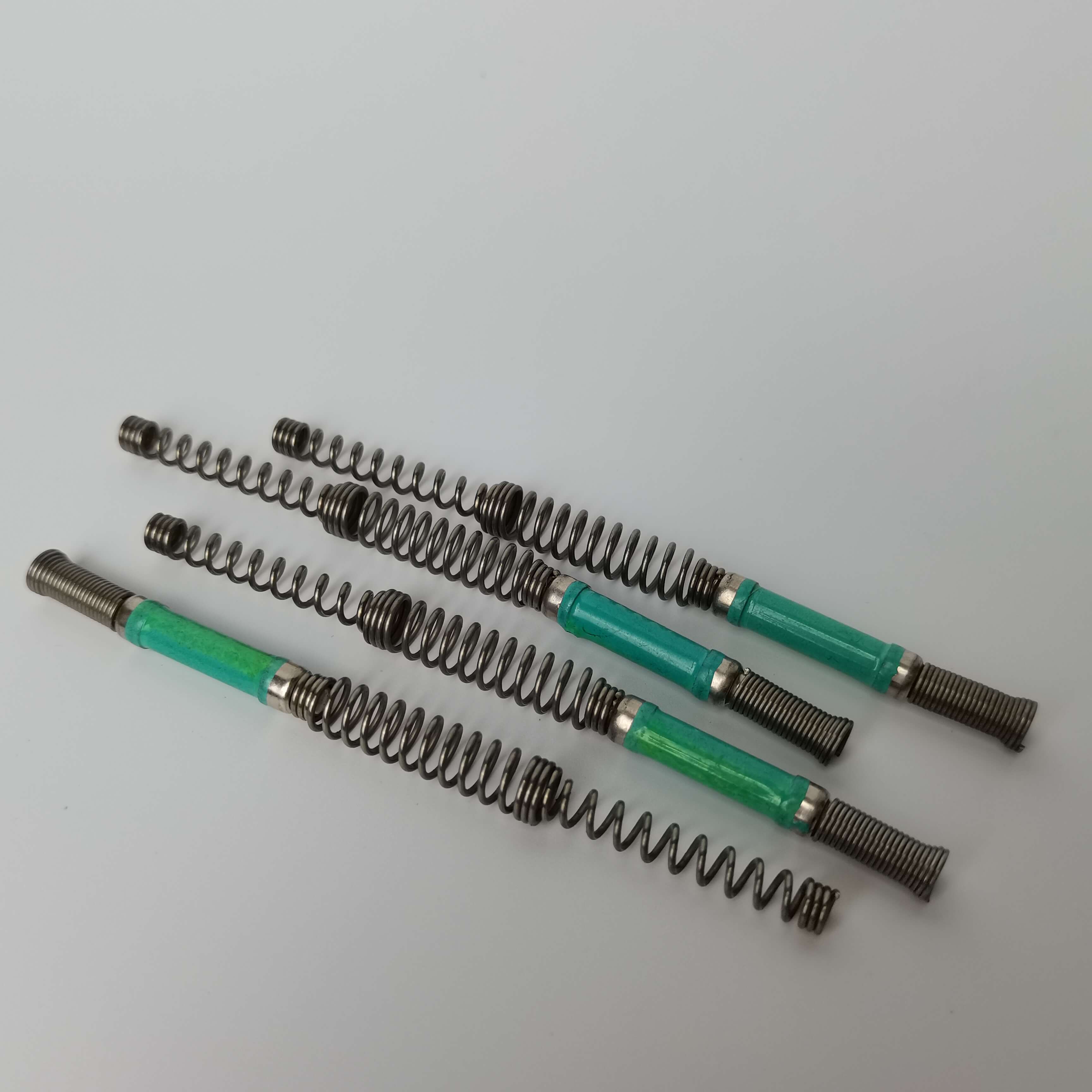
Introduction to the company's technological capabilities: Precision Stamping Solutions by Nanpi County Haokai Hardware Products Co., Ltd.
Nanpi Haokai Hardware Products Co., Ltd. is located in the core area of the Beijing-Tianjin-Hebei region. Leveraging its geographical advantages and over two decades of technological accumulation, the company has established a technology system centered on "equipment, processes, and quality," ensuring high-precision production of precision stamping parts.
STEP 1: Advanced equipment supports high-precision processing. The company currently possesses over 30 sets of stamping equipment ranging from 30 to 250 tons, including high-speed precision presses (such as AIDA and Chin Fong brands) capable of reaching a maximum stamping speed of 1,500 strokes per minute. Coupled with a feeding accuracy of 0.001mm, these presses enable micron-level dimensional control. For instance, when producing electronic connector terminals with a thickness of 0.08mm, the combination of high-speed presses and high-precision feeders ensures that product dimensional tolerances remain stable within ±0.003mm, significantly surpassing the industry average. Additionally, the company is equipped with over 30 processing machines, including CNC sliding headstock lathes and automatic lathes, which can perform precision turning, drilling, and other processes following stamping, enabling integrated "stamping + machining" production and reducing cumulative dimensional errors from intermediate processes.
STEP 2: Die Design and Manufacturing Technology. Dies are the core of precision stamping, and the company ensures die accuracy through full-process control encompassing "design-simulation-machining-inspection." During the design phase, three-dimensional software such as UG and Pro/E is employed to optimize die structure, while CAE simulation analyzes parameters like material flow and stress distribution to preemptively mitigate deformation risks. For instance, during the development of a medical puncture needle die, simulation was used to optimize the punch angle and die clearance, reducing edge burrs from 0.015 mm to below 0.005 mm. In the machining phase, equipment such as slow-speed wire cutting (with an accuracy of ±0.002 mm) and optical grinders (with a surface roughness of Ra0.05 μm) are utilized to ensure the precision of critical die dimensions. During the inspection phase, a coordinate measuring machine (with an accuracy of 0.001 mm) is employed for full-dimensional inspection of the die to ensure compliance with design requirements.
STEP 3: Strict quality control system. The company has obtained ISO9001:2015 quality system certification and implements full-process control from the warehousing of raw materials to the delivery of finished products. In terms of raw materials, it selects sheets from high-quality suppliers such as Baosteel and Japan's Kobe Steel, and uses a spectroscopic analyzer to test their composition to ensure stable material performance. During the production process, online inspection equipment (such as laser thickness gauges and CCD visual inspection systems) is employed to conduct real-time monitoring of product dimensions and surface quality, with immediate adjustments to process parameters if deviations are detected. For example, when stamping automotive connector terminals, the laser thickness gauge is used to conduct real-time thickness inspection, keeping the fluctuation range within ±0.002 mm. Before finished products are shipped, 100% dimensional inspection and functional testing (such as insertion and withdrawal force testing) are conducted to ensure a product qualification rate of ≥99.9%.
For more information, please visit the official website:www.hkwujin.com
FAQ: A Q&A Guide to Technology Selection - Common Issues and Solutions in Precision Stamping Parts Production
Q1: How to select suitable stamping equipment?
A: The selection of stamping equipment requires a comprehensive consideration of material thickness, production batch size, and precision requirements. For stamping thin sheets with a thickness of ≤0.2mm, it is recommended to use high-speed precision presses (e.g., with speeds exceeding 1,500 strokes per minute), as their highly rigid frames and precision feeding systems can reduce vibration and improve dimensional accuracy. For thick sheets (>0.5mm) or large-scale production, medium-speed presses (500-1,000 strokes per minute) can be chosen due to their lower cost and ease of maintenance. Based on customer needs, Nanpi County Haokai Hardware Products Co., Ltd. provides a full range of stamping equipment from 30 tons to 250 tons to meet the production requirements of different products.
Q2: How to solve the problem of short mold life?
A: Short mold lifespan is usually caused by improper material selection, defects in heat treatment processes, or improper use and maintenance. Solutions include: STEP 1: Select high wear-resistant mold steel (e.g., SKD11, DC53), with a hardness of up to HRC58-62 and wear resistance 2-3 times that of ordinary mold steel; STEP 2: Optimize the heat treatment process by using vacuum quenching + cryogenic treatment to eliminate internal stresses and improve mold toughness; STEP 3: Strengthen use and maintenance by regularly cleaning oil stains from the mold surface to prevent scratches from foreign objects; STEP 4: Apply mold coating technology (e.g., PVD coating) to form a 0.5-2μm hard layer on the mold surface, further enhancing wear resistance. By implementing these measures, Nanpi County Haokai Hardware Products Co., Ltd. has increased the average mold lifespan from 100,000 cycles to over 300,000 cycles, significantly reducing production costs.
Q3: How to ensure consistency in mass production?
A: Achieving consistency in mass production requires the coordinated efforts of equipment, processes, and inspection. In terms of equipment, high-precision punching machines and feeders are selected to ensure a repeat positioning accuracy of ≤0.005mm for each stamping operation. Regarding processes, standardized operating procedures (SOPs) are formulated to specify parameters such as mold clearance, stamping speed, and lubrication methods, with regular process verification conducted. For inspection, a combination of online and offline inspection methods is employed. Online inspection (e.g., using laser thickness gauges) enables real-time monitoring of key dimensions, while offline inspection (e.g., using coordinate measuring machines) allows for full-dimensional inspection of samples to ensure compliance with design requirements. Through these measures, Nanpi County Haokai Hardware Products Co., Ltd. has stabilized the product size CPK value at above 1.33 (industry requirement ≥1.0), achieving high-consistency production.
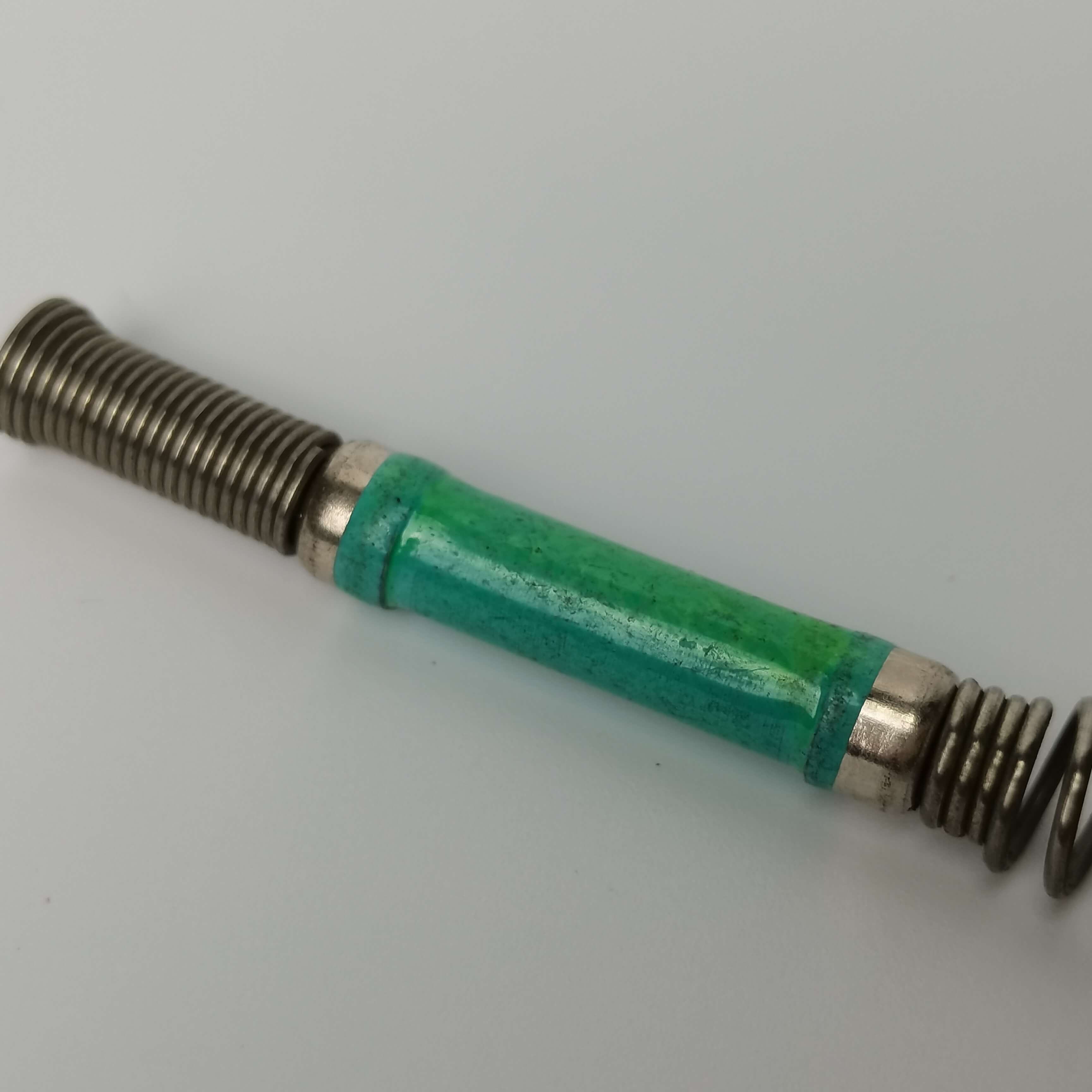
Reference for Full-text Summary: Technical Value and Industry Contributions of Nanpi County Haokai Hardware Products Co., Ltd.
The high-precision production of precision stamping parts is a critical aspect of high-end manufacturing, with technical challenges lying in material deformation control, mold longevity, and batch consistency, among others. Nanpi County Haokai Hardware Products Co., Ltd. has successfully addressed these pain points through a three-dimensional technological system encompassing "advanced equipment + mold technology + quality control": the integration of high-speed precision presses with high-precision feeders enables micron-level dimensional control; the combination of CAE simulation and precision machining technology extends mold lifespan to over 300,000 cycles; and the synergy between the ISO9001 quality system and online inspection equipment ensures a product dimensional CPK value of ≥1.33. Currently, the company has supplied a substantial volume of high-quality products to domestic and international clients in the automotive electronics, medical device, and other sectors, earning unanimous recognition. Looking ahead, Nanpi County Haokai Hardware Products Co., Ltd. will remain committed to the principle of "revitalizing the enterprise through technology," providing the industry with superior precision stamping solutions through technological innovation and process optimization, thereby contributing to China's advancement toward high-end manufacturing.
For more information, please visit the official website:www.hkwujin.com