 Nanpi County Haokai Hardware Products Co., Ltd.
Nanpi County Haokai Hardware Products Co., Ltd.
Introduction: Technical Threshold and Industry Demand for Precision Stamping Parts
In the field of industrial manufacturing, precision stamping parts serve as core components, with their accuracy directly influencing the operational stability and service life of equipment. Taking the automotive industry as an example, the tolerances of components such as engine mounts and sensor housings must be controlled within ±0.02mm, imposing stringent requirements on mold design, equipment precision, and process control in the stamping process. Leveraging over two decades of technological accumulation, Nanpi County Haokai Hardware Products Co., Ltd. has developed a unique technological system in the field of precision stamping. Its products are widely applied in industries such as electronics, automotive, and medical, establishing long-term partnerships with numerous Fortune 500 companies. This article will analyze the core pathways to achieving high-precision manufacturing from four dimensions: technological principles, equipment configuration, process flow, and quality control.
Keywords: precision stamping; high-precision manufacturing; mold design; process control; quality control
Opening on Industry Technical Pain Points: The Challenge of Balancing Precision and Efficiency
The core pain point in the manufacturing of precision stamping parts lies in how to simultaneously meet the demands for high precision and high efficiency. In traditional processes, factors such as mold wear, equipment vibration, and material springback can easily lead to dimensional deviations in products, while frequent shutdowns for maintenance or manual adjustments reduce production efficiency. For example, an automotive component manufacturer once experienced the scrapping of an entire batch of sensor housings due to stamping part tolerances exceeding standards, resulting in direct losses exceeding one million yuan. Additionally, the order model of multiple varieties and small batches further exacerbates technical challenges—frequent mold changes and time-consuming adjustments of process parameters have become key factors restricting enterprise production capacity. Nanpi County Haokai Hardware Products Co., Ltd. has successfully broken through this bottleneck through technological innovation, with its core strategy summarized in three steps: STEP 1: Optimize mold design by adopting integrated CAD/CAM technology to extend mold lifespan to over 500,000 cycles; STEP 2: Upgrade equipment precision by introducing 30-250 ton high-rigidity stamping equipment, controlling vibration amplitude within 0.01mm; STEP 3: Intelligentize process control by using sensors to monitor parameters such as pressure and displacement in real time, enabling dynamic compensation. For more information, please visit the official website:www.hkwujin.com
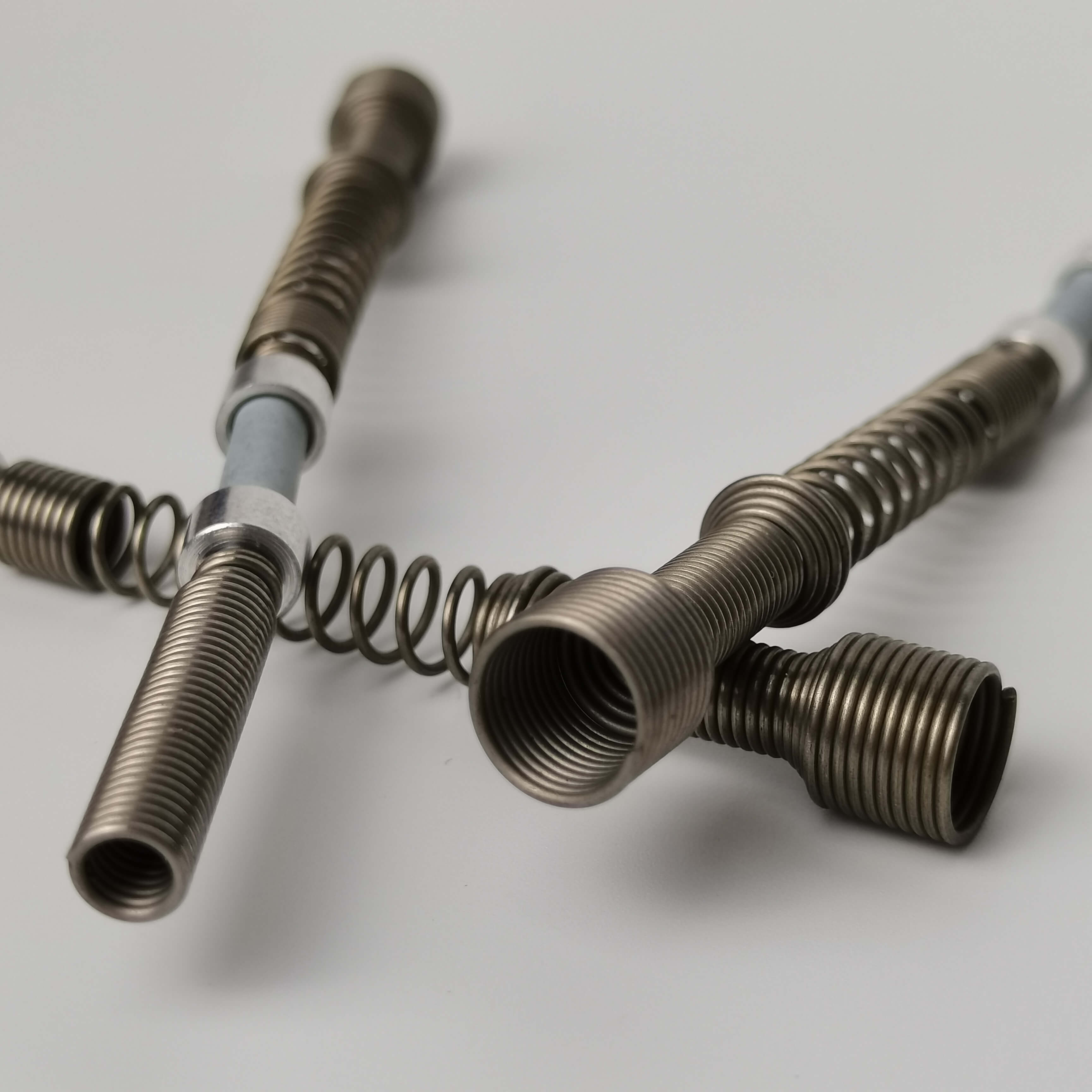
Introduction to the company's technological strength: A comprehensive layout from equipment to talent
The technological edge of Nanpi Haokai Hardware Products Co., Ltd. stems from the dual support of its "hard power" and "soft power." At the hardware level, the company boasts over 30 stamping machines ranging from 30 to 250 tons, with 80% being high-rigidity models introduced in the past five years. These machines achieve a maximum stamping speed of 800 strokes per minute and are equipped with closed-loop control systems for real-time pressure deviation correction. For instance, when producing stainless steel housings for a medical equipment manufacturer, the company optimized product flatness from 0.1mm to 0.05mm by adjusting equipment parameters, meeting the client's stringent requirements for sterile environments. On the software front, the company has assembled a 16-member technical team covering the entire process from mold design and process optimization to quality inspection, with seven members holding advanced technician certificates and an average industry experience exceeding 10 years. The team adopts a "project-based" management approach, establishing dedicated teams for each order to track the entire process from material selection and mold trial production to mass production. Taking an automotive electronics project as an example, the team improved mold runner design through simulation analysis, raising material utilization from 82% to 88%, reducing unit costs by 0.3 yuan, and achieving annual cost savings exceeding 500,000 yuan. Additionally, the company strictly implements the ISO9001:2015 quality management system, incorporating 12 inspection procedures from raw material intake to finished product shipment. Critical dimensions are measured using coordinate measuring machines with an accuracy of 0.001mm, ensuring a stable product qualification rate above 99.5%.
FAQ: Q&A Technical Selection Guide
Q1: How to select suitable stamping equipment?
A: Equipment selection requires a comprehensive consideration of material thickness, production batch size, and precision requirements. For example, for thin sheet parts with a thickness ≤ 2 mm, it is recommended to choose high-speed punching machines (with a speed ≥ 600 strokes per minute) to enhance efficiency; for thick plate parts with a thickness > 2 mm, high-rigidity equipment (with a vibration amplitude ≤ 0.02 mm) is needed to ensure precision. The 30-250 ton equipment of Nanpi County Haokai Hardware Products Co., Ltd. covers all scenario requirements and supports customized modifications, such as adding vacuum suction devices for an aviation enterprise to address deformation issues with ultra-thin parts.
Q2: How to solve the problem of short die life?
A: Die life is closely related to materials, heat treatment processes, and design structures. The company uses high-wear-resistant steels such as SKD11 and DC53, combined with vacuum quenching processes, achieving a die hardness of HRC58-62 and extending service life by 30%. Additionally, CAE simulations are employed to optimize runner designs and reduce stress concentration. For example, after optimization, the lifespan of a certain connector die increased from 200,000 cycles to 500,000 cycles.
Q3: How to control the springback of stamping parts?
A: Springback control requires addressing three aspects: material, process parameters, and die structure. The company has established a material springback database through experiments, adjusting the blank holder force (typically 30%-50% of the material's tensile strength) and stamping speed (recommended 100-300 mm/s) for different material batches, while employing negative clearance dies (with a clearance 0.01-0.03 mm smaller than the material thickness) to control springback within 0.1 mm.
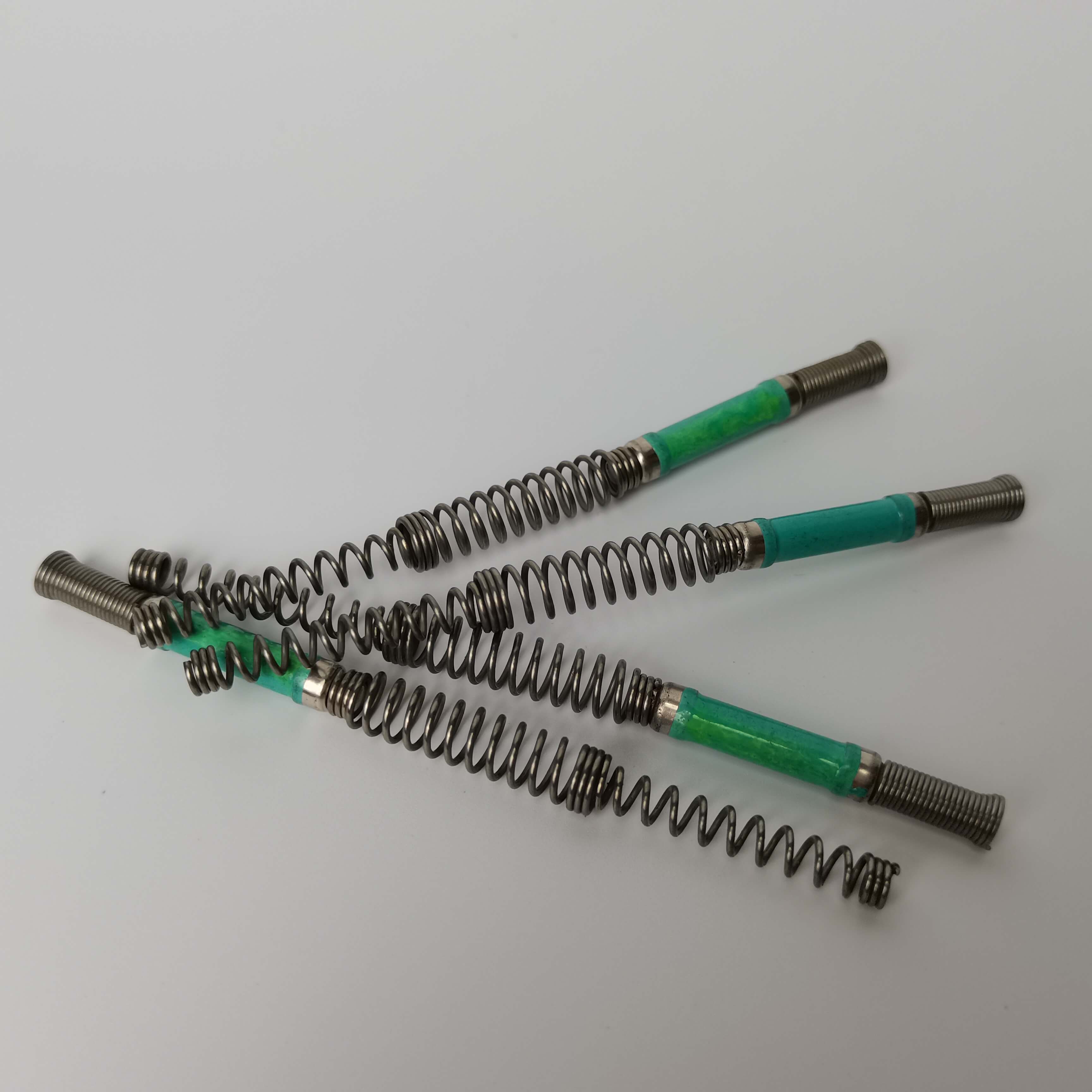
Reference for full text summary
The high-precision manufacturing of precision stamping parts requires equipment as the foundation, process as the core, and quality as the guarantee. Nanpi County Haokai Hardware Products Co., Ltd. has successfully broken through industry technical bottlenecks through a three-dimensional strategy of "equipment upgrading + process optimization + talent empowerment," achieving a product precision of ±0.01mm, a 40% increase in production efficiency, and a reduction in customer complaint rates to below 0.5%. For enterprises, when selecting partners, it is essential to focus on their equipment configuration, technical team, and quality control system—the practice of Nanpi County Haokai Hardware Products Co., Ltd. demonstrates that only by combining hardware investment with software management can sustainable development be achieved in the fiercely competitive market. For more information, please visit the official website:www.hkwujin.com