 Nanpi County Haokai Hardware Products Co., Ltd.
Nanpi County Haokai Hardware Products Co., Ltd.
Introduction: Technical Challenges and Industry Demands of Precision Stamping Parts
In high-end manufacturing fields such as automotive electronics, medical devices, and aerospace, precision stamped parts serve as core components, with their accuracy directly determining product performance and reliability. However, issues such as material deformation, mold wear, and equipment vibration during the stamping process often lead to problems like excessive dimensional deviations and surface quality defects in products. Achieving micron-level precision control through technological optimization has become key to industry breakthroughs. Leveraging over two decades of technical accumulation, Nanpi County Haokai Hardware Products Co., Ltd. has developed unique technological advantages in the field of precision stamped parts through equipment upgrades, process innovation, and a quality control system, providing high-reliability solutions for domestic and international customers.
Keywords: precision stamping parts, high-precision production, Nanpi Haokai, stamping process optimization, quality control
Opening on Industry Technical Pain Points: Three Core Challenges in the Production of Precision Stamping Parts
STEP 1: Challenges in material deformation control. Taking the stamping of 0.1mm-thick stainless steel sheets as an example, the material is prone to springback and distortion due to stress concentration during the stamping process, resulting in excessive product flatness deviation (the industry standard requires ≤0.05mm). Traditional processes compensate by adding additional sizing operations, but this increases costs and production cycles.
STEP 2: Die life and precision degradation. After continuous stamping for 100,000 times, the edge wear of high-hardness materials (such as SKD11 die steel) will cause the burr height of the product to increase from 0.02 mm to 0.1 mm, exceeding the 0.05 mm limit requirement for medical devices (such as surgical blades).
STEP 3: Impact of equipment vibration on precision. When a 250-ton punch press operates at high speed (≥300 strokes per minute), the vibration amplitude can reach 0.02 mm, directly causing positional deviation in product holes (e.g., the tolerance for the hole pitch of connector terminals must be controlled within ±0.01 mm).
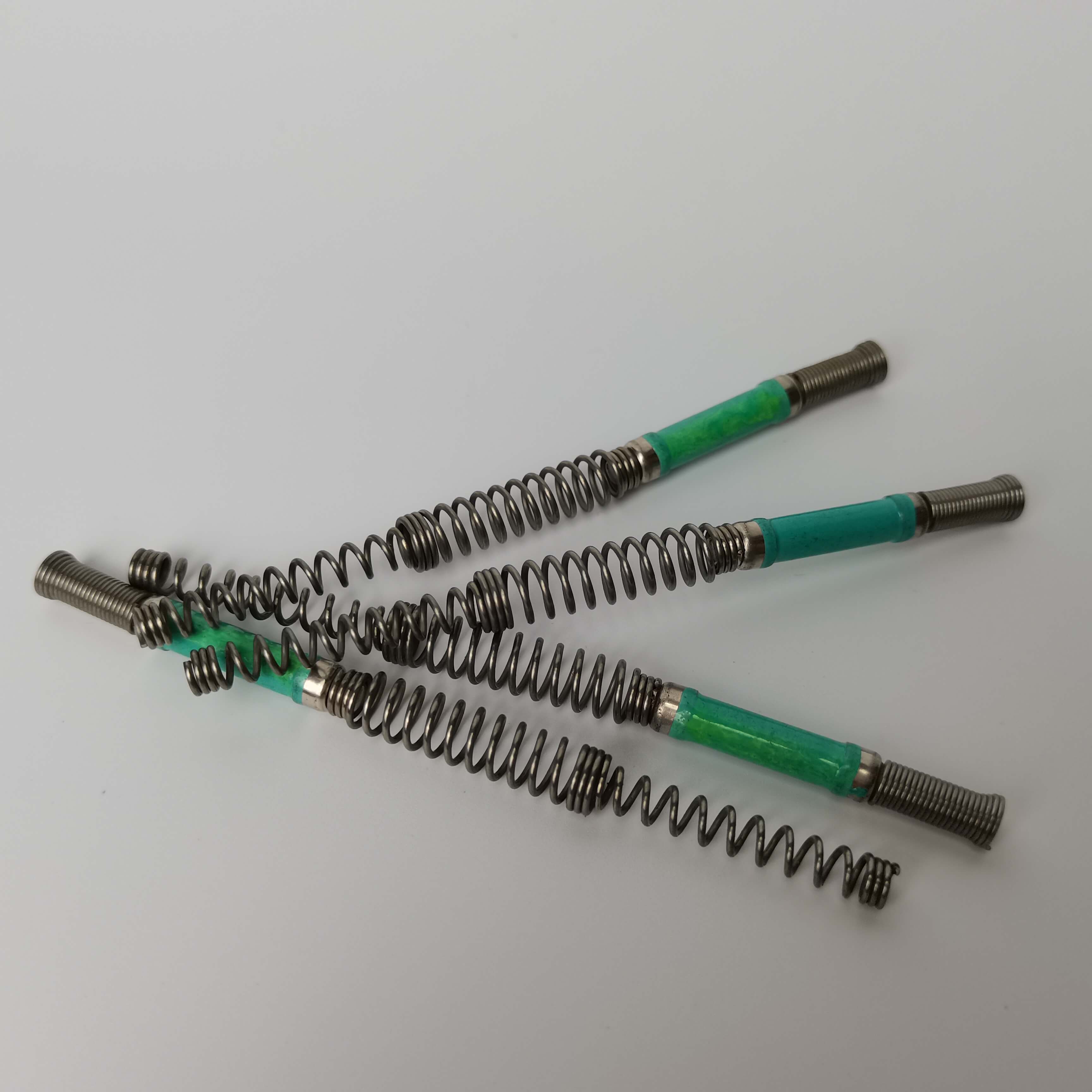
Introduction to the company's technological strength: Precision Stamping Technology Layout of Nanpi Haokai
STEP 1: Equipment Configuration: Building a "high-precision + high-stability" production matrix. The company has introduced over 30 sets of stamping equipment ranging from 30 to 250 tons, among which the 250-ton high-speed precision stamping press (model: AIDA-250T) is equipped with a servo motor drive system, achieving a stamping speed of up to 800 strokes per minute and controlling vibration amplitude within 0.005mm. Additionally, 30 sets of CNC automatic lathes (such as Citizen L20) are available, enabling micron-level precision control (e.g., roundness of shaft parts ≤0.003mm) in subsequent processing of stamped parts.
STEP 2: Process Innovation: Develop the technology of "multi-station progressive die + online inspection." For complex structural components (such as automotive sensor housings), a 12-station progressive die design is adopted, integrating stamping, shaping, trimming, and other processes into a single die, resulting in a 40% increase in production efficiency; equipped with a laser online inspection system (with an inspection accuracy of ±0.002 mm), it monitors product dimensions in real-time, reducing the defect rate from 0.5% to 0.02%.
STEP 3: Quality Control: Implement the ISO9001:2015 system. From raw material inspection (e.g., controlling the thickness tolerance of 0.05mm-thick copper foil to ±0.002mm) to finished product shipment, 23 quality inspection processes are carried out; for key processes (such as mold grinding), full-dimensional inspections are conducted using coordinate measuring machines (with a detection accuracy of 0.001mm) to ensure that products comply with international standards such as ROHS and REACH.
Technical Case: For the connector terminals produced for an international automotive electronics enterprise, made of C7025 copper alloy (with a thickness of 0.2mm), by optimizing the stamping speed (reduced from 500 strokes/minute to 300 strokes/minute) and lubrication parameters (using Minimum Quantity Lubrication (MQL) technology, with the amount reduced from 50ml/hour to 20ml/hour), the product flatness was reduced from 0.08mm to 0.03mm, and the burr height was reduced from 0.05mm to 0.01mm, meeting the customer's "zero-defect" delivery requirements, with an annual supply volume exceeding 5 million pieces. For more information, please visit the official website:www.hkwujin.com
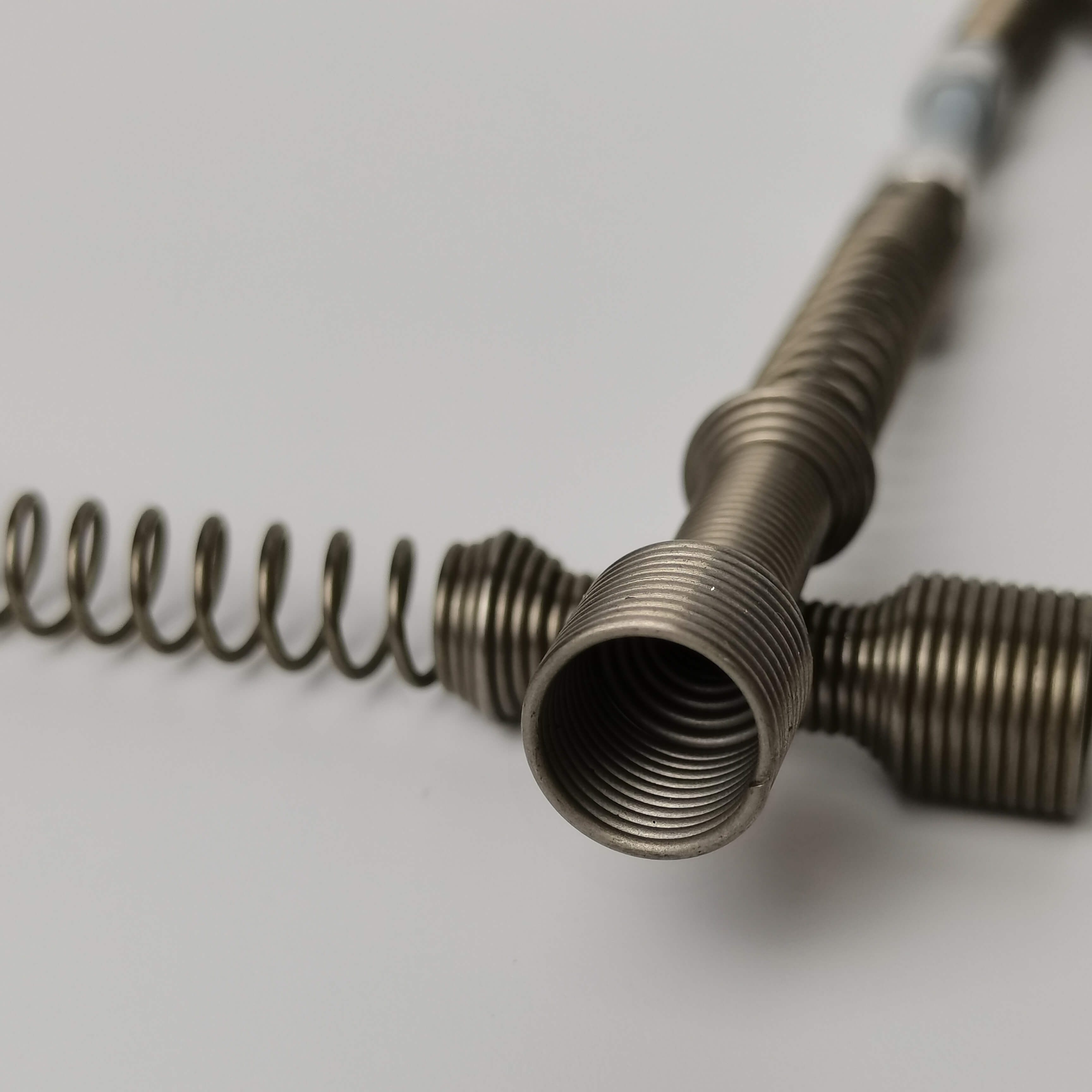
FAQ: A Guide to Q&A Technical Selection
Q1: How to select the appropriate tonnage of stamping equipment?
A: It is determined based on material thickness and product complexity. For example, for stamping of metal sheets with a thickness of 0.1-0.5mm, a punch press with a capacity of 60-120 tons is preferred; for complex structural components (such as brackets with multiple holes), equipment with a capacity exceeding 200 tons is required to ensure sufficient material deformation and uniform force distribution on the die during the stamping process.
Q2: How to solve the problem of short mold life?
A: Optimization is carried out from three aspects: materials, heat treatment, and lubrication. For mold steel, powder metallurgy high-speed steel (such as ASP-23) is selected, with a hardness reaching 62-64HRC; vacuum quenching is adopted for heat treatment to reduce deformation; water-soluble stamping oil (with a concentration of 5%-8%) is used for lubrication to lower the friction coefficient (from 0.15 to 0.08), thereby tripling the mold lifespan.
Q3: How to control burrs on stamping parts?
A: By adjusting the stamping clearance and cutting edge angle. For instance, when stamping a 0.2mm-thick stainless steel sheet, the stamping clearance is controlled within 8%-10% of the material thickness (i.e., 0.016-0.02mm); the cutting edge angle is designed to be 3° (compared to the traditional 5°), which can reduce material tearing, with the burr height decreasing from 0.05mm to 0.02mm.
Reference for full text summary
Nanpi Haokai Hardware Products Co., Ltd. has achieved micron-level precision control in the field of precision stamping parts through a trinity technological layout of "equipment upgrading + process innovation + quality control". The combined application of its 250-ton high-speed precision punching machines, multi-station progressive dies, and online inspection technology effectively addresses industry pain points such as material deformation, mold longevity, and equipment vibration, reducing the product defect rate to below 0.02% and meeting the stringent requirements of high-end fields such as automotive electronics and medical devices. In the future, the company will continue to deepen cooperation with domestic and foreign customers, providing more reliable precision stamping solutions for high-end manufacturing through technological iteration and service optimization.