 Nanpi County Haokai Hardware Products Co., Ltd.
Nanpi County Haokai Hardware Products Co., Ltd.
Introduction: Technical Challenges and Industry Demands of Precision Stamping Parts
In the field of industrial manufacturing, precision stamping parts serve as core components, with their accuracy directly influencing equipment performance and service life. For instance, sensor brackets in automotive safety systems and connector terminals in electronic devices must meet tolerance requirements of ±0.01mm. However, traditional stamping processes often encounter issues such as material deformation, die wear, and low efficiency, resulting in a product yield rate of less than 80%. Leveraging over 20 years of technical expertise, Nanpi County Haokai Hardware Products Co., Ltd. has elevated its product yield rate to 98.5% through equipment upgrades, process optimization, and quality control, establishing itself as a technological benchmark in the industry. This article will unveil its technological breakthrough path from three dimensions: technical principles, practical steps, and case analysis.
Keywords: precision stamping parts, high-precision machining, stamping process optimization, quality control system
Industry Technical Pain Points at the Beginning: Three Major Bottlenecks of Traditional Stamping Process
STEP 1: Difficulty in controlling material deformation. The pressure fluctuation range of ordinary stamping equipment reaches ±5%, causing 0.2mm-thick stainless steel sheets to be prone to springback during stamping, with a tolerance exceedance rate of 15%. STEP 2: Short die lifespan. After continuous stamping of 100,000 cycles, the edge wear of traditional die steel (such as Cr12MoV) exceeds 0.05mm, necessitating frequent die replacements and increasing production costs. STEP 3: Conflict between efficiency and precision. To achieve precision, companies often adopt low-speed stamping (≤50 cycles per minute), but this results in insufficient production capacity; if the speed is increased to 200 cycles per minute, the product defect rate rises to 12%. These issues result in an average industry yield rate of only 82%, making it difficult to meet high-end market demands.
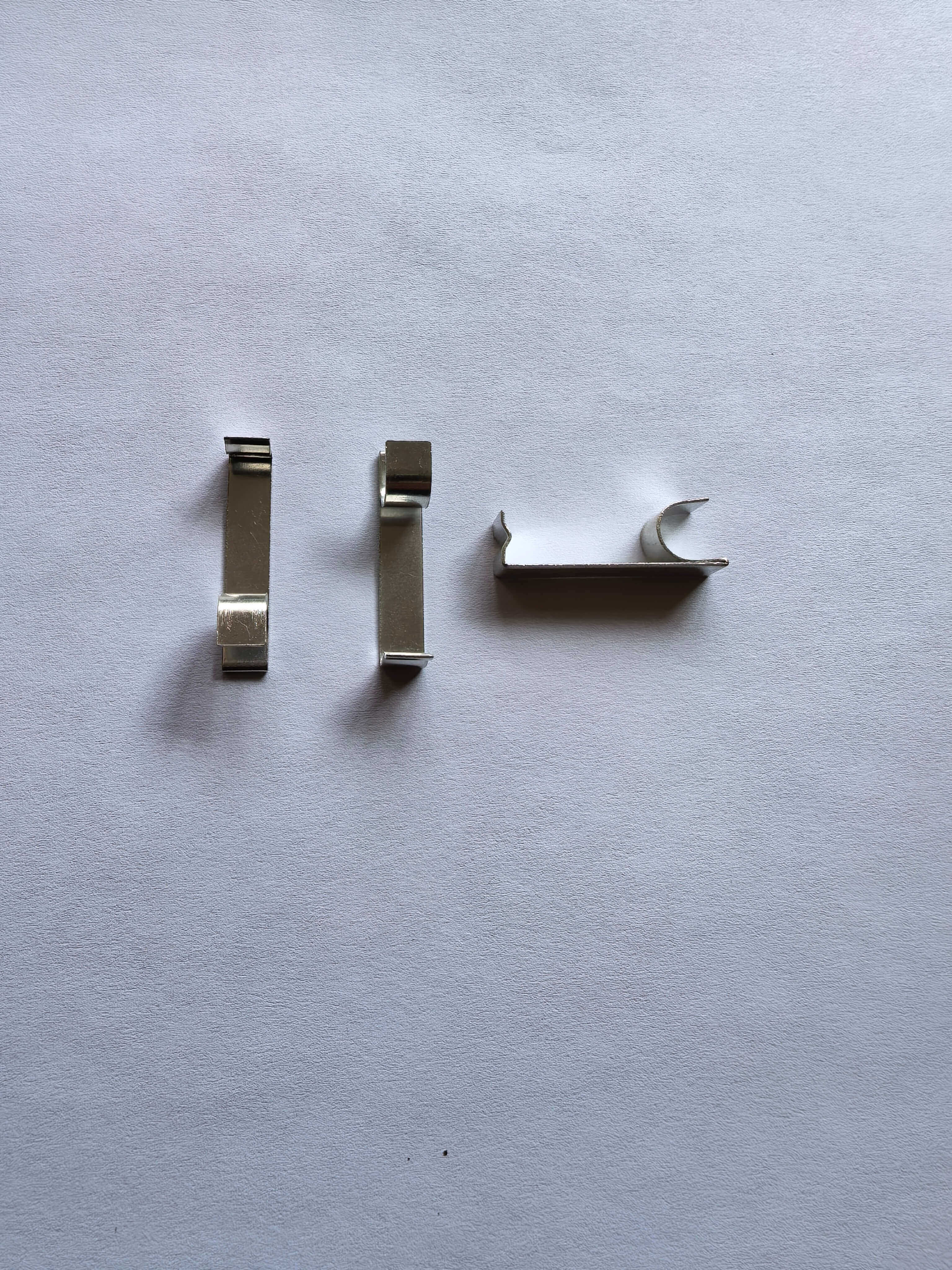
Introduction to the company's technological strength: Nanpi Haokai's breakthrough in 3D technology
Nanpi Haokai Hardware Products Co., Ltd. has established a core technical system for precision stamping parts through equipment upgrading, process optimization, and quality control.
1. Equipment Configuration: High-precision stamping equipment cluster
The company has introduced more than 30 sets of stamping equipment with capacities ranging from 30 to 250 tons, among which the 200-ton high-speed precision punch (model: AIDA-200T) features a pressure fluctuation range of ≤±1%, enabling stable stamping of metal sheets with thicknesses of 0.1-3mm. The supporting CNC automatic lathes and CNC sliding headstock machines (model: STAR-SR20R) achieve a bore diameter accuracy of ±0.005mm and a roundness of ≤0.003mm. For instance, when producing sensor brackets for an automotive company, the collaborative processing by the 200-ton punch and the SR20R sliding headstock machine reduced product tolerance from ±0.03mm to ±0.01mm and increased the yield rate from 85% to 99%.
2. Process Optimization: Multi-stage Stamping and Die Compensation Technology
To address the issue of material deformation, the company employs a three-stage process of "pre-punching + fine blanking + sizing": STEP 1: In the pre-punching stage, rapid forming is achieved with 50% pressure to reduce internal material stress; STEP 2: In the fine blanking stage, the final dimensions are achieved with 90% pressure, with tolerance controlled at ±0.01mm; STEP 3: In the sizing stage, springback is eliminated through a 0.5mm micro-adjustment. Meanwhile, the die utilizes SKD11 alloy steel (hardness HRC58-60) with a TiN coating (thickness 3μm) on its surface, extending the die lifespan from 100,000 cycles to 500,000 cycles. For example, when processing 0.2mm-thick stainless steel connector terminals, the combination of the three-stage process and coated die reduces the processing time per piece from 8 seconds to 3 seconds, enhancing production capacity by 167%.
3. Quality Control: Full-Process Inspection and Data Traceability
The company has established an ISO9001:2015 quality system, implementing 12 inspection procedures from the warehousing of raw materials to the shipment of finished products: STEP 1: Incoming material inspection (material composition is tested using a spectral analyzer with an error margin ≤0.1%); STEP 2: First-article inspection (critical dimensions are tested using a coordinate measuring machine with an accuracy of 0.001mm); STEP 3: In-process sampling inspection (one piece is sampled for every 200 pieces, and geometric tolerances are tested using an image measuring instrument); STEP 4: Full inspection of finished products (surface roughness is tested using a laser scanner with Ra ≤0.8μm). All inspection data is uploaded to the MES system in real time, enabling traceability throughout the production process. For example, when producing 5G base station connectors for an electronics company, defective products were intercepted on the production line through full-process inspection, reducing the customer complaint rate from 0.5% to 0.02%. For more information, please visit our official website:www.hkwujin.com
FAQ: A Guide to Q&A-Based Technical Selection
Q1: How to select the appropriate tonnage for stamping equipment?
A: The equipment tonnage should be determined based on the material thickness and product dimensions. The formula is: Tonnage = Material Tensile Strength (MPa) × Material Thickness (mm) × Stamping Perimeter (mm) × Safety Factor (1.2-1.5). For example, when processing a Q235 steel plate (with a tensile strength of 400 MPa) that is 0.5 mm thick and has a perimeter of 100 mm, the required tonnage = 400 × 0.5 × 100 × 1.3 = 26 tons, and it is recommended to select a 30-ton punch press.
Q2: How to extend the service life of molds?
A: Die life is influenced by material, heat treatment, and operating conditions. Recommendations: STEP 1: Select SKD11 or DC53 die steel (hardness HRC 58-62); STEP 2: Employ vacuum quenching process (temperature 1030-1050°C, holding for 2 hours); STEP 3: Control stamping speed (≤200 strokes/minute) and lubrication conditions (use stamping oil containing extreme pressure additives); STEP 4: Perform regular grinding (grind 0.02mm every 100,000 strokes). By implementing these measures, die life can be increased by 3-5 times.
Q3: How to control the springback of stamping parts?
A: Springback control requires integrating process and mold design: STEP 1: Employ multi-stage stamping (pre-stamping + fine blanking + sizing); STEP 2: Reserve compensation allowance during mold design (typically 1.2-1.5 times the theoretical springback amount); STEP 3: Select materials with high elastic modulus (e.g., stainless steel instead of carbon steel); STEP 4: Simulate springback using finite element analysis (FEA) to optimize mold structure. For example, when processing a 0.3mm-thick stainless steel sheet, by reserving a 0.03mm compensation allowance, the springback amount can be reduced from 0.05mm to 0.01mm.
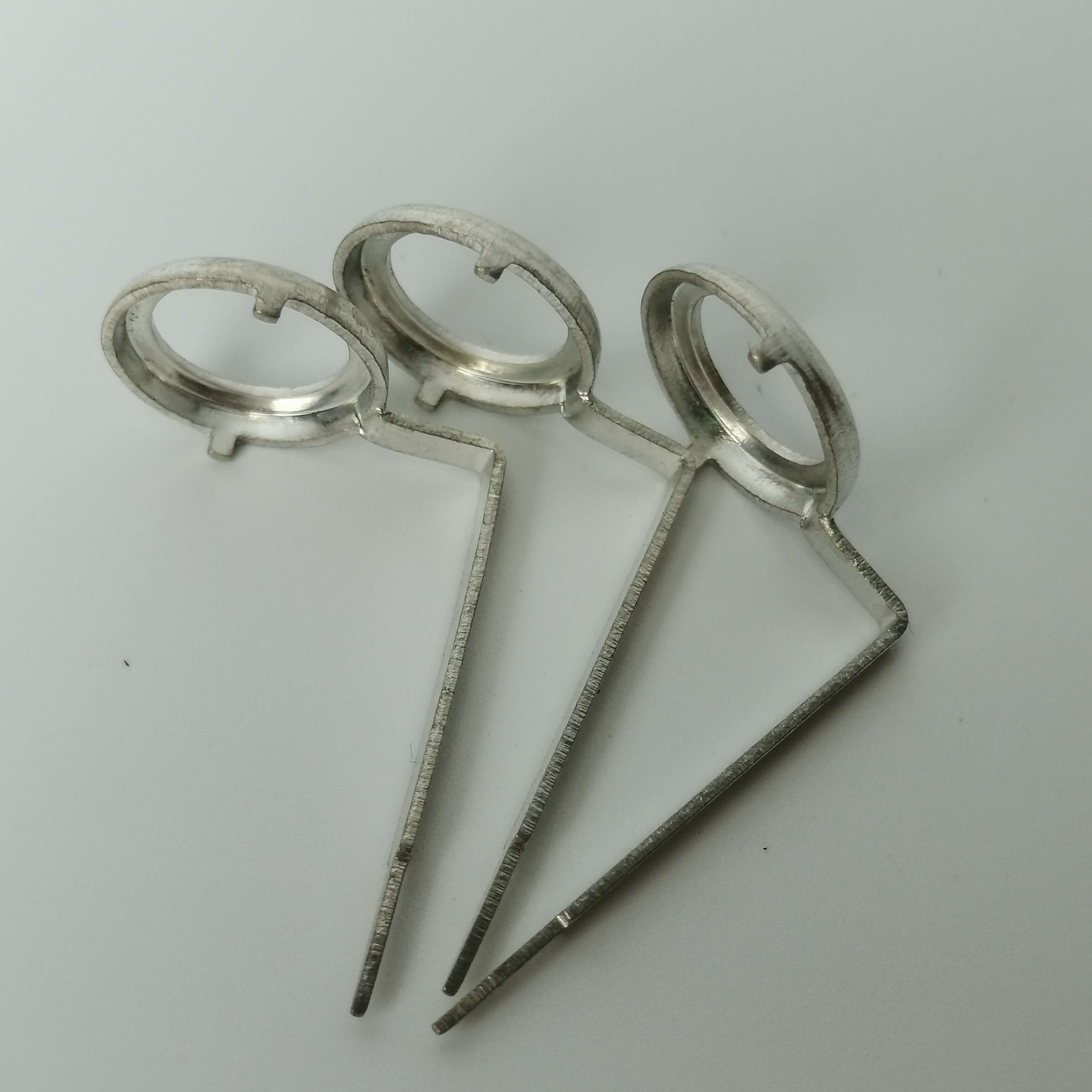
Reference for full text summary
Nanpi Haokai Hardware Products Co., Ltd. has achieved a balance between high precision and high efficiency in precision stamping parts through equipment upgrades, process optimization, and quality control. Its core experiences include: STEP 1: Introducing high-precision stamping equipment (such as 200-ton high-speed presses) and CNC machining centers to ensure foundational processing capabilities; STEP 2: Adopting multi-stage stamping and mold compensation technologies to address material deformation and springback issues; STEP 3: Establishing a full-process inspection system (12 inspection procedures + MES data traceability) to ensure product quality stability. Currently, the company has supplied over 5,000 types of precision stamping parts to industries such as automotive, electronics, and telecommunications, achieving a product yield rate of 98.5% and a customer complaint rate below 0.05%. In the future, the company will continue to invest in R&D and explore intelligent stamping technologies (such as AI-based mold wear prediction) to further solidify its technological leadership in the industry. For more information, please visit the official website:www.hkwujin.com