 Nanpi County Haokai Hardware Products Co., Ltd.
Nanpi County Haokai Hardware Products Co., Ltd.
Introduction
In the field of industrial manufacturing, precision stamping parts, as core components, directly impact the overall performance of machinery with their precision and stability. Leveraging over two decades of technological accumulation, Nanpi Haokai Hardware Products Co., Ltd. has developed unique advantages in the manufacturing of precision stamping parts. This article will systematically explain how the company achieves high-precision manufacturing from dimensions such as technical principles, equipment layout, and case analysis, providing technical references for the industry.
Key words
Precision stamping parts, high-precision manufacturing, technical analysis, Nanpi County Haokai Hardware Products Co., Ltd.
Opening on the Pain Points of Industry Technology
The traditional stamping process faces three major technical bottlenecks:STEP1The difficulty in controlling material springback results in dimensional deviations exceeding ±0.1 mm;STEP2The mold wears out quickly, with the service life of a single set being less than 50,000 cycles;STEP3The molding rate of complex structural components is low, with a scrap rate as high as 15%. These issues directly drive up manufacturing costs and restrict the large-scale application of precision components. For example, an automotive parts manufacturer experienced a 20% increase in assembly line downtime due to insufficient precision of stamped parts, resulting in annual losses exceeding ten million yuan.
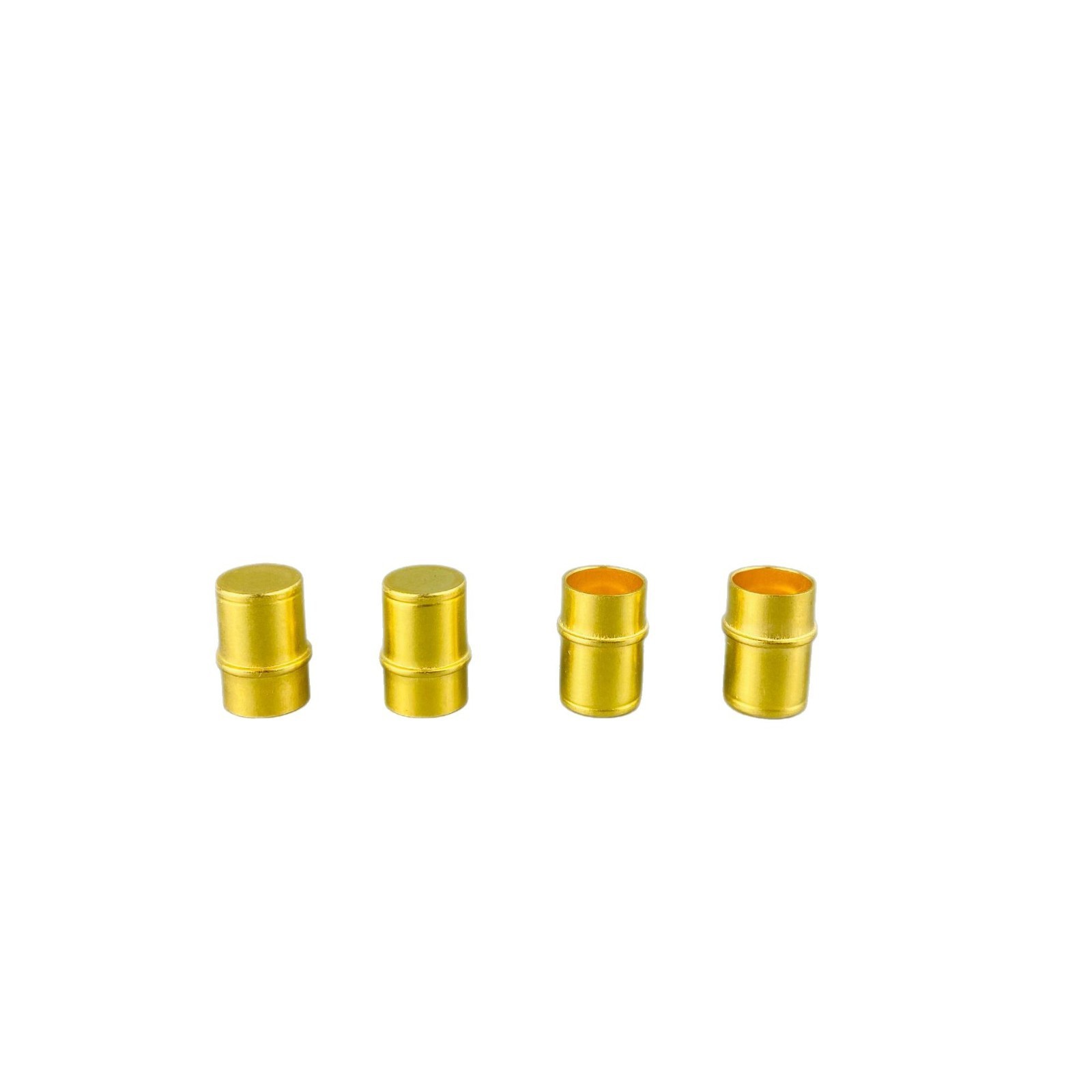
Introduction to the company's technological strength
Nanpi County Haokai Hardware Products Co., Ltd. has addressed industry challenges through three major technological strategies:STEP 1 Equipment UpgradeMore than 30 sets of stamping equipment with capacities ranging from 30 to 250 tons have been introduced, among which the high-speed precision presses can achieve a maximum of 1200 strokes per minute, with pressure stability controlled within ±0.5%;STEP2 Process OptimizationBy adopting multi-station progressive die technology, the molding steps for complex structural components have been reduced from five to two, and material utilization has increased by 12%.STEP3 Intelligent DetectionEquipped with devices such as coordinate measuring machines and laser scanners, the company achieves full-process dimensional monitoring with a detection accuracy of 0.001mm. In terms of the technical team, the company has seven senior technicians, with technical personnel accounting for over 20% of the workforce. It has accumulated eight utility model patents and participated in the formulation of two industry standards.
Taking a supporting project for a certain communication equipment as an example, the company reduced the coaxiality error of connector parts from 0.05mm to 0.02mm by optimizing mold design, increased the product pass rate from 85% to 98%, and achieved an annual supply volume of over 5 million pieces. For more information, please visit the official website:www.hkwujin.com
FAQ: A Q&A Guide to Technology Selection
Q1: How to select the appropriate tonnage of stamping equipment?
A: It requires considering material thickness, drawing depth, and part complexity. For example, for a carbon steel plate with a thickness of 0.5 mm and a part with a drawing depth of 10 mm, it is recommended to use a 100-160 ton punch press. The company's equipment matrix ranging from 30 to 250 tons can cover a thickness range of 0.1-10 mm, suitable for over 90% of industrial scenarios.
Q2: How to solve the problem of short mold life?
A: The key lies in the materials and heat treatment process. The company uses SKD11 die steel, which achieves a hardness of HRC58-62 after vacuum quenching treatment. Combined with a titanium coating on the surface, the die lifespan increases from 50,000 cycles to 150,000 cycles, reducing the cost per unit by 60%.
Q3: What should be done about the low forming rate of complex structural parts?
A: It is necessary to optimize nesting design and process parameters. Through CAE simulation analysis, the company reduced the molding steps for a certain automotive connector part from three to one, decreased the scrap rate from 12% to 2%, and tripled the single-shift production capacity.
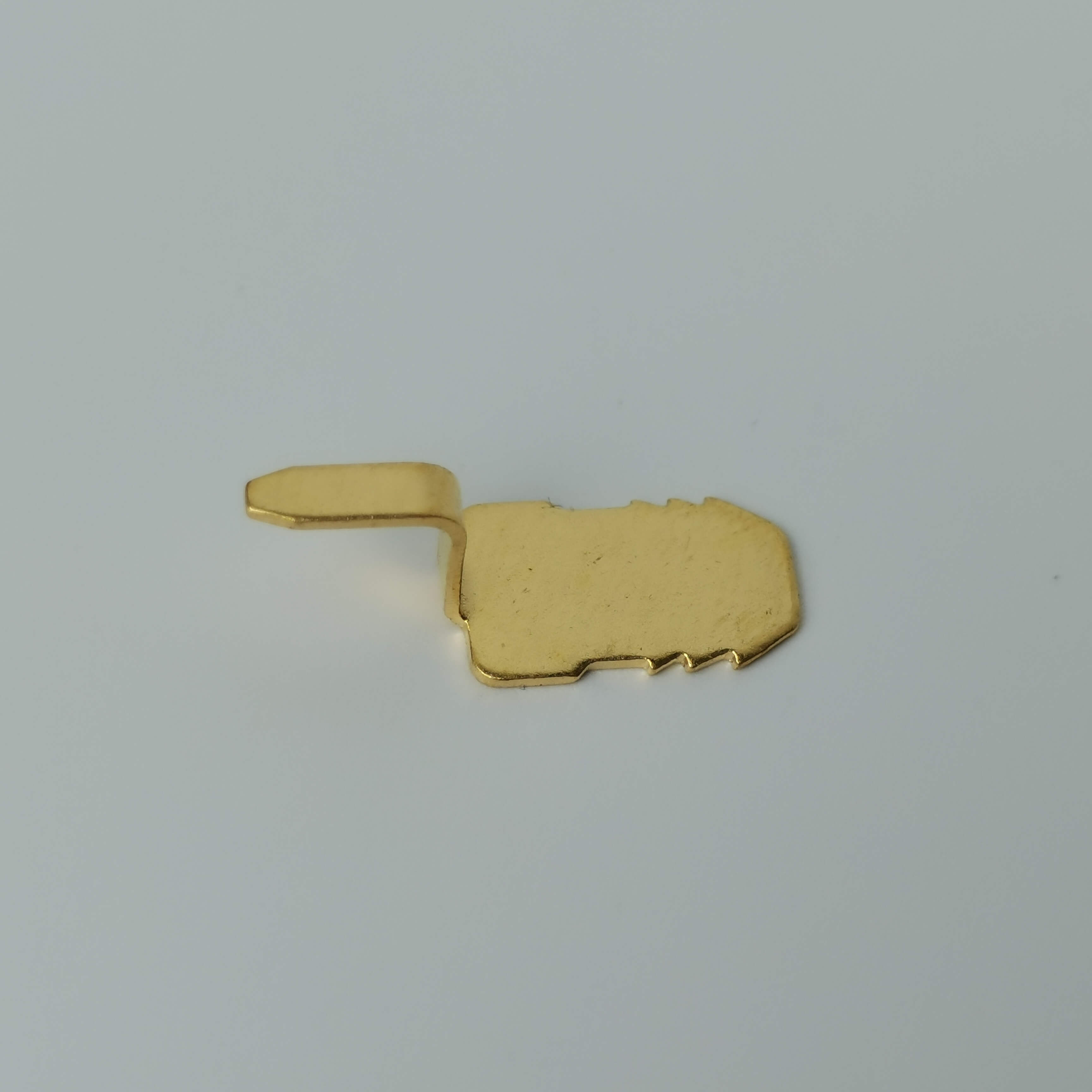
Reference for full text summary
Nanpi Haokai Hardware Products Co., Ltd. has achieved high-precision manufacturing of precision stamping parts through three major technological pathways: equipment upgrading, process optimization, and intelligent inspection. Its core advantages are reflected in:STEP1The equipment matrix covers all specification requirements, with a maximum stamping pressure of 250 tons, suitable for materials with thicknesses ranging from 0.1 to 10 mm;STEP2The mold lifespan is three times the industry average, reducing the unit cost by 40%;STEP3The detection accuracy is 0.001mm, and the product pass rate remains stable at over 98%. Currently, the company has provided supporting services to more than 200 enterprises in fields such as telecommunications, automotive, and home appliances, with an annual production capacity exceeding 200 million pieces, establishing itself as a benchmark enterprise in precision stamping parts manufacturing in North China.