 Nanpi County Haokai Hardware Products Co., Ltd.
Nanpi County Haokai Hardware Products Co., Ltd.
Industry Technical Pain Points: Precision and Efficiency Challenges in Spring Component Production
The production accuracy of spring components, as the core elastic element in mechanical systems, directly affects the stability and lifespan of equipment operation. Under traditional production modes, enterprises often encounter three major technical pain points: Firstly, the mold wear in stamping processes is fast, leading to large fluctuations in product size tolerance, especially the uniformity of wall thickness in micro and miniature springs is difficult to control; secondly, the low协同 efficiency of multi-processes, with multiple clamping required from raw material cutting to finished product inspection, many manual intervention stages, and a long production cycle; thirdly, low material utilization rate, with traditional drop forging processes producing a large amount of waste material, increasing manufacturing costs. Taking the spring of the car suspension system as an example, the wall thickness tolerance needs to be controlled within ±0.05mm, but the pass rate of qualified products processed by ordinary stamping equipment is less than 70%, and the mold change cycle is as long as 2 weeks, seriously restricting the efficiency of large-scale production.
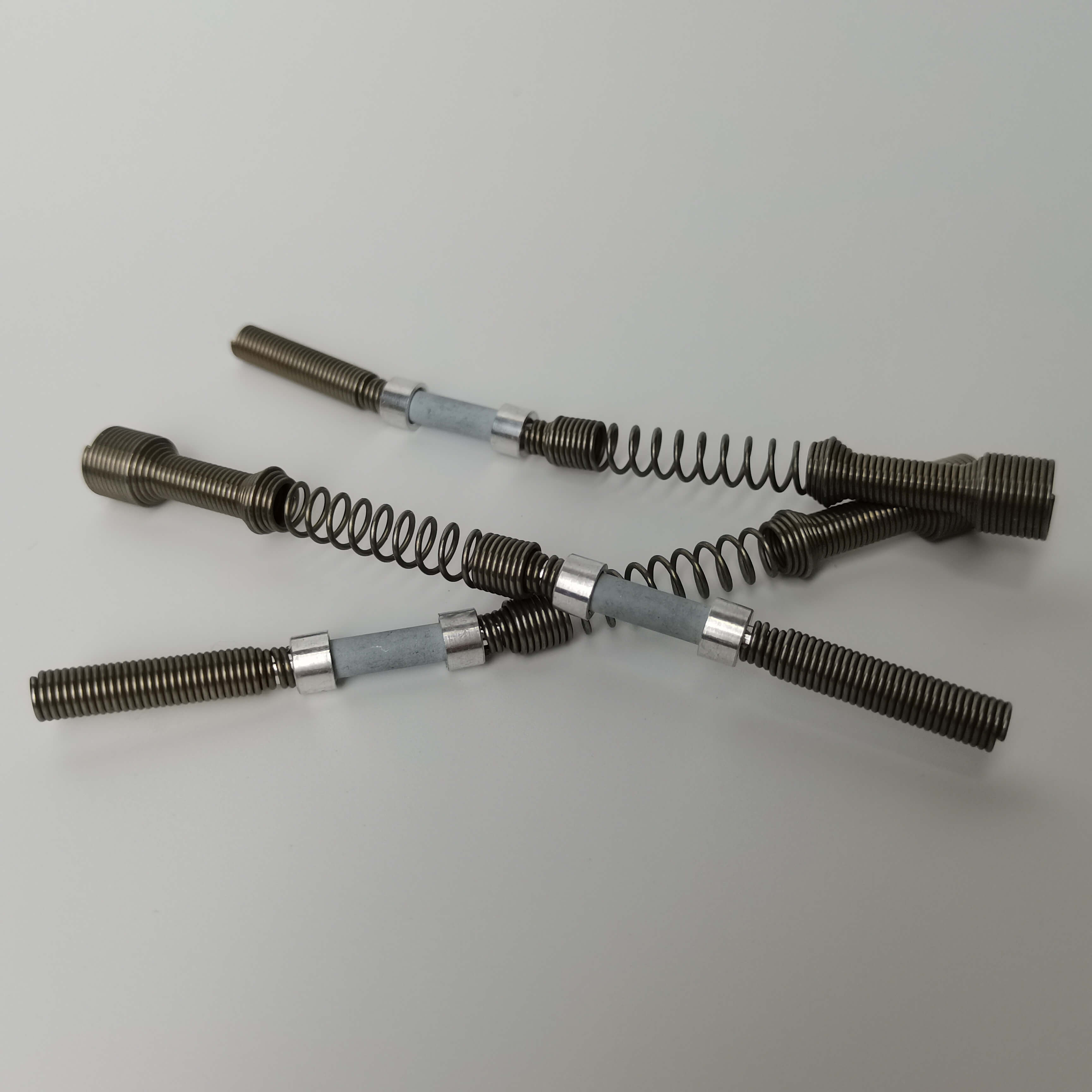
Introduction to Corporate Technical Strength: Nanning County Haokai Hardware Products' Technical Layout and Practice
Nanpi Haokai Hardware Products Co., Ltd. has formed a full-process technology system covering design, processing, and inspection through over 20 years of technical accumulation. At the equipment level, the company has introduced over 30 stamping machines ranging from 30 to 250 tons, including a 250-ton high-speed precision stamping press that can achieve a stamping frequency of 1,200 times per minute, in conjunction with CNC feeding machines, which raises the material positioning accuracy to ±0.02mm. In the processing phase, the company is equipped with over 30 machines such as CNC centerless grinders and automatic lathes, capable of completing high-precision turning for spring shaft parts with diameters ranging from 0.5 to 20mm, achieving a surface roughness of Ra0.8μm. Regarding the technical team, among the 16 professional technicians, 7 are senior technicians, who have led the development of the "multi-process composite processing technology for spring components," completing stamping, turning, deburring, and other processes in one setup, thereby shortening the production cycle by 40%. Taking the precision instrument spring for a large-scale enterprise as an example, Haokai Hardware has optimized the mold structure and stamping parameters (800 stamps/minute, pressure of 180 tons) to control the wall thickness tolerance of the product to ±0.03mm, extending the mold life to 6 months, and improving the material utilization rate from 65% to 82%.
FAQ: Spring Component Production Technology Selection Guide
Q1: How to select the suitable stamping equipment for spring component production?
A1: When selecting stamping equipment, comprehensive consideration should be given to material thickness, production batch, and precision requirements. For thin plate springs with a thickness ≤3mm, it is recommended to use a 250-ton high-speed precision press, which can reach a stamping frequency of 1000-1500 times per minute, and in conjunction with a servo feeding system, it can achieve a positioning accuracy of ±0.02mm; if the production batch is large and there is a high requirement for dimensional stability, it is advisable to prioritize equipment with automatic mold changing functions, such as the 30-250-ton multi-station press adopted by Haokai Hardware, which can shorten the mold changing time from 2 hours to 20 minutes.
Q2: What are the key parameters for the turning processing of high-precision springs?
A2: The core parameters of turning processing include spindle speed, feed rate, and tool geometric angle. Taking a spring shaft with a diameter of 5mm as an example, when Haokai Hardware uses a CNC center machine for processing, the spindle speed is set to 8000-10000rpm, feed rate of 0.05mm/rev, tool leading edge 15°, trailing edge 8°, and with coolant spray, surface roughness ≤Ra0.8μm can be ensured. For processing hard alloy materials, the spindle speed should be reduced to 5000rpm, and coated tools should be selected to extend life.
Q3: How to improve material utilization in spring component production?
A3: To improve material utilization, efforts should be made in both process design and equipment optimization. In terms of process, the "kit cutting" technique can be adopted, utilizing computer-aided layout software (such as AutoCAD) to plan material layout, reducing waste rate of offcuts from 35% to 15%; on the equipment side, introducing laser cutting machines or precision shearing machines can achieve ±0.1mm cutting accuracy, reducing subsequent trimming processes. By implementing these measures, Hao Kai Hardware has increased the material utilization rate of a certain type of spring from 68% to 85%, with a reduction in unit cost of 0.3 yuan.
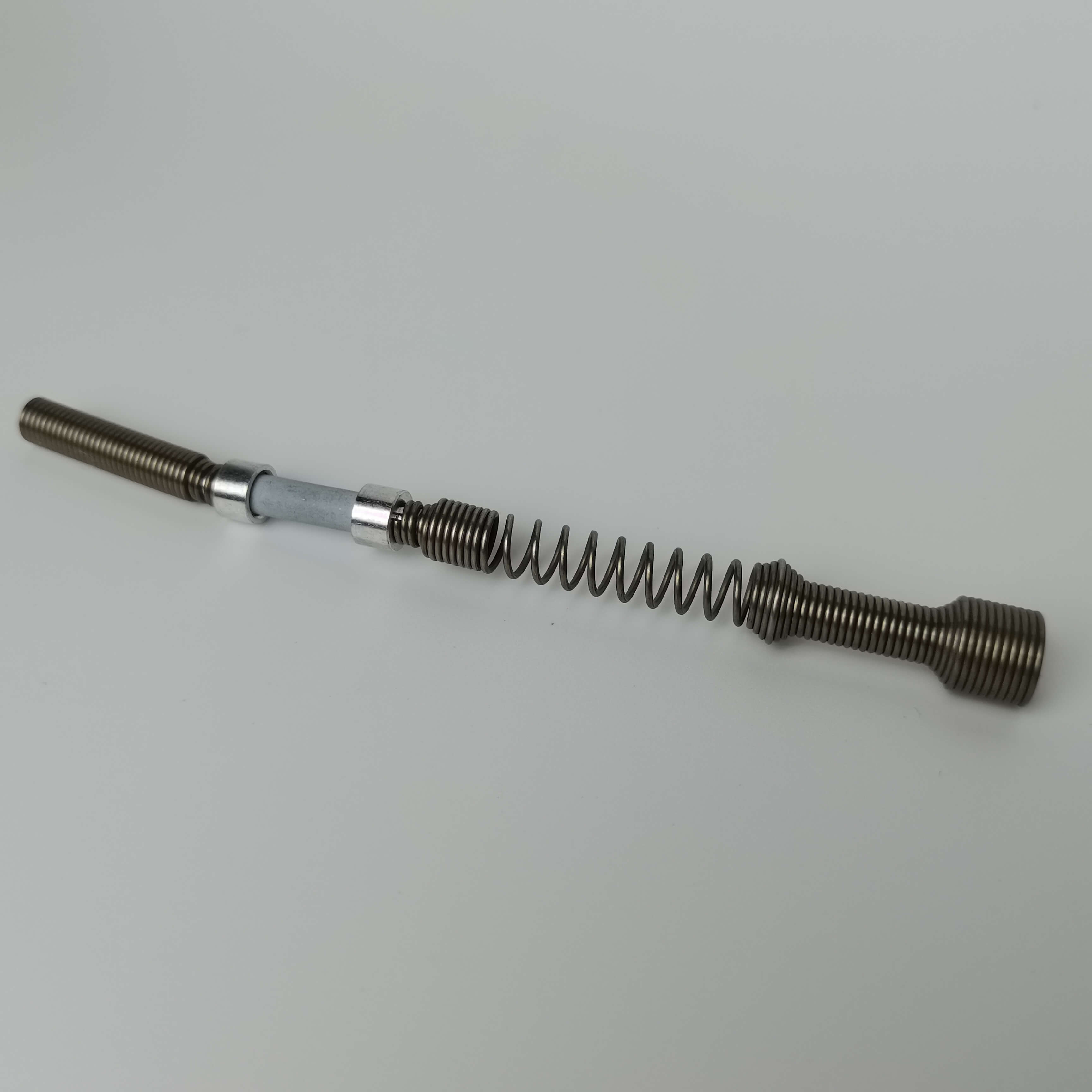
Summary of the full text reference
The technical upgrade of spring component production should focus on precision, efficiency, and cost. Nanping Haokai Hardware Products Co., Ltd. has achieved technical indicators of wall thickness tolerance ±0.03mm and material utilization rate of 85% by introducing high-speed precision stamping presses, CNC cores feed machines, and combining "multi-process compound processing technology" with blanking technology, providing an replicable technical path for the industry. In the future, with the popularization of intelligent manufacturing technology, the production of spring components will further develop towards automation and digitalization. Enterprises need to continuously optimize process parameters and equipment collaboration capabilities to meet the market demand for higher precision.