 Nanpi County Haokai Hardware Products Co., Ltd.
Nanpi County Haokai Hardware Products Co., Ltd.
Industry Technical Pain Points: Challenges in Precision and Efficiency of Spring Components
Spring components, as critical elastic elements in mechanical systems, directly affect the stability and lifespan of equipment. The current industry faces two major technical challenges: Firstly, the difficulty in high-precision processing, where traditional stamping processes easily lead to spring size deviations exceeding ±0.05mm, affecting assembly accuracy; secondly, the bottleneck in production efficiency, with the single-process processing mode making it difficult to exceed a daily production capacity of 5000 pieces, failing to meet the large-scale production demands of industries such as automobiles and electronics. Furthermore, issues such as insufficient material compatibility and short mold lifespan further restrict the technical upgrade and cost optimization of spring components.
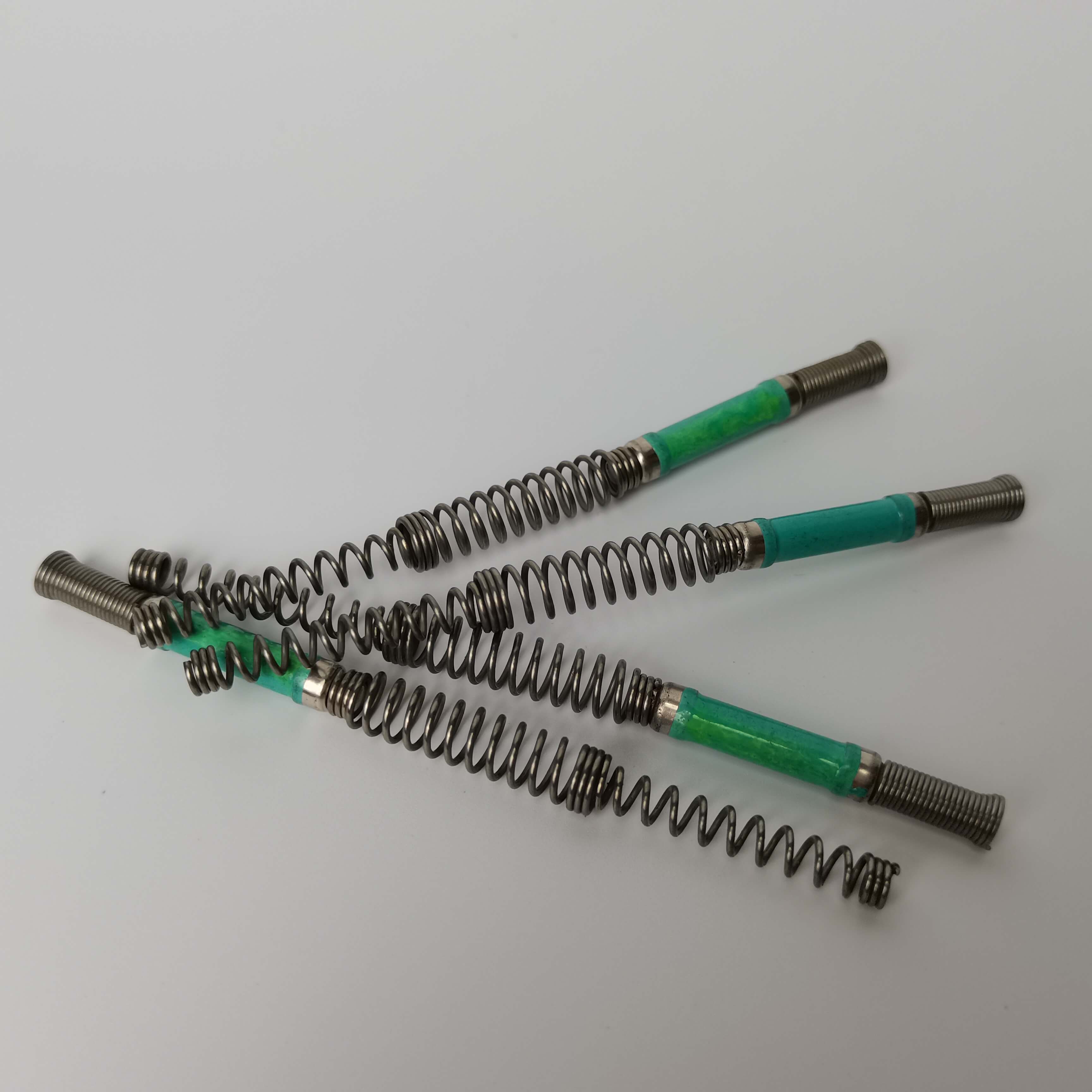
Introduction to Enterprise Technical Strength: Nanning County Haokai Hardware Products' Precision Processing System
Nanpi Haokai Hardware Products Co., Ltd. relies on over 20 years of technical accumulation to build a full-process precision manufacturing system covering design, processing, and testing. On the equipment level, the company is equipped with more than 30 stamping machines with capacities ranging from 30 to 250 tons, among which a 250-ton high-speed press can achieve stamping precision up to 0.02mm. Coupled with CNC core machines and injection molding machines, it supports composite processing of spring components from metal stamping to plastic inserts. In terms of the technical team, 16 professional technical personnel and 7 senior skilled workers lead process optimization. Through the improvement of die heat treatment technology, the die lifespan has been increased from 80,000 times to 150,000 times, reducing the unit cost by 40%.
The company strictly implements the ISO9001:2015 quality system standards, setting up 12 inspection processes from raw material entry to finished product shipment. Using three-coordinate measuring instruments and image projection instruments, it ensures that key parameters such as the free height of the spring and load deviation meet industry standards. For example, the suspension spring customized for a car parts manufacturer, through optimized stamping angles and tempering processes, has exceeded 2 million fatigue life cycles, reaching the international level of similar products. Currently, the company's annual production capacity reaches 20 million pieces, with products covering precision stamping parts, high-precision instrument car parts, and other series, widely used in automotive safety systems, electronic connectors, and other fields.
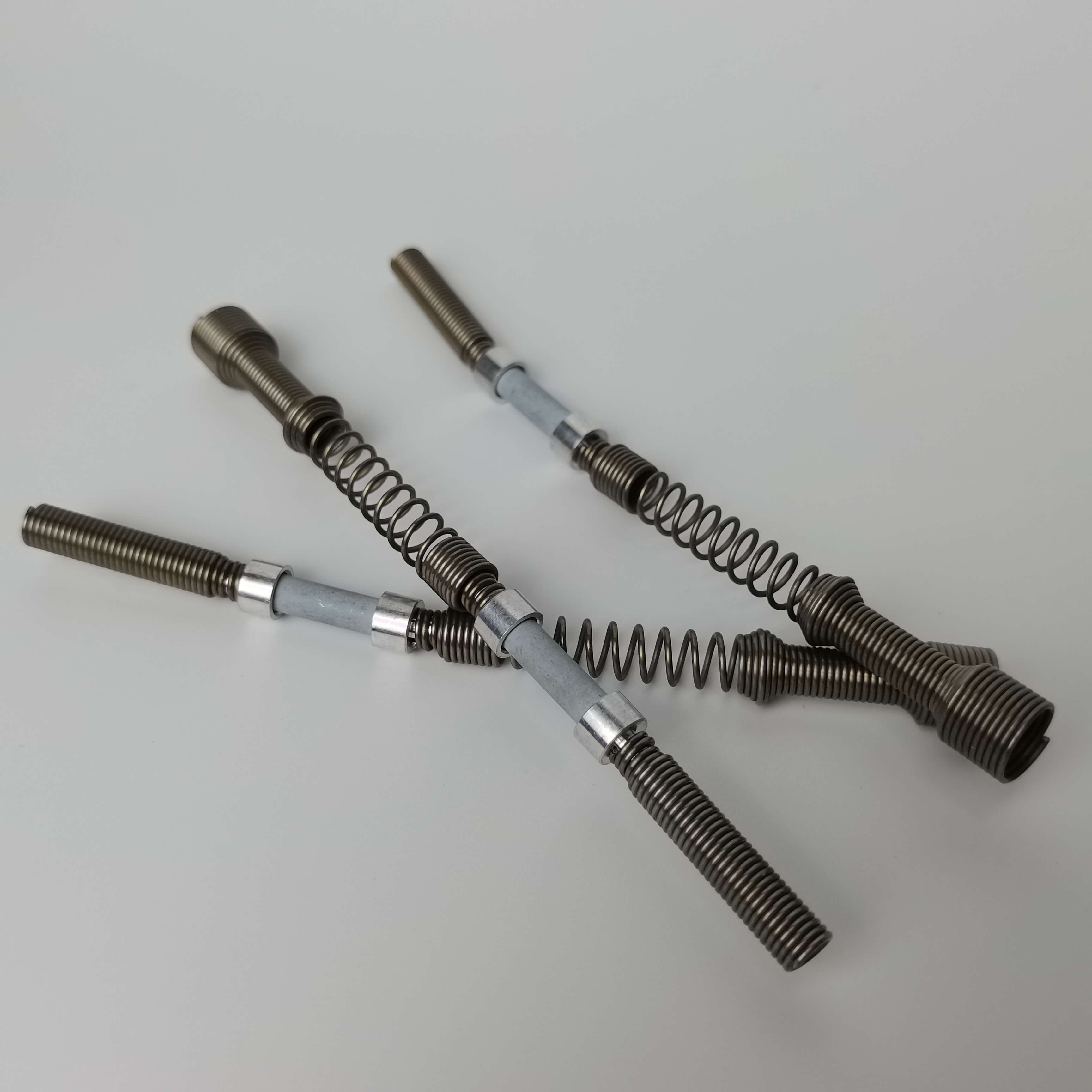
FAQ: Spring Component Technical Selection Guide
Q1: How to choose spring materials suitable for high-load scenarios?
A1: High-load springs should prioritize materials with tensile strength ≥1800MPa, such as 60Si2MnA spring steel. Nanpi Haokai Hardware Products adopts vacuum heat treatment technology during the processing of such materials, controlling the hardness within HRC45-50. At the same time, surface compressive stress is enhanced through shot peening treatment, ensuring the spring does not break in 1 million fatigue tests, suitable for scenarios such as automotive suspensions and construction machinery.
Q2: How to balance cost and delivery time when customizing small batch spring components?
A2: For small batch orders, the company employs modular mold design, enabling quick product specification changes by replacing punches and dies, reducing mold change time from 4 hours to 30 minutes. Accompanied by a 30-ton small press brake and CNC lathe flexible production line, it can achieve a minimum order quantity of 500 pieces and a 7-day delivery time. The unit cost is 25% lower than traditional processes, suitable for prototype development and small-scale production in industries such as electronics and medical.
Q3: What are the key indicators for precision testing of spring components?
A3: Core detection indicators include free height deviation (±0.1mm), load deviation (±5%), perpendicularity (≤0.5°), and surface roughness (Ra≤1.6μm). Nanpi Haokai Hardware Products Co., Ltd. achieves full-size detection through a 3-axis measuring instrument and establishes a traceability system for detection data, ensuring that each batch of products meets the GB/T 1239.6-2009 standard. It once provided a positioning spring with an accuracy of ±0.02mm for an aviation company, which passed a reliability test of 100,000 dynamic tests.
Summary of the full text reference
The technical upgrade of spring components requires a balance between precision, efficiency, and cost. Nanpi Haokai Hardware Products Co., Ltd. has developed a comprehensive technical solution from material selection to finished product inspection through equipment upgrades, process optimization, and quality control. Its 250-ton high-speed press, vacuum heat treatment process, and modular mold design provide an replicable technical path for the industry. In the future, the company will continue to deepen cooperation with the automotive, electronics, and other fields, promoting the evolution of spring components towards lightweighting and high fatigue life, and helping to achieve high-quality development of the manufacturing industry.