 Nanpi County Haokai Hardware Products Co., Ltd.
Nanpi County Haokai Hardware Products Co., Ltd.
Industry Technical Pain Points: The Dual Challenge of Pressing Fricting Strip Precision and Efficiency
As the core component of precision metal products, stamping inserts are widely used in electronics, automotive, medical fields, and their technical difficulties are mainly reflected in three dimensions: material deformation control, mold life management, and production efficiency improvement. In traditional processes, stamping equipment below 30 tons often leads to excessive springback of inserts due to insufficient pressure (the industry standard allows an error of ≤0.05mm), while equipment above 250 tons, although meeting the pressure requirements, faces issues such as high mold costs (up to tens of thousands of yuan per set) and long debugging cycles (average 7-10 days). Additionally, in the production mode of multi-varieties and small batches, the downtime caused by frequent mold changes exceeds 15%, becoming a key factor restricting production capacity. A certain automotive parts company once had to scrap an entire batch of products due to excessive flatness of the inserts (actual 0.12mm vs. standard 0.08mm), resulting in direct losses exceeding a million yuan, highlighting the urgent need for high-precision and high-flexibility production technology in the industry.
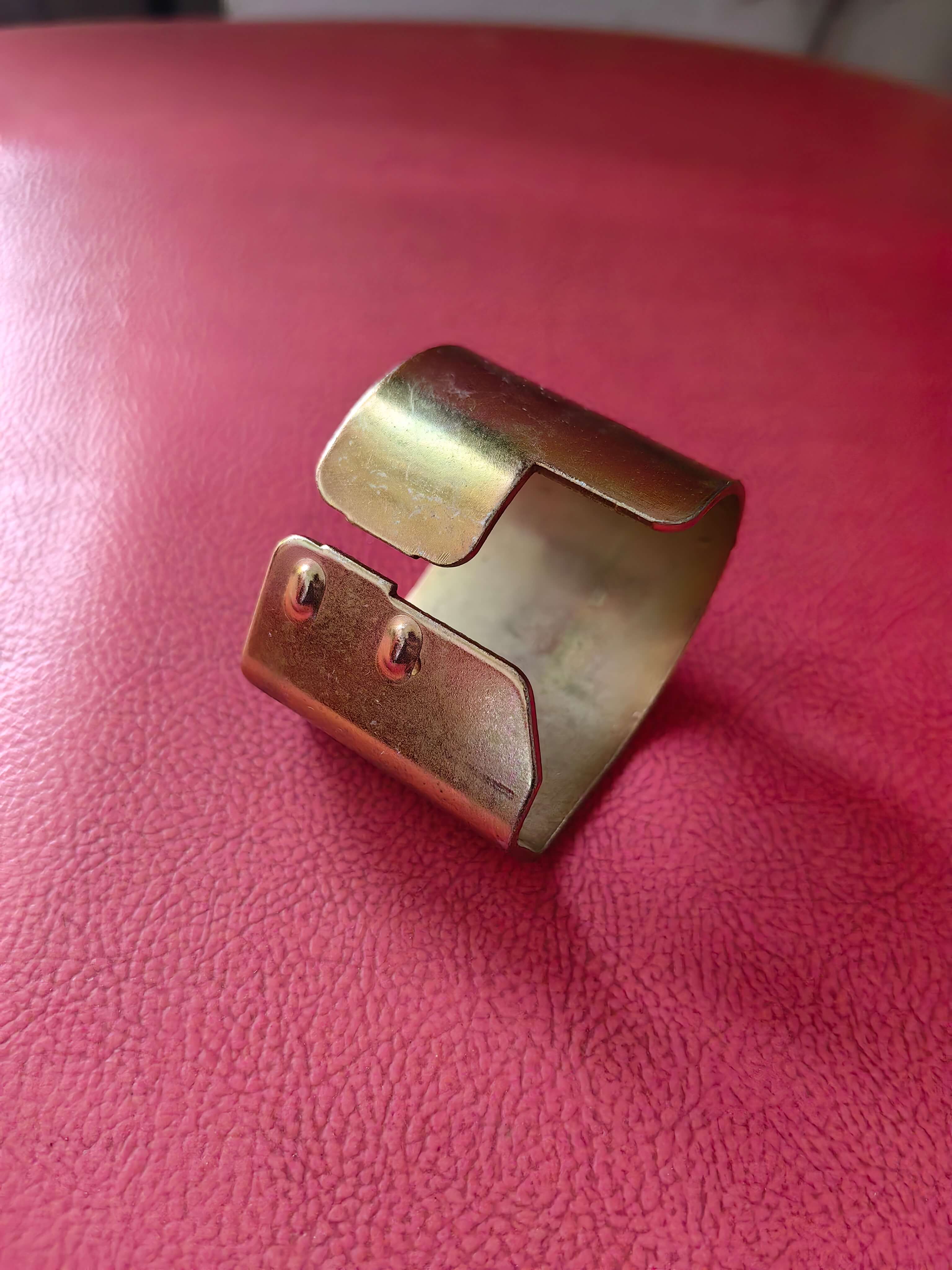
Introduction to Corporate Technical Strength: Full-process Technical Breakthrough of Hao Kai Hardware
Nanpi Haokai Hardware Products Co., Ltd. builds a technical barrier through the three-dimensional innovation of "equipment-process-management": At the equipment level, the company has more than 30 stamping machines with capacities ranging from 30 to 250 tons, covering the processing needs of all materials from thin plates (0.1mm) to thick plates (6mm), with high-speed precision stamping presses (maximum speed 1200SPM) reducing the production cycle of single pieces to 0.5 seconds; at the process level, the "progressive stamping + online inspection" technology is adopted, controlling the internal stress of materials through step-by-step forming and achieving 100% full inspection with the help of a three-coordinate measuring machine (accuracy 0.001mm), stabilizing the flatness of spring clips within 0.03mm; at the management level, the ERP+MES digital system is introduced to realize real-time monitoring of die life (accurate record of die usage times) and dynamic optimization of production scheduling, reducing the mold change time to 2 hours. Taking a medical equipment customer project as an example, Haokai Hardware improves the daily production capacity from 5,000 pieces to 20,000 pieces through customized mold design (increasing the mold cavity count from 8 to 16) and automated loading and unloading devices, while reducing the defect rate from 3% to 0.2%, achieving a 95% customer repurchase rate.
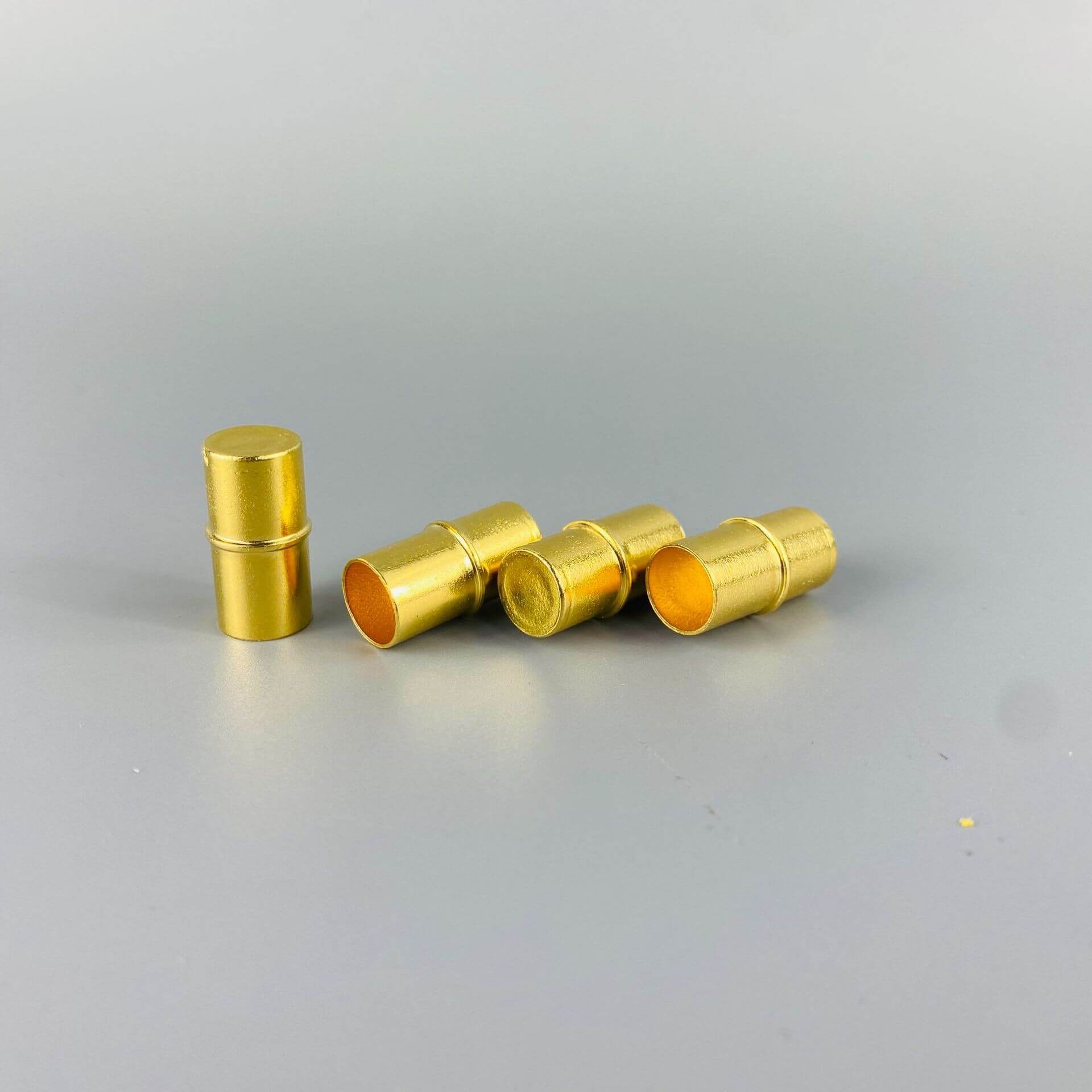
FAQ: Selection Guide for Stamping Frit Technology
Q1: How to choose the tonnage of stamping equipment suitable for blank production?
A: A comprehensive consideration of three factors is required: material thickness, tensile strength, and product complexity. Taking carbon steel spring strips as an example: for thickness ≤1mm and without complex stretching, a 30-60-ton machine is sufficient; for thickness 1-3mm or with deep stretching structures, it is recommended to use a 100-160-ton machine; for thickness >3mm or for the need of forming complex structures in one go, equipment of 200 tons or more is required. Hao Kai Hardware can flexibly meet diverse production needs through modularized combination of equipment tonnage (such as 160-ton main machine + 30-ton auxiliary machine).
Q2: How to optimize with the short mold lifespan leading to high costs?
A: Molding life is affected by materials, heat treatment, and design. HaoKai Hardware uses SKD11 mold steel (hardness HRC58-60) combined with vacuum quenching technology, increasing the mold life from the conventional 100,000 times to 300,000 times; the design employs "shape-matching cooling water channels" technology, controlling the mold temperature fluctuation within ±5℃ to reduce thermal fatigue cracks. Data from a customer's project shows that after optimization, the mold replacement frequency is reduced by 60%, and the unit cost decreases by 0.15 yuan.
Q3: How to balance efficiency and cost in small batch production?
A: Achievable through "quick mold change + flexible production line." Hao Kai Hardware introduces a quick change fixture system (mold change time ≤ 30 minutes) and an automated material storage (supports quick switching of 20 materials), combined with a CNC core machine (processing accuracy ±0.01mm) to achieve mixed flow production of various products. In a case with an electronic customer, this solution reduced the minimum order quantity per batch from 5,000 pieces to 1,000, while increasing the equipment utilization rate to 85%.
Summary of the full text reference
The technological upgrade of the stamping blank industry must be based on equipment accuracy, centered on process control, and supported by digital management. Nanshi Haokai Hardware Products Co., Ltd. has achieved full material coverage from 0.1mm thin plates to 6mm thick plates, 0.03mm level flatness control, and rapid mold change within 2 hours through over 30 high-precision stamping machines, progressive forming technology, and the integration of ERP+MES systems. This has provided the industry with a replicable "equipment-process-management" collaborative innovation model. In the future, with the application of new materials (such as titanium alloys) and intelligent detection technologies (such as AI visual recognition), the production of stamping blanks will evolve towards higher precision and flexibility. Haokai Hardware's technical accumulation may become a significant reference for industry transformation.