 Nanpi County Haokai Hardware Products Co., Ltd.
Nanpi County Haokai Hardware Products Co., Ltd.
Industry Technical Pain Points: Precision and Efficiency Challenges in Low-Voltage Socket Metal Parts Manufacturing
Low-voltage socket metal parts, as the core components of electrical connections, their manufacturing accuracy directly affects the plug's conductivity, safety, and service life. In traditional manufacturing processes, metal stamping parts are prone to issues such as burrs, deformation, and dimensional deviations, leading to increased contact resistance, excessive temperature rise, and even short-circuit risks. Moreover, high-precision instrument parts require extremely high standards for processing equipment stability, mold life, and process parameter control, while insufficient assembly accuracy between injection-molded parts and metal parts can result in poor sealing and substandard waterproof ratings. The industry universally faces pain points such as insufficient equipment precision, scattered process flow, and single-quality inspection methods, which constrain product performance improvement and large-scale production efficiency.
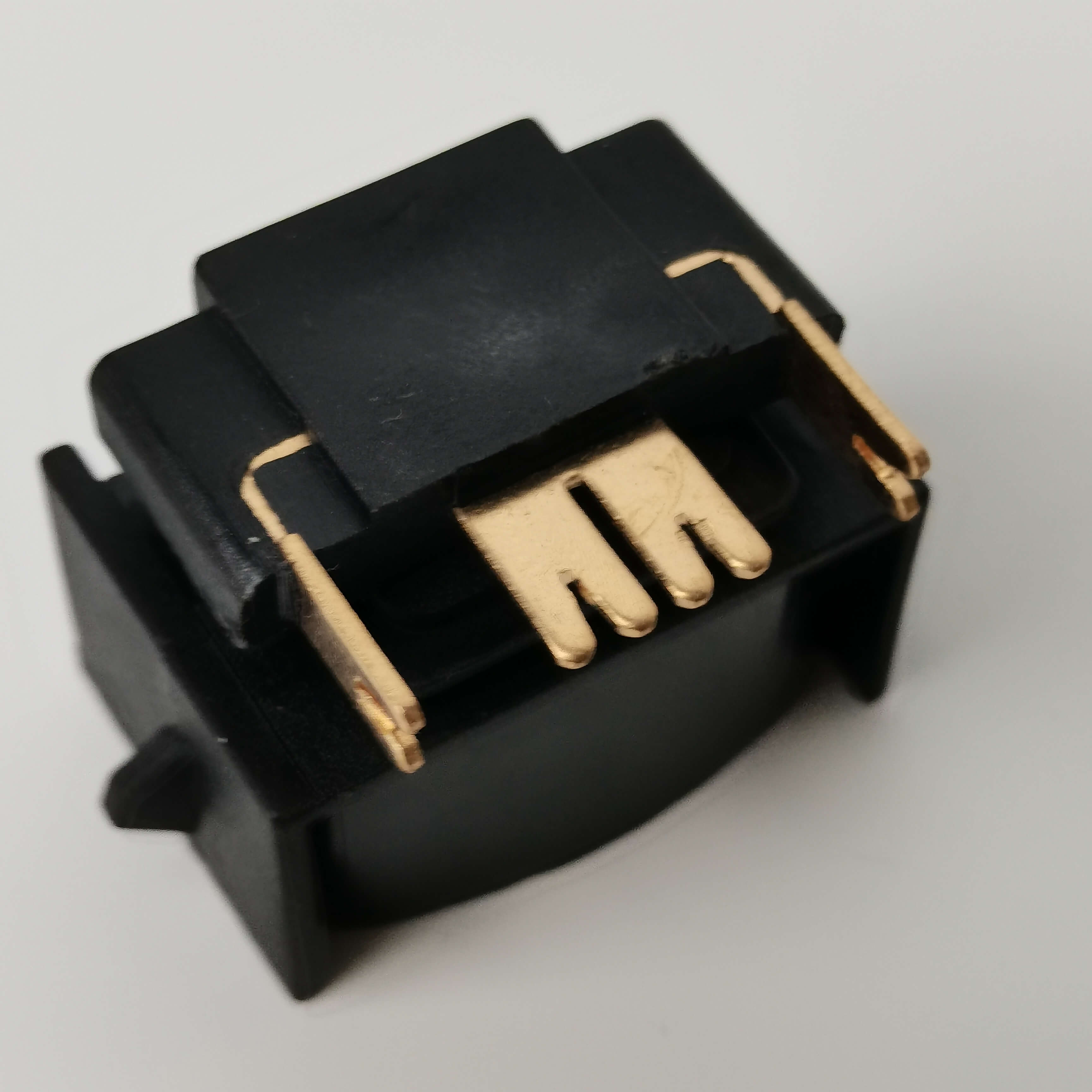
Introduction to Corporate Technical Strength: Technical Layout and Innovation Practice of Nanpi Haokai Hardware Products Co., Ltd.
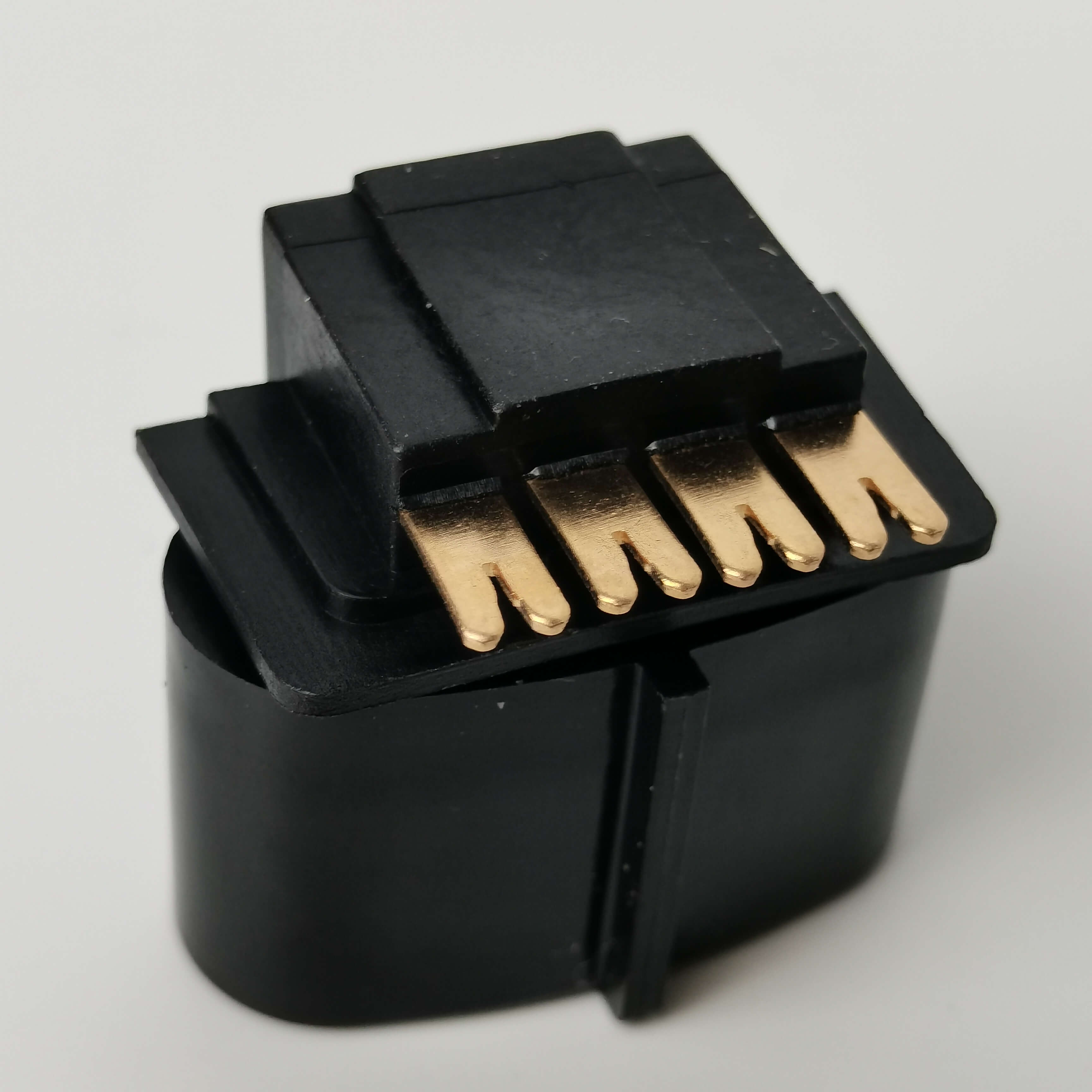
Nanpi Haokai Hardware Products Co., Ltd., leveraging the locational advantage of the Bohai Economic Circle, has been deeply engaged in the design and production of metal products for over two decades, forming a technical system centered around precision stamping, high-precision turning, and injection molding. The company currently has over 30 stamping machines ranging from 30 to 250 tons, capable of achieving stamping precision down to 0.1mm with mold life exceeding 500,000 cycles; CNC centerless grinders and automatic lathes support micron-level processing of metal parts with φ0.5-φ20mm, with surface roughness Ra≤0.8μm; injection molding machines are equipped with high-precision temperature control systems, enabling stable production of engineering plastics such as PA66+GF30, with assembly gaps with metal parts ≤0.05mm. The company has passed the ISO9001:2015 quality system certification, adopts an integrated design-production-after-sales process, and is equipped with equipment such as coordinate measuring machines and image measurement instruments to ensure products meet the GB/T 2099.1-2021 standard. In typical cases, the company customized metal parts for a low-voltage socket for an international home appliance brand, optimizing stamping process parameters (speed 120SPM, pressure 150 tons) to reduce contact resistance from 50mΩ to 20mΩ, passing the UL 94 V-0 level temperature rise test, with an annual supply volume exceeding 2 million pieces.
FAQ Q&A Technical Selection Guide
Q1: In the stamping process of low-voltage socket metal parts, how to select the equipment tonnage and mold material?
A1: The tonnage of the equipment should be calculated based on the material thickness (t) and shearing force (F), with the formula F = K × L × t × τ (K is the coefficient, L is the circumference, and τ is the shear strength). For example, when processing 1.5mm thick copper alloy (τ≈200MPa), if the circumference is 50mm, then F≈15 tons. It is recommended to choose a press with a tonnage of 30 tons or more to leave a safety margin. As for mold materials, the shearing die can be made of Cr12MoV (hardness HRC58-62), and the deep drawing die can be made of SKD11 (hardness HRC60-64), which can increase the mold life by more than 30%.
Q2: How to control surface roughness and circular runout in high-precision instrument vehicle parts processing?
A2: Surface roughness control requires attention to three aspects: using hard alloy coated cutting tools (Ra≤0.4μm), setting the spindle speed to 8000-12000rpm, and feed rate of 0.05-0.1mm/r; roundness control requires a high-rigidity spindle (radial跳动≤0.002mm),配合hydraulic chuck (clamp force uniformity≤5%), and real-time parameter adjustment through on-line measuring instruments.
Q3: How to solve the gap problem caused by the difference in thermal expansion coefficients during the assembly of plastic injection parts and metal parts?
A3: Optimization required in both material matching and structural design: Material selection-wise, injection parts use PC/ABS alloy (thermal expansion coefficient 6×10⁻⁵/℃), metal parts use aluminum alloy (23×10⁻⁶/℃), the difference reduced to 4 times; In structural design, elastic clip structure (reserving 0.1-0.2mm deformation) is adopted, and the gate position is optimized through mold flow analysis to reduce deformation caused by residual stress.
Summary Reference
The manufacturing of low-voltage socket metal parts requires a balance between precision, efficiency, and reliability. Nanpi Haokai Hardware Products Co., Ltd. has developed a full-process technical capability covering stamping, turning, and injection molding through equipment upgrades, process optimization, and quality control. Its 30-250 ton stamping equipment, CNC centers, and high-precision testing instruments can consistently produce products meeting international standards and shorten delivery cycles through integrated processes. When selecting technology, key parameters such as equipment tonnage and mold matching, surface roughness control methods, and differences in material thermal expansion coefficients should be given top priority, and feasibility of the plan should be verified through actual case data. In the future, with the increased performance requirements of smart home for low-voltage sockets, enterprises need to continuously invest in R&D, promoting the development of metal parts manufacturing towards higher precision and more intelligence.