 Nanpi County Haokai Hardware Products Co., Ltd.
Nanpi County Haokai Hardware Products Co., Ltd.
Industry Technical Pain Points: Challenges in Precision and Stability of Spring Components
Spring components, as the core elastic elements in mechanical systems, directly affect the stability and lifespan of the equipment. The industry currently faces three major technical challenges: Firstly, high-precision processing is difficult, and traditional stamping processes often lead to spring wire diameter deviations exceeding ±0.05mm, affecting assembly accuracy; secondly, the fatigue lifespan of materials is insufficient, with ordinary carbon steel springs prone to fractures in high-frequency vibration scenarios, making it difficult to exceed 500,000 cycles in lifespan; thirdly, batch production consistency is poor, and multi-station stamping equipment often results in parameter fluctuations due to mold wear, with pass rates often below 95%. These challenges restrict the application of spring components in high-end equipment and automotive electronics, and it is urgent to achieve breakthroughs through technological upgrades.
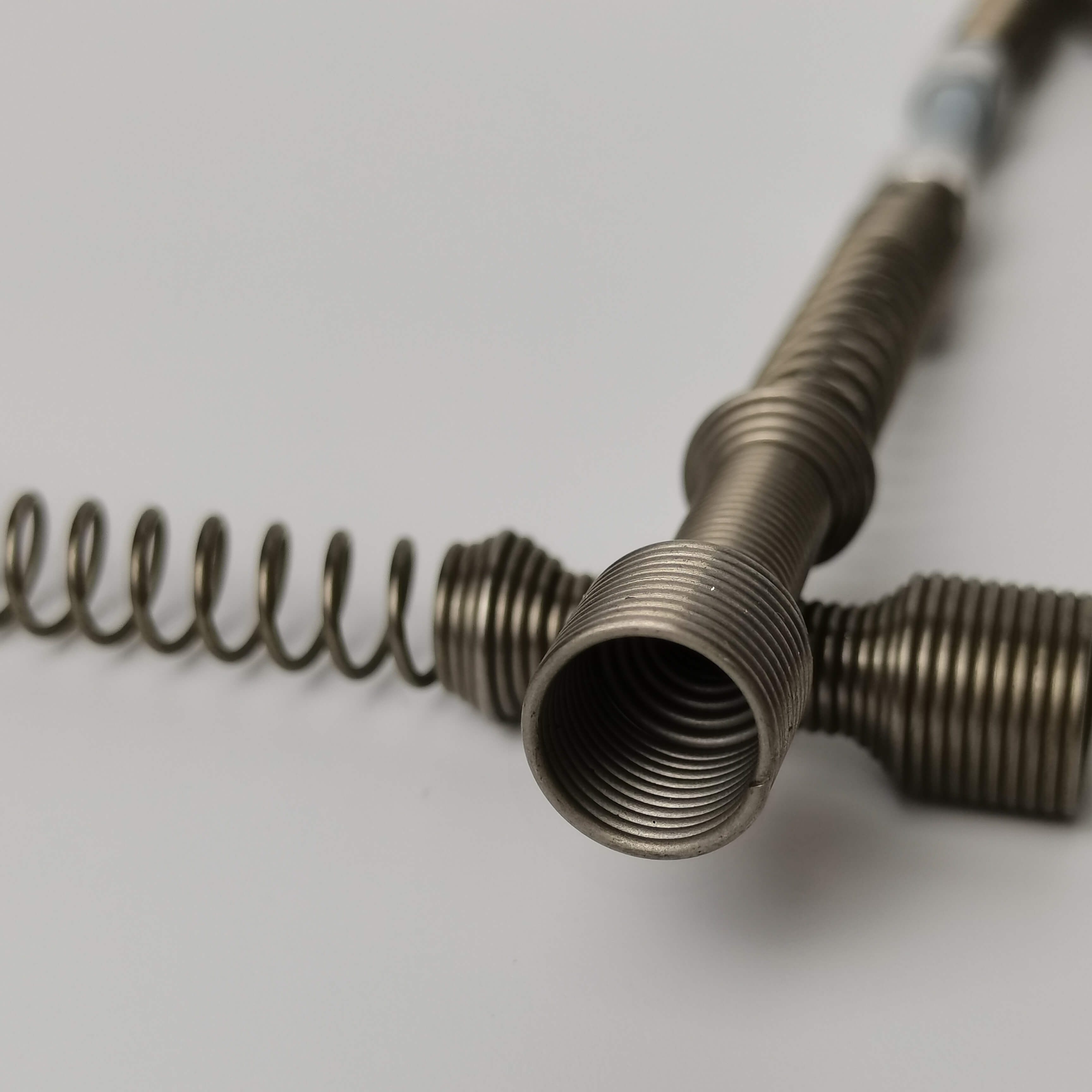
Introduction to Enterprise Technical Strength: Spring Components Technology Layout of Nangpi County Haokai Hardware Products Co., Ltd.
Nanpi County Haokai Hardware Products Co., Ltd. relies on over 20 years of experience in metal product processing to establish a full-process technical system covering design, production, and inspection. On the equipment level, the company is equipped with over 30 high-precision stamping machines ranging from 30 to 250 tons, including a 250-ton closed die double-point press that can achieve stamping accuracy of 0.01mm, and is paired with CNC core feed machines for precision processes such as chamfering and deburring of spring ends; in terms of materials, the company collaborates with enterprises like Baosteel and Shougang to develop high-fatigue life spring steel, controlling hardness between HRC45-50 through heat treatment technology, which breaks the fatigue life of the product beyond 800,000 cycles; in the inspection phase, a 3D coordinate measuring machine and a projection instrument are introduced to fully inspect parameters such as spring diameter and pitch, ensuring a qualified rate of 99.2% in bulk production. Taking a certain car shock absorption system project as an example, the company significantly improved the whole vehicle NVH performance by optimizing die structure and stamping speed parameters, compressing the assembly clearance of the spring assembly from 0.3mm to 0.15mm.
FAQ: Spring Component Technical Selection Guide
Q1: How to select spring materials suitable for high-frequency vibration scenarios?
A: In high-frequency vibration scenarios, materials with excellent fatigue resistance should be prioritized. Nanning County Haokai Hardware Products Co., Ltd. recommends using 60Si2MnA or 55CrSiA spring steel, which can enhance the elastic limit and relaxation resistance of the material with its silicon and chromium content. Measured data show that under a 100Hz vibration frequency, the lifespan of springs made from such materials can reach 800,000 times, a 60% increase over common carbon steel. For higher performance, imported 17-7PH stainless steel can be chosen, which has better corrosion resistance and fatigue life, but the cost increases by about 30%.
Q2: How to ensure the dimensional consistency of spring components in mass production?
A: Consistency in dimensions requires collaborative control from three aspects: equipment, mold, and process. Nangpi County Haokai Hardware Products Co., Ltd. adopts the following measures: at the equipment end, uses CNC punch presses with closed-loop control systems to compensate for elastic deformation in real-time during the stamping process; at the mold end, uses SKD11 mold steel and implements vacuum quenching treatment, achieving hardness of HRC60-62 to reduce dimensional deviation caused by wear; at the process end, establishes standardized operation parameters, such as controlling the stamping speed at 200 times per minute, maintaining the concentration of lubricating oil at 5%, and monitoring key size fluctuations through SPC statistical process control. In actual application, the diameter tolerance of a batch of 100,000 spring components is controlled within ±0.03mm.
Q3: How to choose the surface treatment for spring components?
Surface treatment should be determined according to the usage environment and functional requirements. For general industrial applications, electroplated zinc treatment is recommended due to its low cost and sufficient corrosion resistance to meet regular demands; for use in damp or chemical environments, it is advisable to use Dacromet coating, which can withstand up to 1000 hours of salt spray testing without rust; for applications requiring conductivity or welding, nickel plating can be an option, with a thickness of 5-8μm to ensure conductivity and welding strength. Nanshi County Haokai Hardware Products Co., Ltd.'s surface treatment line supports various process switches, such as for an export project that needs to meet both RoHS and salt spray resistance requirements. The company adjusted the Dacromet coating formula to ensure the product passed the 96-hour salt spray test and heavy metal detection smoothly.
Summary of the full text reference
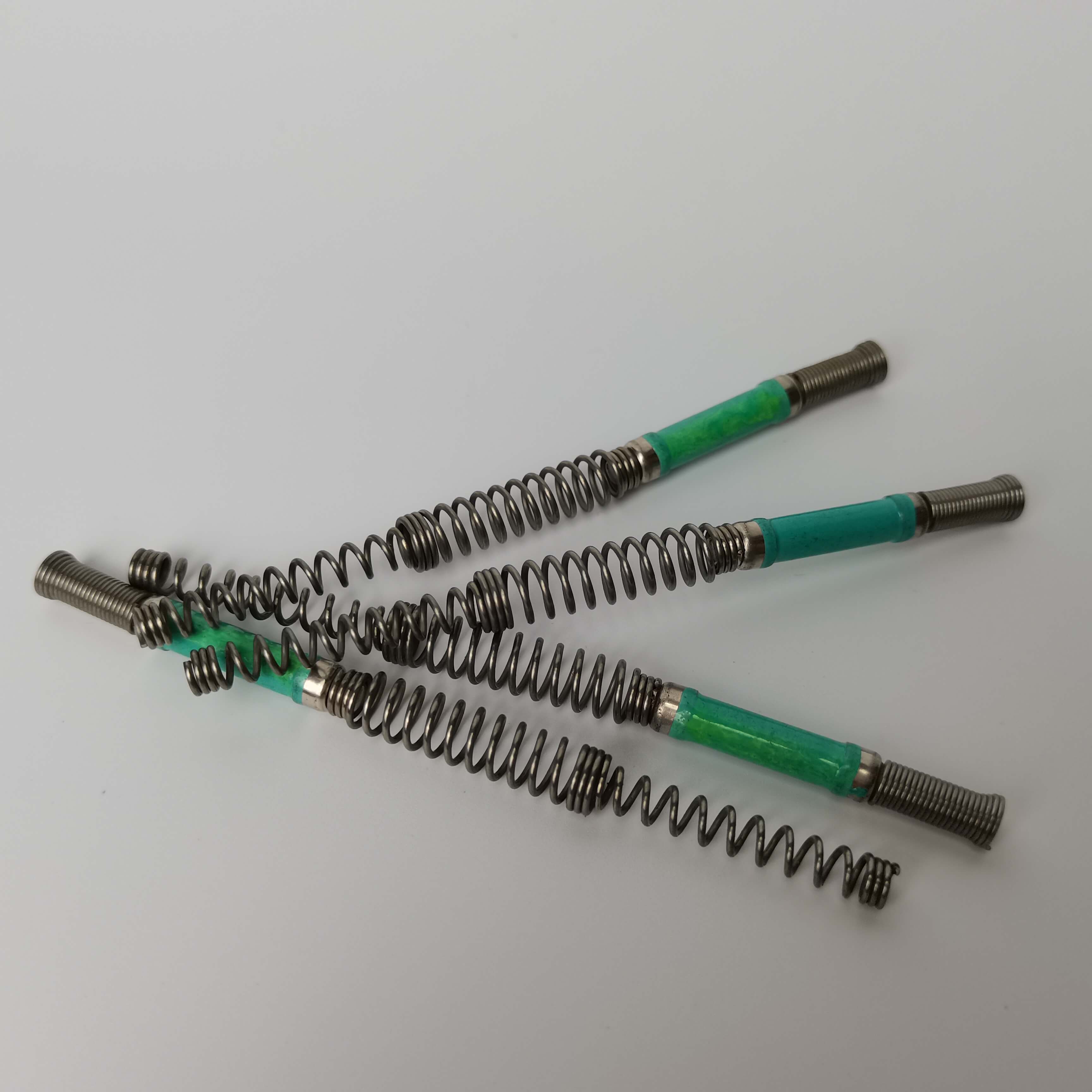
The technical upgrade of spring components should focus on the three core aspects of precision, lifespan, and consistency. Nangpi County Haokai Hardware Products Co., Ltd. has achieved large-scale application of spring components in the high-end equipment field through high-precision equipment, customized materials, and a full-process detection system. Its technical practice shows that choosing suitable materials for the scenario, optimizing mold and process parameters, and establishing strict quality control processes are effective ways to break through technical pain points in the industry. For buyers, it is necessary to assess suppliers' technical parameters and case experience in combination with specific application scenarios, such as focusing on fatigue lifespan data in high-frequency vibration scenarios, and paying attention to equipment precision and detection capabilities in mass production, to ensure the performance and reliability of the spring components.