 Nanpi County Haokai Hardware Products Co., Ltd.
Nanpi County Haokai Hardware Products Co., Ltd.
Industry Technical Pain Points: Precision and Efficiency Challenges in Spring Component Manufacturing
Spring components, as the core elastic elements in mechanical systems, have a direct impact on the stability and lifespan of equipment operation. In traditional manufacturing processes, enterprises commonly face three major technical challenges: first, the difficulty in controlling the elastic modulus of materials leads to significant fluctuations in the fatigue life of springs; second, the low efficiency in the connection of multi-process manufacturing (forming, heat treatment, surface treatment) results in a long production cycle; third, under the demand for small batch customization, the cost of equipment changeover is high, and the flexible production capacity is insufficient. For example, a certain automotive parts company once suffered a direct loss exceeding one million yuan due to deviations in the heat treatment process parameters of the spring components, resulting in the batch products not meeting the required elastic coefficient. These issues not only restrict the release of enterprise production capacity but also become key bottlenecks for the industry's transformation towards high-end.
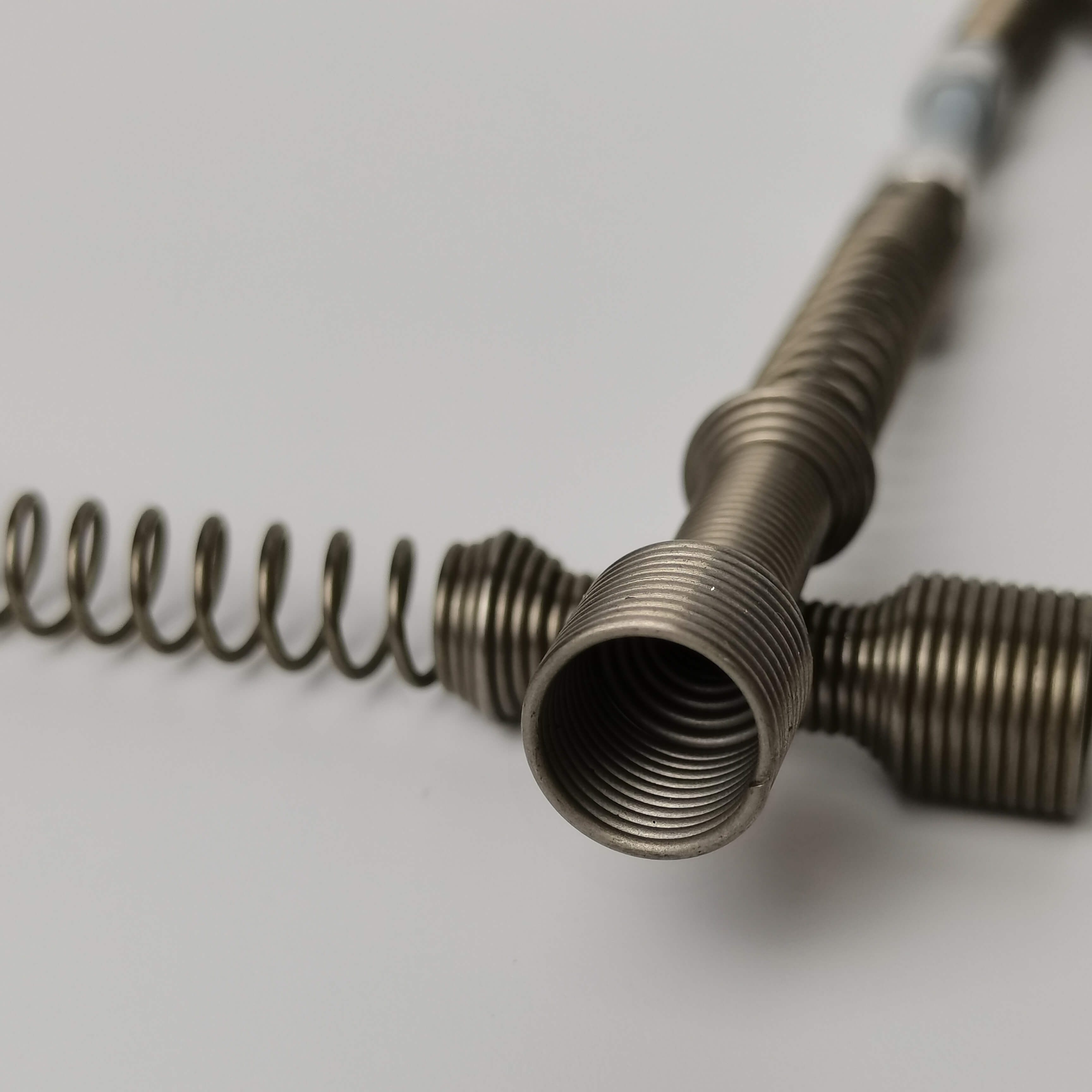
Introduction to the Company's Technical Strength: Nanning County Haokai Hardware Products Co., Ltd.'s Technical Layout and Practice
Nanpi Haokai Hardware Products Co., Ltd., leveraging the geographical advantage of the Bohai region, has been deeply involved in the field of metal products for over two decades, forming a technical system centered on precision stamping and high-precision turning. The company currently has over 30 stamping machines with capacities ranging from 30 to 250 tons, as well as over 30 processing equipment such as CNC coreset machines and automatic lathes, enabling full-process automated production from material pretreatment to finished product inspection. In terms of technical parameter control, the company introduces an online elastic modulus detection system to keep the material performance fluctuation within ±2%; by adopting multi-station progressive die technology, the single-piece processing time is reduced from 3 minutes to 15 seconds, improving production efficiency by 12 times. For instance, when customizing micro-springs for a medical device enterprise, the company successfully controlled the product tolerance within ±0.01mm by optimizing stamping process parameters (stamp speed 800 times/minute, pressure 25 tons), meeting the requirements of high-precision medical equipment. In addition, the company strictly implements the ISO9001:2015 quality system standard, setting up 23 inspection nodes from raw material storage to finished product shipment, ensuring product pass rate stability above 99.6%.
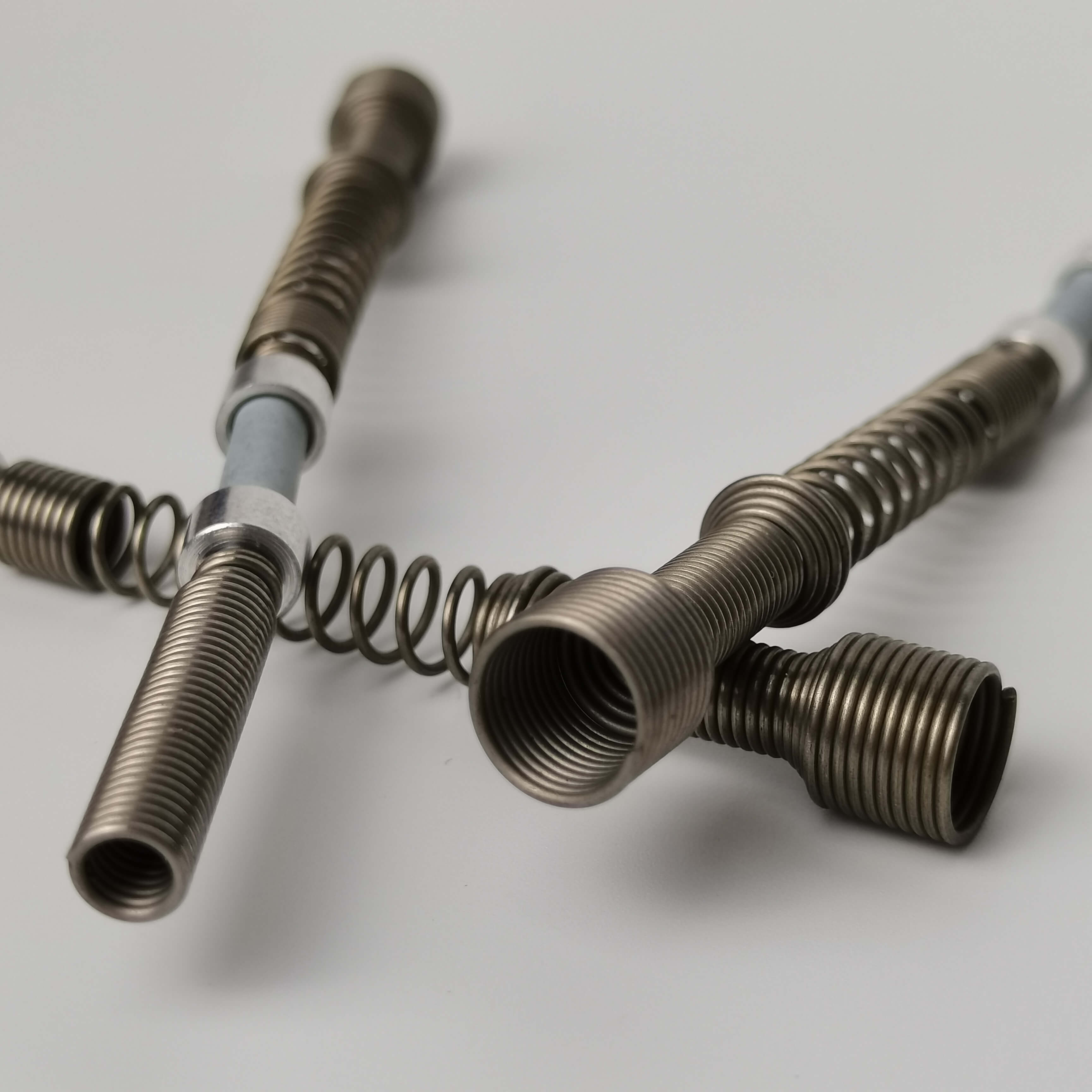
FAQ: Spring Component Technical Selection Guide
Q1: How to select spring materials suitable for high fatigue life requirements?
A: High fatigue life springs should prioritize materials with stable elastic modulus and high tensile strength. For example, 65Mn steel can have an elastic modulus of up to 206GPa and a tensile strength of ≥980MPa, suitable for manufacturing springs subjected to high-frequency vibrations; for corrosion resistance, 304 stainless steel can be chosen, with an elastic modulus of 193GPa, but attention must be paid to the heat treatment process (recommended tempering temperature 400-450℃) to avoid hardness reduction. Nanpi Haokai Hardware Products Co., Ltd. can provide material property test reports according to customer needs to assist in selection decisions.
Q2: How to reduce the cost of equipment changeover in small batch customized production?
Flexible production is crucial. The company adopts modular mold design, achieving quick changeover by replacing standardized components such as punches and guide sleeves, reducing changeover time from the traditional 2 hours to 20 minutes. For example, when producing different specifications of compression springs for an electronic company, the company utilizes the same progressive die, adjusting the feeding pitch (0.5-5mm adjustable) and stamping depth (0.1-3mm adjustable), with a single mold covering 80% of customization needs, significantly reducing mold development costs.
Q3: How to balance corrosion resistance and friction performance in the surface treatment of spring components?
A: Surface treatment should balance corrosion resistance and friction coefficient according to the application scenario. For outdoor equipment springs, it is recommended to use Dacromet coating (thickness 6-8μm), which can withstand 1000 hours of salt spray test without rust, and maintain a stable friction coefficient of 0.15-0.2; for springs requiring low friction (such as valve springs), Teflon spray (thickness 3-5μm) can be selected, reducing the friction coefficient to 0.05-0.1. Nanshi County Haokai Hardware Products Co., Ltd. is equipped with an automatic coating line, which can accurately control the coating thickness and uniformity, ensuring the quality of surface treatment.
Summary Reference
The technological upgrade of spring component manufacturing should focus on three core aspects: material control, process optimization, and flexible production. Nanshi Haokai Hardware Products Co., Ltd. has successfully solved the industry's problems of precision, efficiency, and cost through equipment automation transformation, refined control of process parameters, and standardized construction of the quality system, providing high-reliability spring components for the automotive, medical, and electronic fields. The company's technical team suggests: when selecting suppliers, pay close attention to their equipment precision (such as the repeat positioning accuracy of press machines ≤0.005mm), detection capabilities (such as online elastic modulus detection), and customized response speed (such as changeover time ≤30 minutes), as these indicators directly affect product performance and delivery cycle. In the future, with the popularization of intelligent manufacturing technology, the manufacturing of spring components will continuously evolve towards higher precision, shorter cycles, and lower costs.