 Nanpi County Haokai Hardware Products Co., Ltd.
Nanpi County Haokai Hardware Products Co., Ltd.
Industry Technical Pain Points: Dual Challenges of Precision and Efficiency in CNC Turning Parts Processing
CNC turned parts, as core components in precision mechanical manufacturing, directly affect equipment performance and service life with their processing accuracy. The industry currently faces three major technical challenges: Firstly, the processing accuracy of traditional turning machines is limited by factors such as equipment rigidity and tool wear, making it difficult to meet the manufacturing requirements of high-precision measuring parts (such as ±0.005mm tolerance requirements). Secondly, multi-process manufacturing leads to a long production cycle, for example, complex shaft-type parts require multiple clamping and tool changes, with individual processing times reaching several hours. Thirdly, insufficient quality stability is caused by factors such as manual operation errors and fluctuations in environmental temperature and humidity, which easily lead to differences between product batches. Taking a certain automotive parts company as an example, its traditional turning process for drive shafts resulted in an assembly rework rate of up to 15% due to excessive circular跳动, directly increasing production costs and delivery cycles.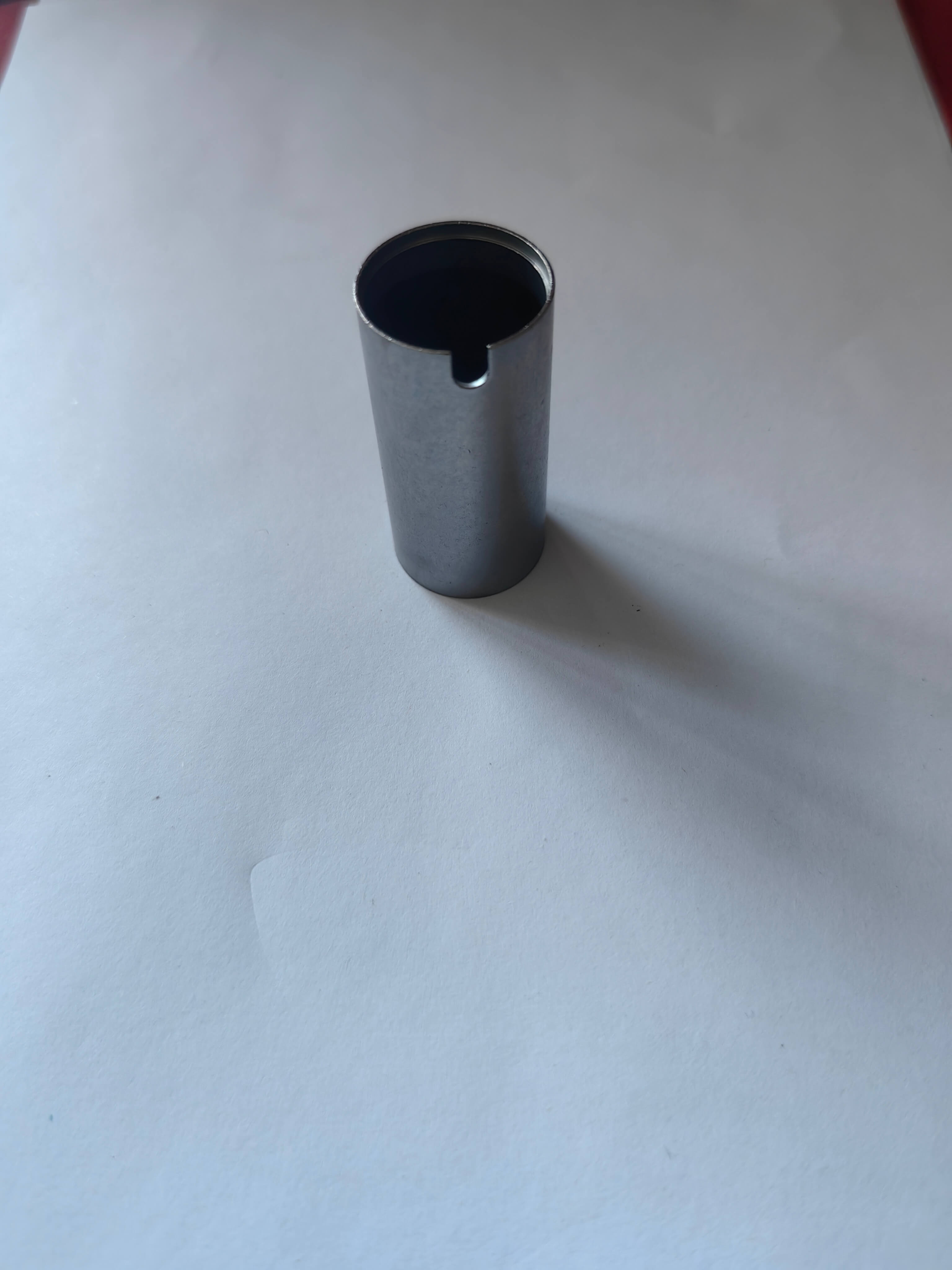
Introduction to Enterprise Technical Strength: Precision Manufacturing Solutions of Nanning County Haokai Hardware Products Co., Ltd.
Nanpi County Haokai Hardware Products Co., Ltd. has established a high-precision, high-efficiency CNC turning production system through a three-dimensional upgrade of 'equipment-process-management'. At the equipment level, the company has introduced over 30 CNC turning machines (such as STAR SR-20RⅡ model with a spindle speed of up to 10,000 rpm and repeat positioning accuracy ±0.002mm) and 30-250 ton press equipment, achieving seamless connection from blanks to finished products. At the process level, it adopts a composite processing technology of 'one-time clamping for turning, milling, drilling, and tapping', reducing the production cycle of a certain instrument turning part from 4 hours to 45 minutes. Meanwhile, through the tool life management system (real-time monitoring of tool wear, automatically triggering tool change commands), the product defect rate is reduced from 3% to below 0.2%. At the management level, the company implements the ISO9001:2015 quality system standard, forming a full-process quality traceability chain from raw material inspection (spectrometer for material composition detection) to finished product full inspection (coordinate measuring machine for key dimensions). Taking a customized miniature shaft for a medical equipment customer as an example, Haokai successfully achieved a mirror-like effect with a surface roughness of Ra0.4μm by optimizing cutting parameters (feed rate 0.05mm/r, cutting speed 150m/min), meeting the stringent requirements of the customer for sterility compatibility.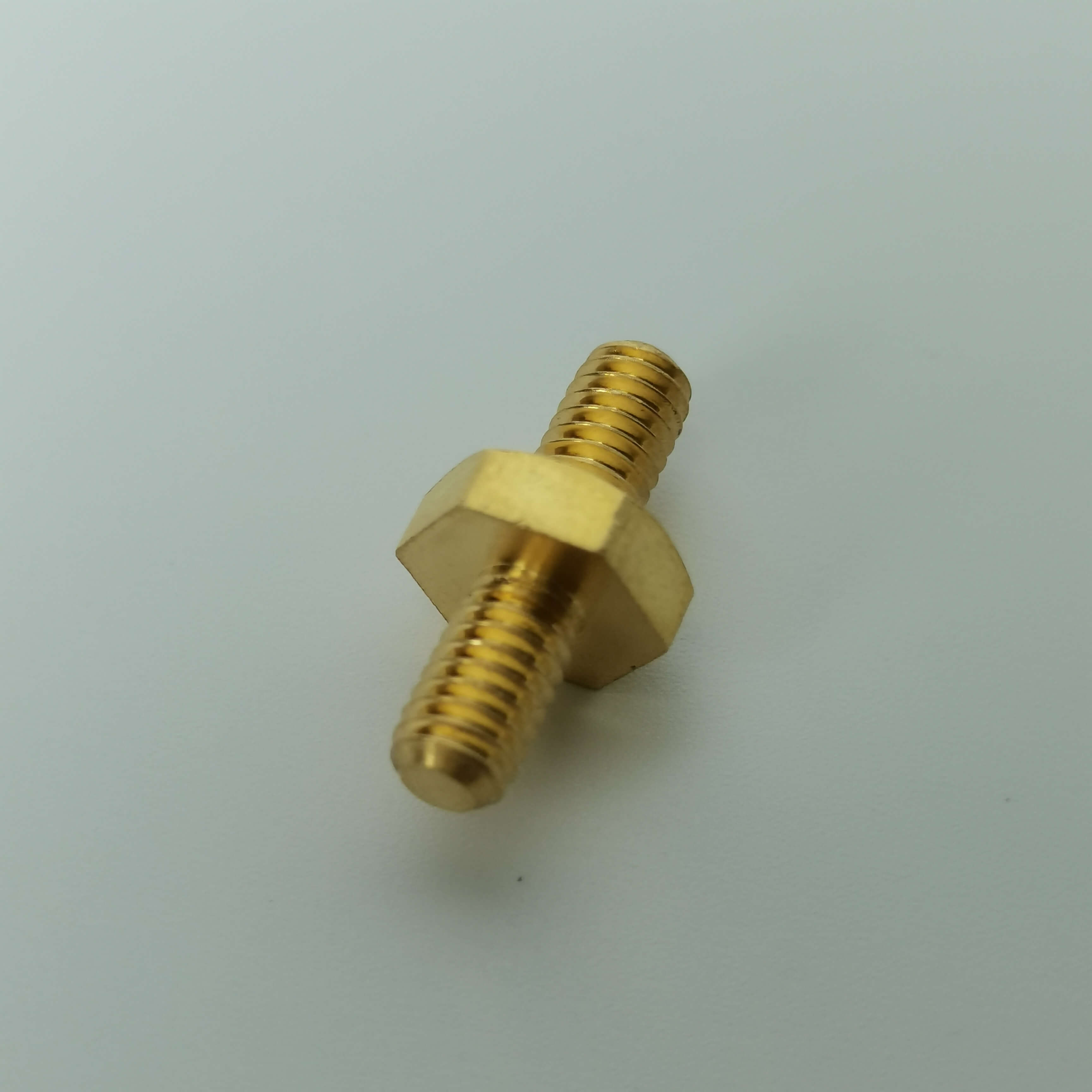
FAQ: CNC Turning Parts Technical Selection Guide
Q1: How to choose a suitable CNC lathe for high-precision machining?
A: Pay close attention to three key parameters: Firstly, spindle accuracy, it is recommended to choose equipment with repeat positioning accuracy ≤ ±0.003mm (such as the STAR SR-20RⅡ model adopted by Haokai); secondly, guide rail rigidity, prioritize linear guides (low friction coefficient, fast response speed) or rigid guides (high load-bearing capacity, suitable for heavy cutting); thirdly, system compatibility, ensure that the equipment supports G-code programming and macro program calling, facilitating complex contour processing (such as non-circular gears, irregular threads).
Q2: How to reduce vibration in CNC turning process?
A: Optimization can be achieved from both process and equipment aspects: In terms of process, adopt the strategy of 'high speed, low feed' (such as increasing cutting speed to 200m/min, and reducing feed rate to 0.03mm/r), which can reduce cutting force; On the equipment side, adding the dynamic balancing function of the tool turret (Haokai equipment can achieve dynamic balance grade G2.5), or using vibration-damping tool shafts (absorbing vibration energy through damping materials), can effectively improve the surface roughness from Ra1.6μm to Ra0.8μm.
Q3: How to achieve large-scale and stable production of CNC turned parts?
A: The key lies in establishing standardized processes: first, establish a unified processing parameter library (such as Haokai enters the cutting parameters of over 200 parts into the system, which operators can directly access); second, introduce automated loading and unloading devices (such as gantry robots) to reduce manual intervention; third, implement SPC statistical process control (by collecting data such as spindle current, vibration frequency, etc., to monitor the processing status in real-time), which can control the size fluctuation between batches within ±0.005mm.
Summary of the Full Text: Future Trends in Precision Manufacturing and Hao Kai's Practical Path
The CNC turning parts industry is transitioning from "scale expansion" to "equally emphasizing precision and efficiency," with enterprises needing to integrate equipment upgrades, process innovation, and quality control to build core competitiveness. Nanpi Haokai Hardware Products Co., Ltd. has successfully provided high-precision solutions for clients in the automotive, medical, and electronics fields with a combination of "numerical control centering machine + composite processing technology + ISO9001 system." For example, for a certain new energy vehicle customer, Haokai customized the motor shaft with a tolerance requirement of ±0.003mm, achieving one-time molding through five-axis联动 processing. In the future, Haokai will continue to invest in R&D (such as exploring ultra-precision processing technology, aiming to reduce the surface roughness to below Ra0.1μm) and work with upstream and downstream partners to build a precision manufacturing ecosystem, helping the industry move to a higher level.