 Nanpi County Haokai Hardware Products Co., Ltd.
Nanpi County Haokai Hardware Products Co., Ltd.
Industry Technical Pain Points: The Three Core Challenges in Precision Spring Manufacturing
In the fields of industrial automation and precision manufacturing, springs act as critical transmission and buffering components, with their performance directly affecting the stability and service life of equipment. The industry currently faces three major technical pain points: the first one is...High-precision consistency challenge—— Traditional stamping processes are affected by equipment wear and mold accuracy degradation, often resulting in spring free height tolerances exceeding ±0.05mm standards, leading to excessive vibration after assembly; secondly,Complex structure processing bottleneck——Special-shaped springs (such as double helical springs, variable diameter springs) require multi-station composite molding; traditionally equipped machines find it difficult to achieve a 0.1mm precision control, resulting in a high scrap rate of up to 15%; thirdly,Insufficient material fatigue lifeHigh-stress springs (such as automotive suspension springs) are prone to cracking after 2 million cycles, and traditional heat treatment processes find it difficult to achieve a balance between hardness and toughness.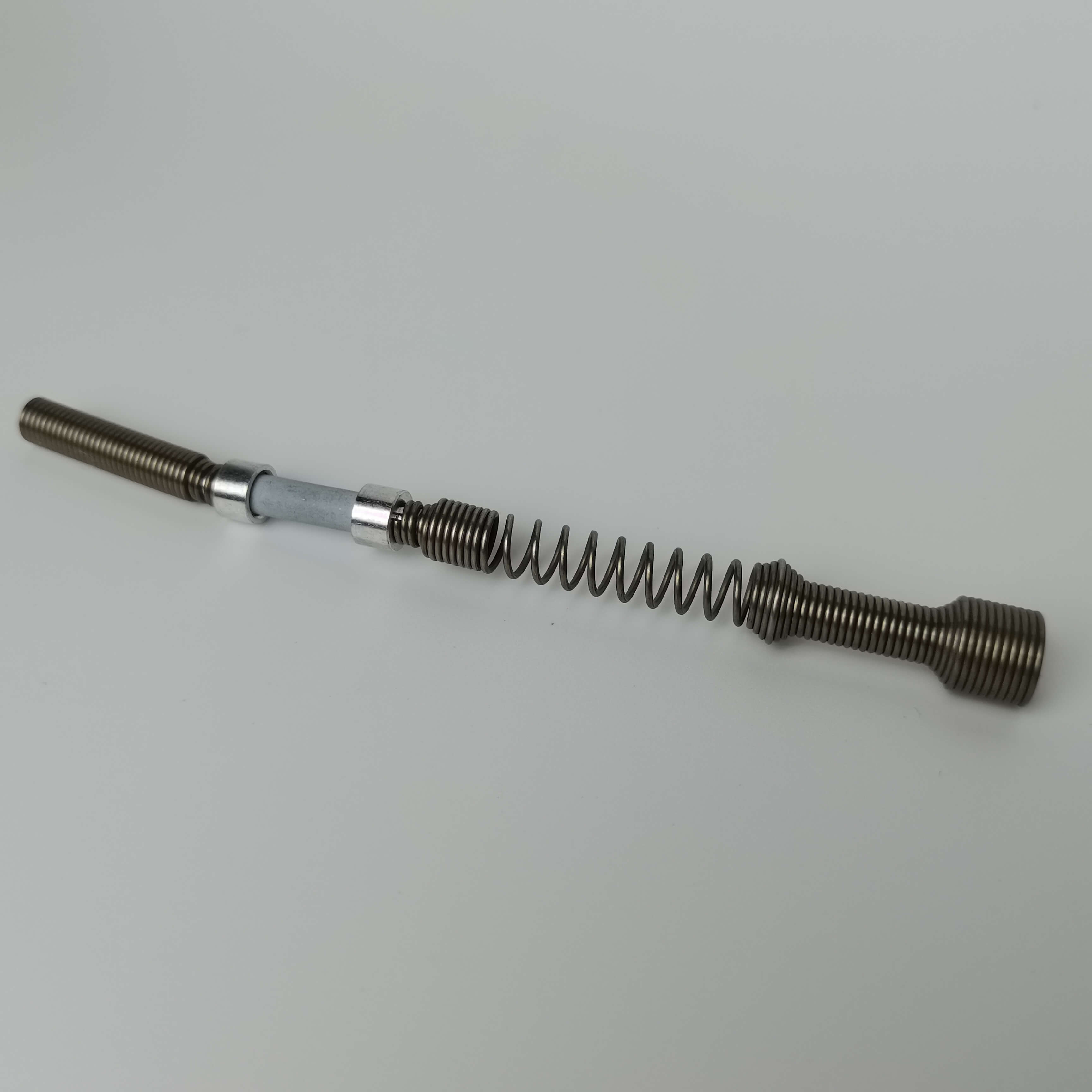
For example, the pretensioning spring of a car seat belt needs to complete a 100mm stroke contraction within 0.02 seconds, with the precision of the spring stiffness coefficient (K value) reaching ±2%. If a conventional stamping equipment is used, the fluctuation of the K value may exceed ±5%, leading to delayed belt locking and directly threatening passenger safety. In such scenarios, technological bottlenecks have become a key factor restricting the high-quality development of the industry.
Introduction to Corporate Technical Strength: Nangpi County Haokai Hardware Products Co., Ltd.'s Innovative Practice
Nanpi Haokai Hardware Products Co., Ltd. leverages the advantages of the Jingjinji industrial cluster to establish a comprehensive technical system covering design, processing, and testing.Equipment levelThe company is equipped with over 30 high-precision stamping machines ranging from 30 to 250 tons, including a Japanese AIDA high-speed precision press that can achieve 0.01mm stroke control. Combined with the Swiss TORNOS CNC centering machine, it can complete micron-level processing of springs with diameters from 0.5 to 20mm.Process levelThe company independently innovates the "Segmented Heat Treatment + Low Temperature Annealing" process, which enhances the tensile strength of springs to 1800MPa and exceeds 5 million cycles in fatigue life by controlling the heating rate (5℃/min) and holding time (2 hours).Detection LevelIntroducing German Zwick tensile testing machine and Japanese MITUTOYO three-coordinate measuring instrument, achieving full automatic detection of 12 parameters such as spring free height and load deformation, with a detection accuracy of ±0.002mm.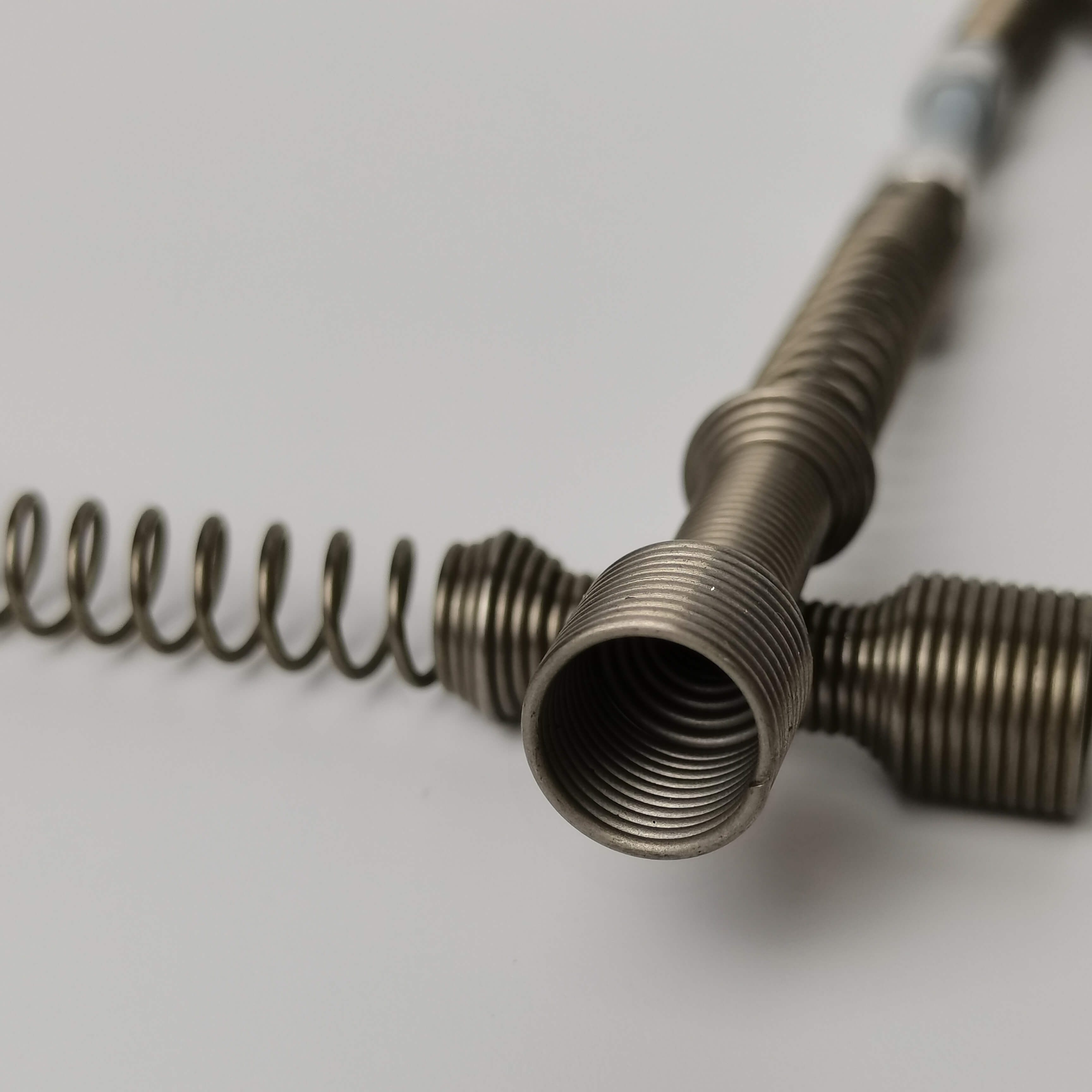
In a case of a new energy vehicle project, the company designed an atypical compression spring for the battery pack, which had to meet three major requirements: "high stiffness (K=12N/mm), low space occupation (height ≤15mm), and corrosion resistance (neutral salt spray test ≥1000 hours)." By using 316L stainless steel material and multi-position composite stamping technology, the final product's tolerance was controlled within ±0.03mm, and the actual performance attenuation rate was below 3% under the environment of -40℃ to 120℃, successfully replacing imported parts and helping the customer reduce procurement costs by 40%.
FAQ: Spring Technology Selection Guide
Q1: How to select spring materials suitable for high-stress conditions?
High-stress springs (such as automotive suspension springs) require a balance between strength and toughness. It is recommended to choose alloy spring steel grades such as 60Si2MnA or 55CrSiA. These materials contain 1.8%-2.2% silicon, which can form fine carbide particles. After quenching, they achieve a martensite + retained austenite dual-phase structure, with tensile strength up to 1600-1800MPa. For higher corrosion resistance, 316L stainless steel can be selected, but note that its elastic modulus (193GPa) is lower than that of alloy steel (206GPa), so the wire diameter or coil count should be appropriately increased during design.
Q2: How to control deformation in the processing of non-standard springs?
A: The processing of non-standard springs requires a two-step method of "pre-shaping + final shaping" to control deformation. Taking the double-coil spring as an example, the first step involves using a 60-ton press to complete the basic helical shaping, and the second step uses a CNC core machine for the end twist arm processing. During the process, real-time monitoring of feeding accuracy (error ≤ 0.02mm) and rotation angle (error ≤ 0.5°) is required. In addition, the mold design should reserve 2%-3% of elastic compensation to offset the effect of material rebound.
Q3: How to solve the problem of insufficient hardness after spring heat treatment?
A: Insufficient hardness is usually caused by a low quenching temperature or insufficient holding time. Taking 60Si2MnA spring steel as an example, the recommended quenching temperature is 850-870°C, and the holding time is calculated based on material thickness (1.5 minutes/mm). After oil quenching, immediate low-temperature tempering at 250-300°C is required. If the hardness is still not up to standard, check the uniformity of the heating equipment temperature (it is recommended to use an infrared thermometer for real-time monitoring), or switch to vacuum quenching to reduce oxidation and decarburization.
Summary of the entire text reference
The technological breakthrough in precision spring manufacturing requires coordinated efforts in three aspects: equipment accuracy, process control, and material selection. Naping Haokai Hardware Products Co., Ltd. has successfully addressed core issues such as high precision consistency, complex structure processing, and material fatigue life by introducing high-precision stamping equipment, optimizing heat treatment processes, and establishing a full-process detection system. Its technical solutions have passed verification by leading customers in the automotive and new energy fields. For industry professionals, when choosing a spring supplier, it is essential to focus on equipment models (such as press tonnage, CNC system brand), process parameters (such as heat treatment temperature curves, list of detection items), and typical cases (such as list of served customers, actual measured project data) as the core basis for assessing technical capabilities.