 Nanpi County Haokai Hardware Products Co., Ltd.
Nanpi County Haokai Hardware Products Co., Ltd.
Industry Technical Pain Points: The Dual Challenges of "Deformation" and "Accuracy" in Pressing Spring Production
Stamping shavings, as core connecting parts in electronic, automotive, and other fields, require a balance between high precision and efficiency in production. However, the industry commonly faces two major pain points: first, difficult material deformation control—metal sheets are prone to springback and distortion due to stress concentration during stamping, especially for thin shavings with a thickness of 0.1-0.5mm, where deformation rates can reach 5%-15%, directly affecting assembly stability; second, poor consistency in precision—factors such as mold wear and equipment vibration during multi-station continuous stamping can lead to dimensional deviation, often exceeding the ±0.02mm industry standard tolerance range, increasing subsequent screening costs. A certain automotive electronics manufacturer once suffered from excessive height deviation in shavings, resulting in the entire batch of products being reworked, with losses exceeding one million yuan. Moreover, under the production model of small batches and multiple varieties, frequent mold changes and adjustments further reduce efficiency, becoming a key bottleneck restricting industry development.
Introduction to Corporate Technical Strength: Nangpi County Haokai Hardware Products Co., Ltd.'s dual engines of "Precision Control" and "Efficiency Enhancement"
Nanpi Haokai Hardware Products Co., Ltd. has been dedicated to the field of press machine processing for over two decades, adhering to the principle of "Technology-Driven Development," and has established a comprehensive technical system covering equipment, technology, and management.Equipment levelThe company is equipped with over 30 stamping machines ranging from 30 to 250 tons, with more than 40% being high-speed precision presses over 200 tons, achieving a maximum stamping speed of 1200 times per minute, capable of reliably processing metal sheets with thicknesses from 0.05 to 3mm; accompanied by over 30 processing machines including CNC core machines and automatic lathes, realizing integrated production of stamping, turning, and injection molding, reducing material turnover time by over 30%.Process levelThe company adopts "multi-position progressive die + servo control" technology, reducing the springback rate of the spring pieces from the industry average of 8% to below 2% by segmentally heating the mold (temperature controlled at 80-120℃) and precisely feeding with servo motors (accuracy ±0.005mm), while maintaining size tolerance stability at ±0.01mm. For small batch orders, a "quick mold change system" is developed, reducing the mold change time from 2 hours to 20 minutes, supporting product switching within 10 minutes.Management levelThe company implements the ISO9001:2015 quality system, achieving 100% process traceability from raw material inspection (using spectrometers to analyze composition) to finished product full inspection (projector measuring critical dimensions); through zero-defect delivery records, it has become the sole supplier of shrapnel in the Asia-Pacific region for an international electronics giant.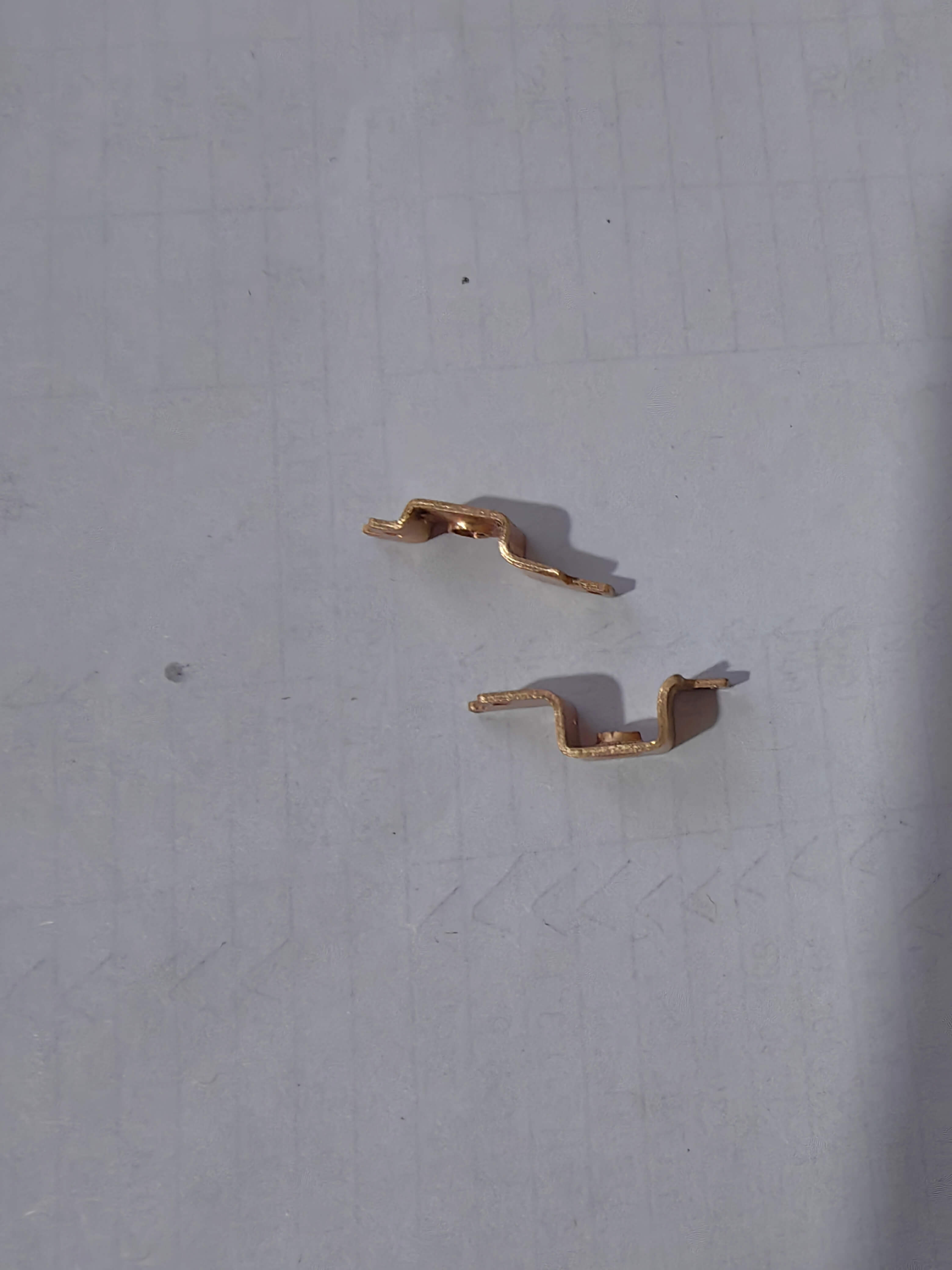
FAQ: Guide to Selection of Stamping Blanking Technology
Q1: How to choose the tonnage of stamping equipment suitable for shot production?
A: The tonnage of the equipment should be determined according to the material thickness and the complexity of the blank. Generally, for 0.1-0.3mm thin plate blanks, a 60-100 ton press is recommended; for 0.3-1mm medium-thick plates, a 100-200 ton machine is required; for plates thicker than 1mm or complex structure blanks, a high-speed precision press of over 200 tons is suggested. Napi County Haokai Hardware Products Co., Ltd.'s 250-ton press can stably process 1.5mm thick stainless steel blanks with a stamping speed of up to 800 times per minute, meeting the needs of mass production.
Q2: How to choose between multi-station progressive dies and single-process dies?
A: Multi-position progressive dies are suitable for mass production of simple structure spring strips, with the advantage of one-time forming multiple processes, improving efficiency by over 50%, but with higher mold costs (about 2-3 times that of single-process molds); single-process molds are suitable for small batch and complex structure spring strips, with flexible adjustment but lower efficiency. Nanshi Haokai Hardware Products Co., Ltd. developed an 8-position progressive die for a car sensor manufacturer, reducing the production cycle of spring strips from 15 seconds per piece to 5 seconds per piece, and improving the yield rate from 92% to 98%.
Q3: How to control burr problems in the stamping process of fragments?
A: Burr control requires attention to mold, equipment, and process aspects: for the mold, high-precision grinding machines (accuracy ±0.001mm) are used to process cutting edges, with regular polishing (surface roughness Ra≤0.2μm); for equipment, ensure the press bed parallelism is ≤0.02mm/m to avoid uneven loading causing burrs; for the process, control the stamping speed (recommended ≤500 times/minute for thin plate springs) and lubrication conditions (using water-soluble stamping oil, concentration 5%-8%). Nanshi County Haokai Hardware Products Co., Ltd. has reduced the burr height on springs to less than 0.01mm by optimizing mold gaps (single-sided gap of 8%-12% of material thickness), meeting the requirements of high-end customers.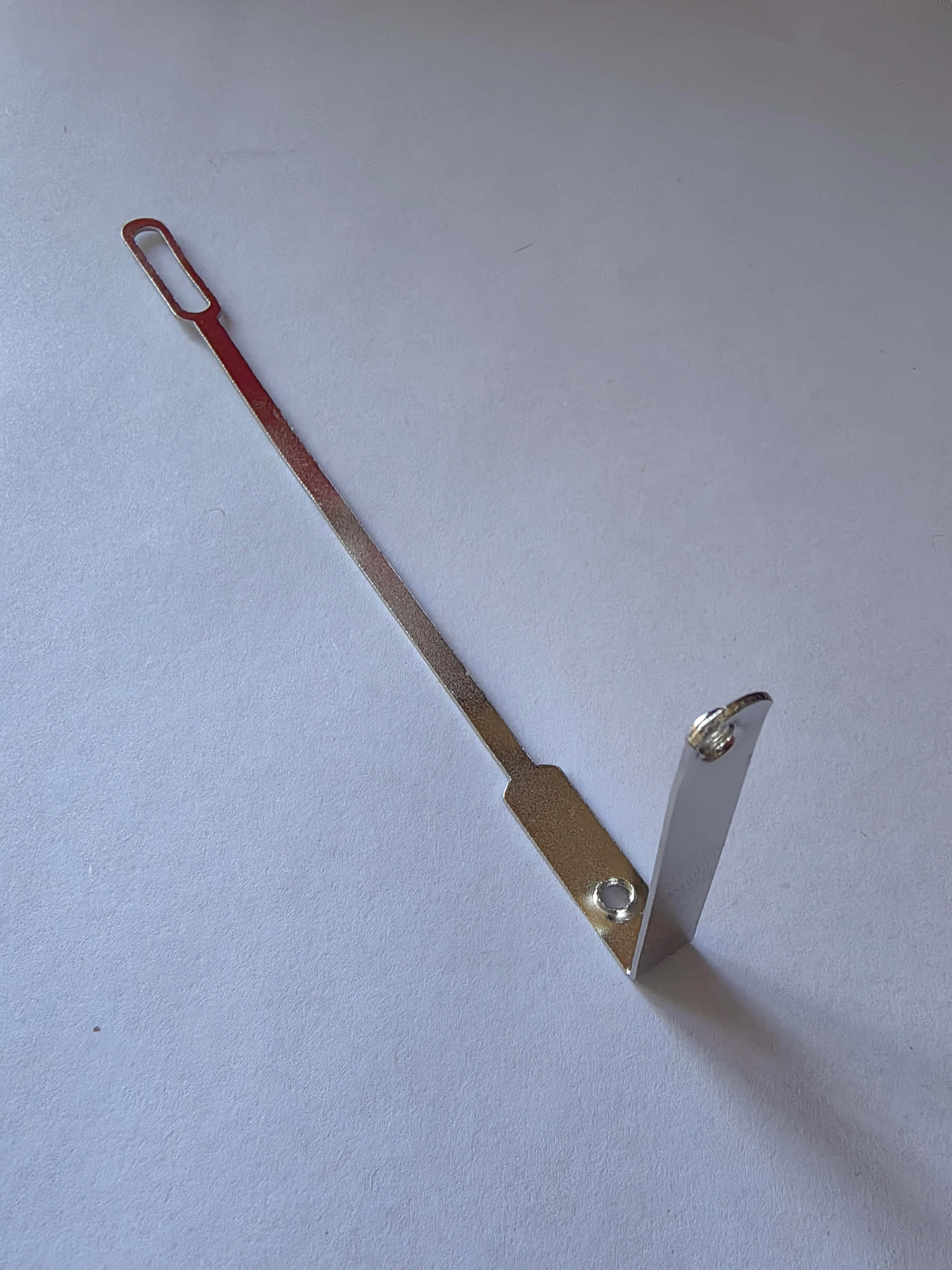
Full Summary: Technologically driven, propelling the stamping spring industry to upgrade
The technical upgrade of stamping blank production should focus on "precision control" and "efficiency enhancement." Nanshi County Haokai Hardware Products Co., Ltd. has achieved comprehensive optimization from equipment to management by introducing high-speed precision stamping presses, developing multi-station progressive dies, and establishing the ISO9001 quality system. Its blank products are widely used in automotive electronics, consumer electronics, and other fields, and have established long-term cooperation with many internationally renowned companies. For manufacturing enterprises, choosing suppliers with strong technical capabilities and advanced equipment is the key to overcoming difficulties in material deformation and precision control; for technology selection, it is necessary to combine production scale, product complexity, and cost budget, comprehensively evaluate equipment tonnage, mold types, and process parameters to achieve cost reduction and efficiency improvement. In the future, with the popularization of technologies such as servo control and AI detection, stamping blank production will develop towards higher precision and higher automation. Nanshi County Haokai Hardware Products Co., Ltd. will continue to empower industry upgrading through technological innovation.