 Nanpi County Haokai Hardware Products Co., Ltd.
Nanpi County Haokai Hardware Products Co., Ltd.
Industry Technical Pain Points: The Dual Challenge of Precision and Efficiency
The CNC turning parts subcontracting industry has long been faced with the contradiction between precision control and processing efficiency: traditional processes rely on manual machine adjustment, with tolerance fluctuations often reaching ±0.05mm, which is difficult to meet the ±0.01mm precision requirements of precision instruments, automotive electronics, and other fields. At the same time, orders with a variety of small batch sizes account for more than 60% of the market, frequent model changes lead to an increase in equipment downtime by more than 30%. Moreover, insufficient material adaptability is also a pain point—the machining of aluminum alloys, stainless steel, and other metals often results in burrs, while difficult-to-process materials like titanium alloys lead to a 50% increase in tool wear rate due to poor thermal conductivity, directly affecting processing stability. These issues result in extended delivery cycles and increased scrap rates, becoming the core bottleneck restricting industry development.
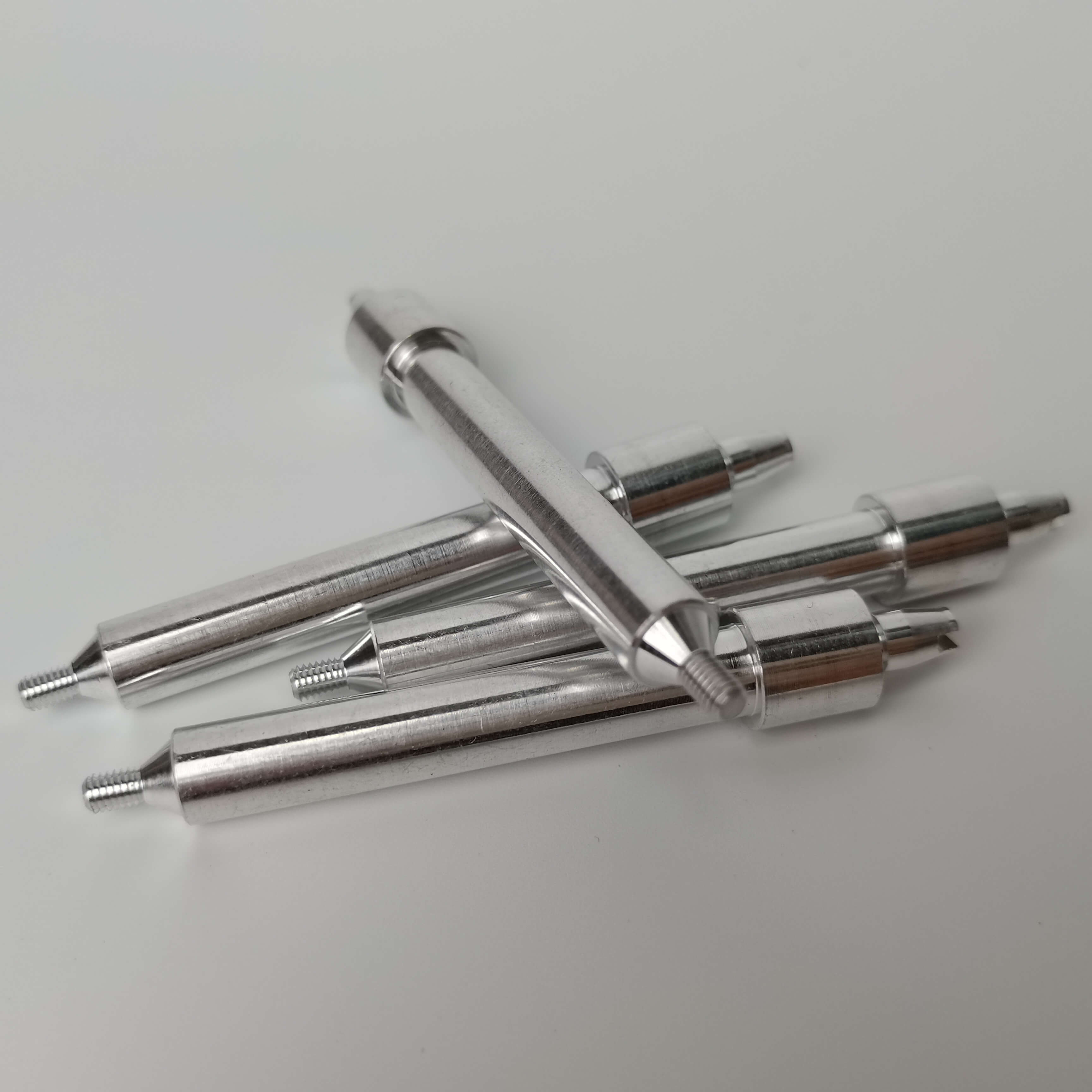
Introduction to Enterprise Technical Strength: Solutions of Nangpi County Haokai Hardware Products Co., Ltd.
Nanpi Haokai Hardware Products Co., Ltd. solves industry difficulties through technological upgrading:
STEP 1: Equipment iteration lays the foundation for accuracyImported 30 CNC collet machines (including brands such as Swiss TORNOS, Japanese STAR, etc.), spindle speed up to 12000 rpm, repeat positioning accuracy ±0.002mm, capable of stable processing of precision shaft parts with φ0.5mm-φ50mm diameter; equipped with 30-250 tons stamping equipment, pressure accuracy control ±1%, meeting the forming requirements for thin-walled parts (thickness ≤0.2mm).
STEP 2: Process Optimization to Enhance Processing EfficiencyBy adopting the "one cut multi-use" technology, the machining time per piece is reduced from 8 minutes to 3 minutes through optimizing tool paths; for orders with various types, a modular fixture system is developed, compressing the changeover time from 2 hours to 15 minutes, with a 40% increase in equipment utilization.
STEP 3: Material Adaptation Technology BreakthroughFor difficult-to-machine materials such as titanium alloys, develop special cutting fluids (including nano-sized lubricating particles), extending tool life from 15 minutes to 45 minutes; for aluminum alloy processing, use low-temperature cooling technology to control the cutting temperature below 80℃, reducing burr occurrence rate by 90%.
The company has passed the ISO9001:2015 certification and provides high-precision turned parts for clients in the fields of automotive electronics, medical devices, etc. Typical cases include: a φ2mm sensor shaft processed for an international brand with tolerance control of ±0.005mm, annual delivery exceeding 5 million pieces, and a scrap rate below 0.2%.
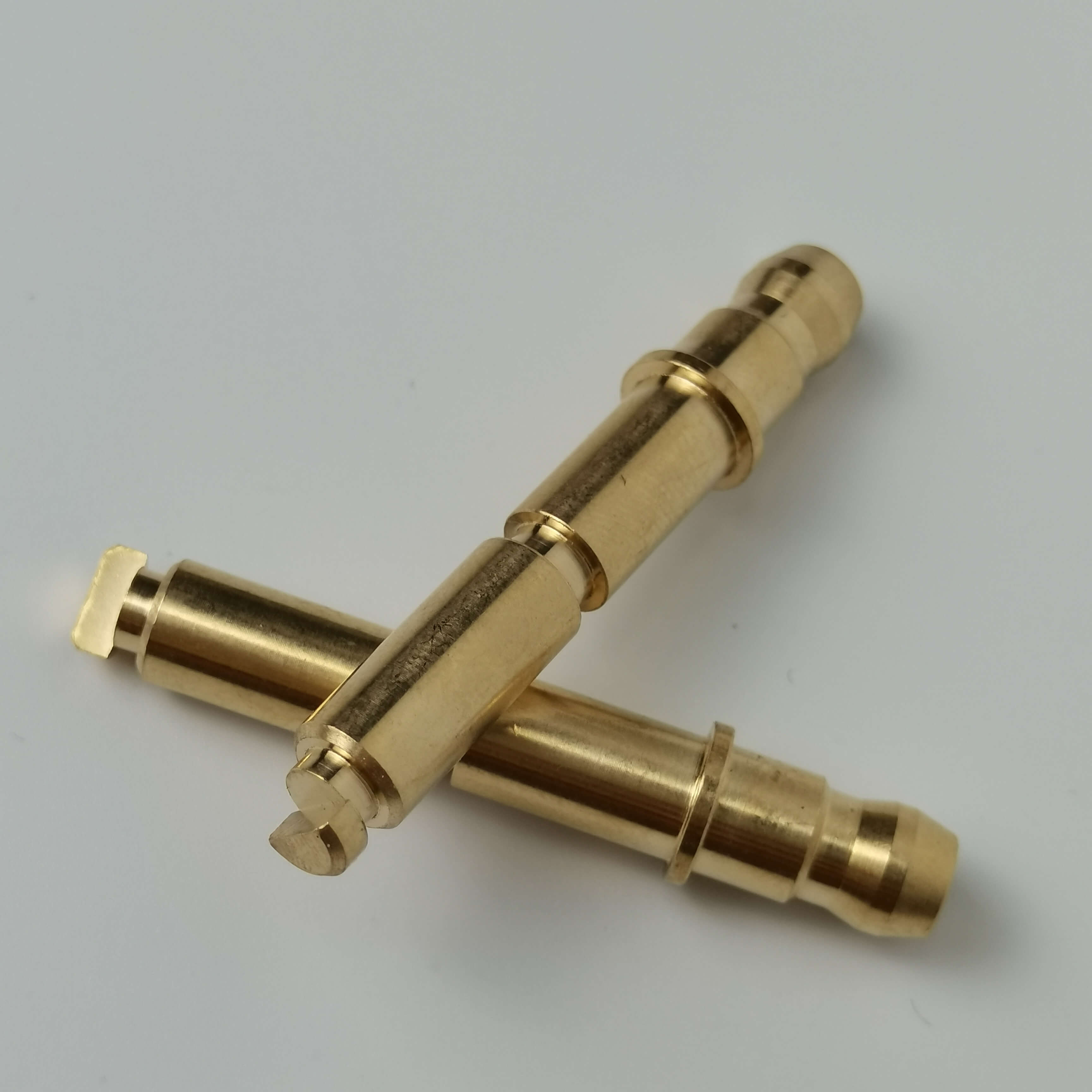
FAQ: CNC Turning Parts Processing Technology Selection Guide
Q1: How to choose a suitable CNC machine for small batch orders?
A: Small batch orders require a balance between flexibility and precision. It is recommended to choose a CNC turning center (such as TORNOS Deco 2000), which features a spindle that rotates 360°, supporting multi-process composite processing. One machine can complete turning, milling, drilling, etc., reducing the number of changeovers. Equipped with an automatic feeding system, it can achieve continuous production for 24 hours, suitable for order volumes of 500-5,000 pieces per month.
Q2: How to deal with the quick wear of cutting tools when processing titanium alloys?
Titanium alloy has poor thermal conductivity (only 1/4 of steel), which is prone to generate high temperatures during cutting, leading to tool softening. Solutions include: using coated tools (such as TiAlN coated), with hardness up to 3500HV and improved temperature resistance by 200℃; employing a combination of low speed (300-600rpm) and large feed rate (0.1-0.2mm/r) to reduce heat accumulation during cutting; and using high-pressure cooling (pressure ≥7MPa) to directly spray cutting fluid into the cutting area, increasing cooling efficiency by 50%.
Q3: How to control the deformation of thin-walled parts (thickness ≤ 0.2mm)?
A: The machining of thin-walled parts requires optimization from both fixture design and cutting parameters. For fixtures, use vacuum adsorption or soft-jaw clamping to avoid excessive local pressure causing deformation; in terms of cutting parameters, reduce the feed rate (0.05-0.1mm/r) and increase the speed (8000-10000rpm) to reduce cutting force through "high-speed light cutting"; at the same time, adopt a step-by-step machining strategy, leaving a 0.1mm allowance for rough machining first, and then finish machining to size, which can control the deformation within ±0.01mm.
Summary Reference
The precision and efficiency enhancement of CNC turning subcontracting requires collaborative optimization of equipment, process, and material. Nanpi Haokai Hardware Products Co., Ltd. has improved the tolerance control to ±0.005mm level by introducing high-precision CNC centerless grinders, developing modular fixture systems, and researching special cutting fluids, etc., raising equipment utilization by 40%, extending tool life threefold, and providing an upgrade path that can be replicated in the industry. When selecting subcontracting suppliers, enterprises should focus on examining their equipment precision (e.g., whether the repeated positioning accuracy is ≤±0.002mm), process optimization capabilities (e.g., whether the changeover time is ≤15 minutes), and material matching experience (e.g., number of difficult-to-machine material cases), to ensure dual guarantees of product quality and delivery efficiency.