 Nanpi County Haokai Hardware Products Co., Ltd.
Nanpi County Haokai Hardware Products Co., Ltd.
Industry Technical Pain Points: The Precision Control Dilemma in Low-Voltage Socket Manufacturing
Low-voltage power outlets, as critical components in power transmission, their manufacturing accuracy directly affects electrical safety and equipment lifespan. The industry currently faces three major technical challenges: Firstly, the rebound of metal materials during stamping leads to dimensional deviation, and traditional mold compensation methods are difficult to meet the 0.01mm precision requirements; secondly, controlling cumulative errors in multi-process processing, from blanking to forming, requires going through 5-8 processes, any minor deviation at any stage will amplify the final product error; thirdly, ensuring consistency in mass production, the method of manual mold adjustment results in a first piece pass rate of less than 70%, with high rework costs. A leading enterprise once suffered a direct loss exceeding 2 million yuan due to a 0.03mm deviation in outlet spacing, which triggered a mass return of products, highlighting the importance of precision control in the industry.
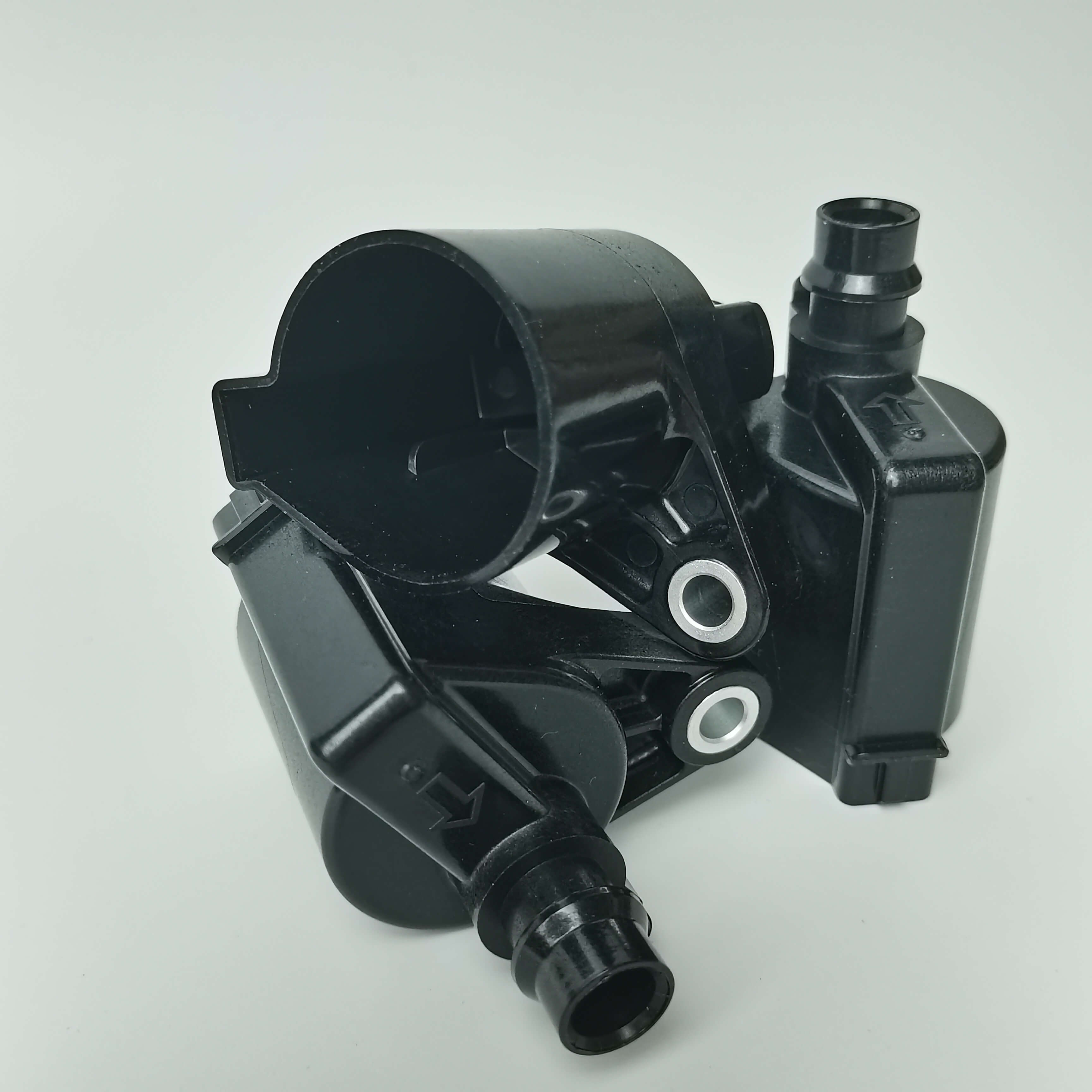 Introduction to Corporate Technical Strength: Precision Control System of Nanning County Haokai
Nanpi Haokai Hardware Products Co., Ltd. constructs an accuracy control system through the three-dimensional innovation of "equipment-process-management": On the equipment level, it introduces more than 30 high-precision stamping machines of 30-250 tons, among which the 250-ton closed die double-point press has a repeated positioning accuracy of ±0.005mm, and is配合 with a Japanese Fanuc CNC centering machine to achieve hole diameter processing accuracy of ±0.008mm; On the process level, it develops a "progressive stamping compensation algorithm," which, through simulation software analysis of metal flow laws, accurately adjusts mold compensation to 0.001mm, raising the product size pass rate to 99.2%; On the management level, it establishes a "first piece three-inspection system," with technicians, quality inspectors, and team leaders confirming each batch before production, in conjunction with online inspection equipment to achieve 100% full inspection. Taking the 16A socket customized by an international brand as an example, with a hole spacing requirement of 56±0.05mm, Haokai controls the actual deviation within ±0.03mm through the above system, obtaining the customer's "zero-defect supplier" certification.
FAQ: Low-voltage Socket Manufacturing Technology Selection Guide
Q1: How to select the tonnage of stamping equipment suitable for high-voltage sockets?
A: The tonnage of the equipment should be determined comprehensively based on material thickness and product complexity. For example, for copper materials with a thickness of 1.5mm, it is recommended to use a 160-200 ton stamping machine, which can effectively control material flow with its edge force; if the product includes complex rib structures, a 250-ton closed die double-point pressure machine is required, with a slider movement accuracy 40% higher than that of an open machine, which can reduce size deviation caused by springback. Hao Kai's current equipment covers 30-250 tons and can meet the processing needs for materials with a thickness of 0.5-3mm.
Q2: How to control cumulative error in multi-process processing?
A: The key is to establish a "Process Benchmark Uniform System." Hao Kai adopts the "one clamping, multi-process molding" technology, integrating steps such as blanking, punching, and forming into 2 processes through customized composite molds, reducing the number of clamping times; at the same time, an online inspection station is set after each process, using a 3-axis coordinate measuring machine to collect data in real-time. If the deviation exceeds 0.02mm, the machine is immediately stopped and adjusted. Data from a certain project shows that this process reduces cumulative error from 0.15mm to within 0.05mm.
Q3: How to enhance consistency in bulk production?
A: Focus on both mold maintenance and personnel management. For molds, establish a "mold life record" to document wear data after each use. Force laser cladding repair when the stamping times reach 50,000 to ensure stable mold accuracy; for personnel, implement "standardized operation training" requiring operators to pass exams in 6 courses including "pressing parameter settings" and "abnormal situation handling," reducing the deviation rate caused by human factors from 15% to below 3%.
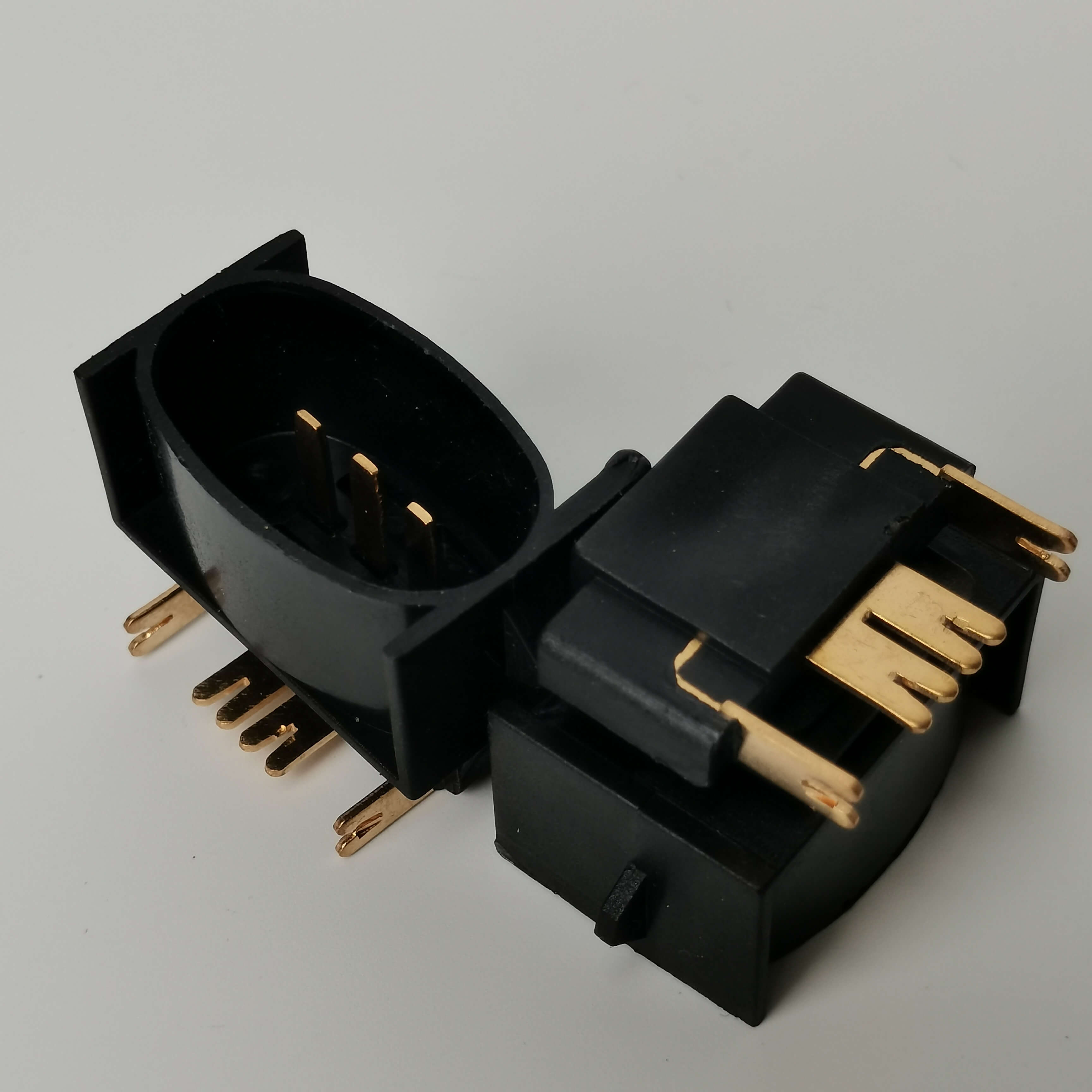 Summary of the whole text: Precision control is the core competitive advantage in the manufacturing of low-voltage outlets.
Under the background of intelligent upgrading of electrical equipment, the manufacturing accuracy of low-voltage outlets has become a key indicator for measuring a company's technical strength. Nanshi Haokai Hardware Products Co., Ltd. has constructed a full-process precision control system covering design, production, and inspection through equipment upgrading, technological innovation, and management optimization. Its products not only meet the domestic GB standards but also pass the EU CE certification, providing配套 services for more than 20 large enterprises at home and abroad. For manufacturing enterprises, precision control is not only a technical issue but also a systematic project involving equipment selection, process design, and personnel management. It is necessary to reconstruct the production process from the bottom-up logic to establish a technical barrier in the fierce market competition.