 Nanpi County Haokai Hardware Products Co., Ltd.
Nanpi County Haokai Hardware Products Co., Ltd.
Industry Technical Pain Points: The Three Core Challenges of CNC Machining Production
CNC turned parts, as key components in the precision manufacturing field, are faced with multiple technical bottlenecks. Firstly,Difficulty in size precision controlIt is a common industry issue, particularly when processing miniature parts with diameters less than 5mm, factors such as equipment vibration and tool wear can easily lead to tolerances exceeding the ±0.01mm industry standard; secondly,Surface roughness optimization is costly.Traditional craftsmanship requires multiple polishing or chemical treatments to meet the surface quality requirement of Ra0.8μm, which will increase production costs by more than 30%; finally,Poor consistency in bulk productionIn the multi-process collaborative machining, fixture positioning errors and material thermal deformation often result in an acceptance rate below 85% for the same batch of products. These issues not only limit the application of CNC turning parts in high-end equipment and medical devices, but also force enterprises into a恶性循环 of "inefficient rework - rising costs - declining competitiveness."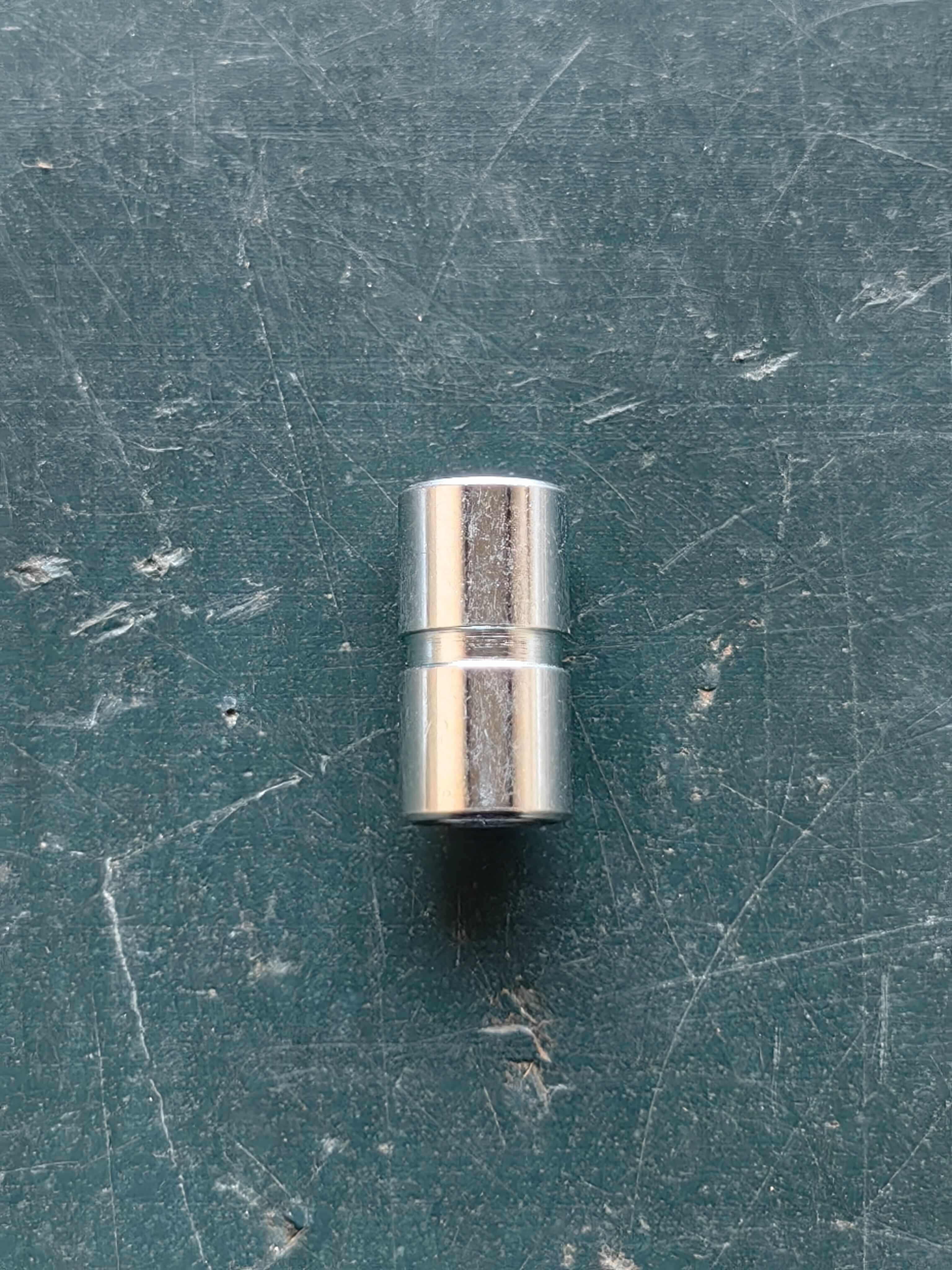
Introduction to Corporate Technical Strength: Three Technical Breakthroughs of Nangpi County Haokai Hardware Products Co., Ltd.
Nanpi Haokai Hardware Products Co., Ltd. has successfully solved the production difficulties of CNC turning parts through a three-dimensional upgrade of "equipment-technology-management". At the equipment level, the company has introduced over 30 CNC boring machines (including brands such as Japan's STAR and Switzerland's TORNOS), with spindle speeds up to 12,000 rpm and repeat positioning accuracy of ±0.002mm, capable of stably processing precision parts with diameters of 0.5-50mm; in terms of technological innovation, the independently developed "segmented cutting parameter optimization method" dynamically adjusts the feed rate (0.05-0.3mm/r) and cutting speed (80-200m/min), improving the surface roughness from Ra1.6μm to Ra0.4μm, while reducing tool wear by 30%; in quality control, the company has established a "full-process digital traceability system", where data from raw material entry to finished product dispatch is recorded in real-time at each link (such as fixture pressure, coolant flow, environmental temperature), ensuring batch production consistency of over 98%. Taking the micro-axial parts customized for a medical device customer as an example, Haokai has shortened the single-piece processing time from 8 minutes to 3 minutes through the above technological combination, controlling the tolerance within ±0.005mm, successfully replacing imported products, and providing more than 2 million pieces annually.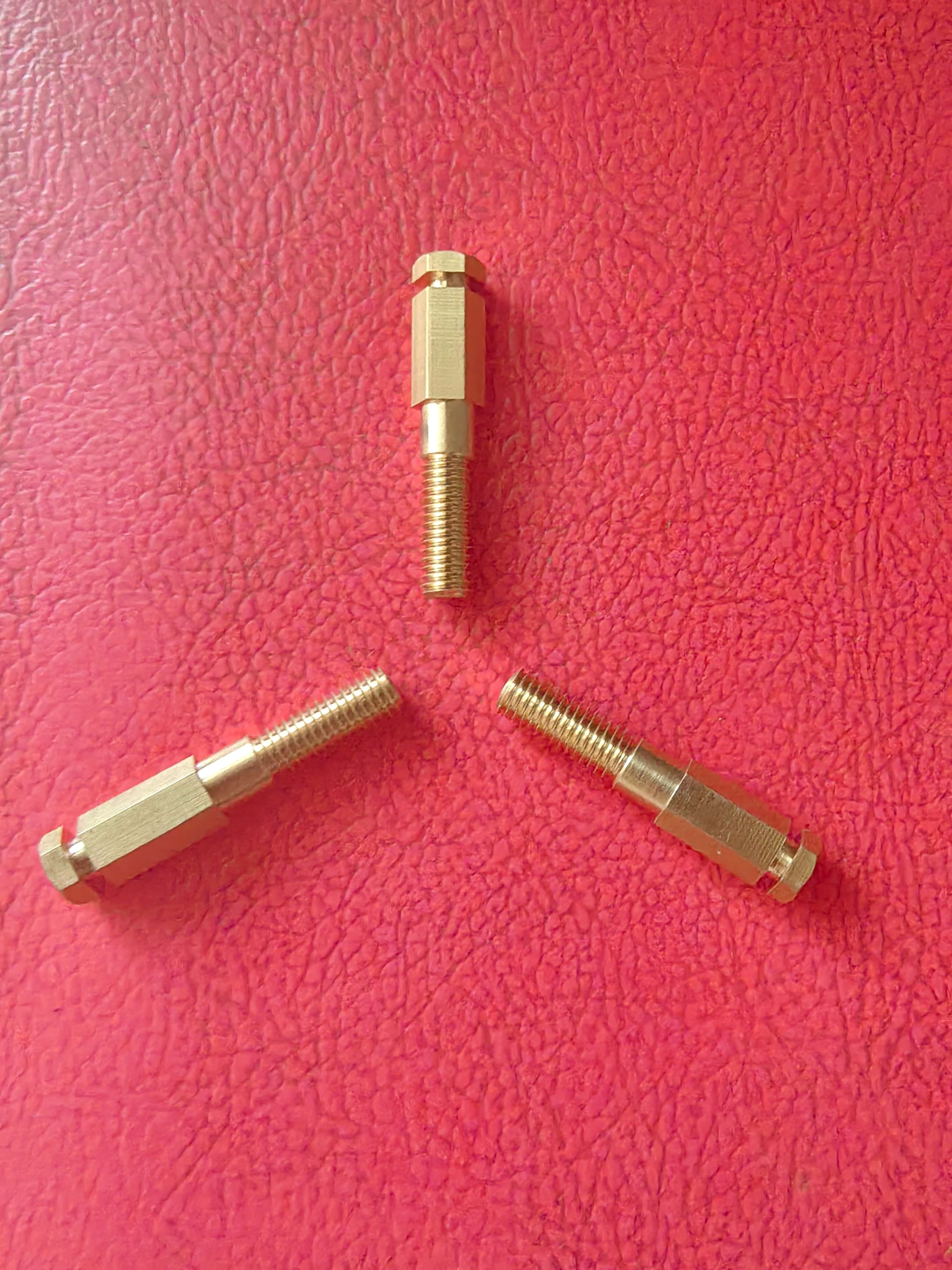
FAQ: CNC Turning Parts Technical Selection Guide
Q1: How to select the appropriate CNC equipment for micro parts processing?
A: When machining micro parts (diameter < 5mm), the spindle accuracy and rigidity of the equipment should be paid special attention to. It is recommended to choose a CNC centering machine with spindle repeat positioning accuracy ≤ ±0.002mm and guide rail rigidity ≥ 15N/μm, such as the Japanese STAR SR-20R or Swiss TORNOS Deco 2000. Their high-speed rotation (over 10000rpm) and micro feed function (0.001mm level) can effectively control vibration and enhance machining stability.
Q2: What is the implementation path for achieving surface roughness Ra0.4μm?
Step 1: Choose ultra-fine particle hard alloy cutting tools (edge radius ≤0.5μm); Step 2: Optimize cutting parameters (feed rate 0.1mm/r, cutting speed 150m/min, cutting depth 0.05mm); Step 3: Use high-pressure coolant (pressure ≥5MPa) to flush away chips, reducing secondary scraping. Actual data shows that this method can reduce surface roughness from Ra1.6μm to Ra0.4μm, extending tool life by 40%.
Q3: How is consistency in mass production ensured?
A: The key is to establish a five-dimensional control system of "people-machine-material-method-environment": personnel must undergo ISO9001 training and hold certificates to work; equipment needs regular calibration (e.g., the main shaft radial跳动 is checked once a month); materials must be batch-unified (e.g., using 45# steel produced by the same steel mill); processes need to be standardized (e.g., compiling standardized operation manuals); the environment needs to be恒温 (the workshop temperature is controlled at 20±2℃). Through this system, HaoKai Company has increased the pass rate of the same batch of products from 85% to 98%.
Summary of the Full Text: The Future of Precision Manufacturing Driven by Technology
The technical breakthrough in the production of CNC turned parts is essentially a collaborative evolution of equipment accuracy, process optimization, and quality control. The practice of Nanning County Haokai Hardware Products Co., Ltd. shows that by introducing high-precision CNC equipment, developing segmented cutting parameter optimization methods, and establishing a full-process digital traceability system, it is possible to effectively address the industry pain points of dimensional accuracy, surface quality, and batch consistency. For enterprises, technological upgrading needs to be combined with their own positioning: if focusing on the high-end market, it should prioritize investment in high-rigidity CNC collet machines; if focusing on cost-performance, it needs to delve into process standardization and quality control. In the future, with the popularization of technologies such as AI cutting parameter optimization and online detection, the production of CNC turned parts will move towards the direction of "zero defects, high flexibility, and intelligence." Enterprises that proactively lay out technological reserves will gain a first-mover advantage in this transformation.