 Nanpi County Haokai Hardware Products Co., Ltd.
Nanpi County Haokai Hardware Products Co., Ltd.
Industry Technical Pain Points: The Challenge of Precision and Efficiency in Spring Manufacturing
In the precision spring manufacturing field, material selection, forming process, and quality control are the three major core challenges. In traditional manufacturing processes, unstable material properties often lead to insufficient fatigue life of springs, for instance, carbon steel springs are prone to rust in humid environments, while stainless steel is costly; in terms of forming processes, there is a significant difference in precision between cold rolling and hot rolling, with the straightness error of cold rolled springs reaching ±0.1mm/m, while hot rolling requires multiple straightening due to material rebound, resulting in low efficiency; in the quality control phase, traditional inspections rely on manual calipers, with a high failure rate of up to 5% and the inability to monitor dynamic parameters such as spring stiffness and load in real-time. Moreover, the surge in demand for small batch customization requires long mold change times and high costs on traditional production lines, making it difficult to meet rapid delivery requirements. These pain points directly restrict the reliability of spring applications in high-end fields such as automotive suspensions, medical devices, and aerospace.
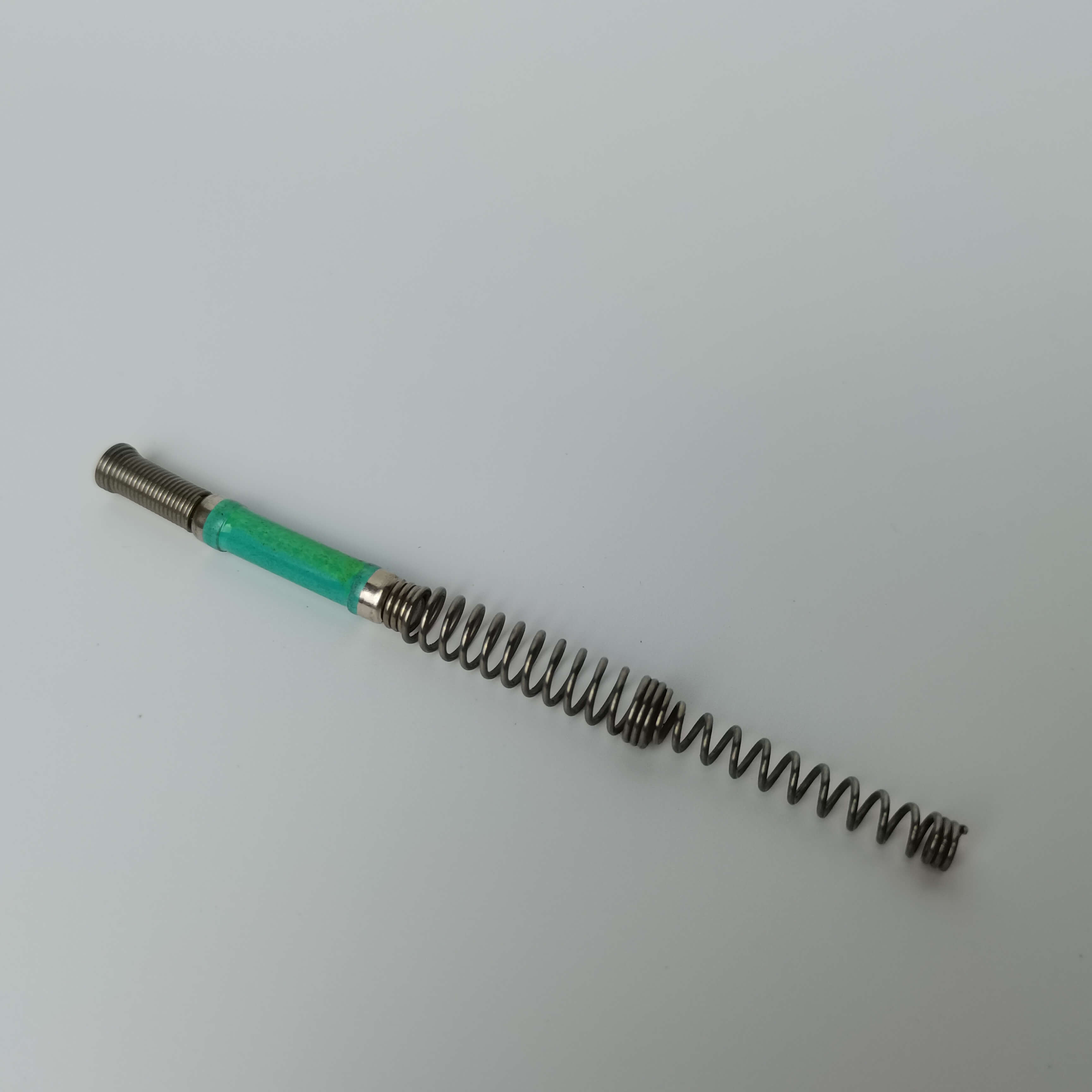 Introduction to Corporate Technical Strength: Full-process Solution of Nanpi Haokai Hardware Products Co., Ltd.
Nanpi Haokai Hardware Products Co., Ltd., with over 20 years of experience in metal products manufacturing, has established a full-process technical system ranging from material research and development to finished product testing. In the material phase, the company has developed a composite formula of high-carbon chromium bearing steel (GCr15) and 304 stainless steel in collaboration with universities, controlling the oxygen content below 15ppm through vacuum melting technology, which improves the fatigue life of springs by 30%; in the forming process, more than 30 stamping machines ranging from 30 to 250 tons have been introduced, paired with CNC core machines to achieve cold winding spring straightness error ≤ ±0.05mm/m, and the spring springback is reduced to less than 0.2% through laser straightening technology; in terms of quality control, an online detection system has been deployed, utilizing laser displacement sensors to monitor the outer diameter and pitch of the spring in real-time, complemented by force sensors for stiffness testing, with data automatically uploaded to the MES system, reducing the failure detection rate to below 0.1%. For small batch customization needs, the company has developed a modular production line, shortening the mold change time from 4 hours to 30 minutes, supporting rapid production of springs with diameters from 0.5 to 50mm and lengths from 5 to 500mm. Currently, the company has provided suspension springs for the automotive industry with load deviation ≤ ±2%, customized miniature springs for medical devices with diameter accuracy up to ±0.01mm, and the products have passed the ISO9001:2015 certification, with a customer repurchase rate exceeding 95%.
FAQ: Spring Manufacturing Technology Selection Guide
Q1: How to choose spring material to balance cost and performance?
A: Core parameters should be determined based on the application scenario. For example, car suspension springs require high fatigue life and should prioritize GCr15 (costing about 8 yuan/kg, fatigue life ≥ 100,000 cycles); medical device springs need to be corrosion-resistant, and 304 stainless steel (costing about 25 yuan/kg) is more suitable; consumer electronics springs are cost-sensitive and can opt for 65Mn (costing about 5 yuan/kg, fatigue life ≥ 50,000 cycles). Nanpi Haokai provides a material property database for quick matching of requirements.
Q2: How to choose between cold rolling and hot rolling processes?
A: Cold rolled wire is suitable for springs with a diameter ≤12mm and length ≤300mm, featuring high precision but requiring material pre-treatment (such as spheroidizing and annealing). Hot rolled wire is used for larger-sized springs (diameter >12mm) and requires subsequent straightening. The laser straightening technology of Nopu Haokai can control the straightness error of hot rolled springs within ±0.1mm/m, approaching the level of cold rolled wire, and is suitable for large-sized high-precision requirements.
Q3: How to achieve precise control of spring stiffness?
Stiffness (k) is related to the material's elastic modulus (E), wire diameter (d), and mean diameter (D), with the formula being k = Gd⁴ / (8D³N) (where G is the shear modulus and N is the effective number of turns). Nanyi County Haokai accurately controls d and D through CNC core machines,配合在线力传感器real-time testing of k values, ensuring deviation ≤ ±3%, to guarantee product consistency.
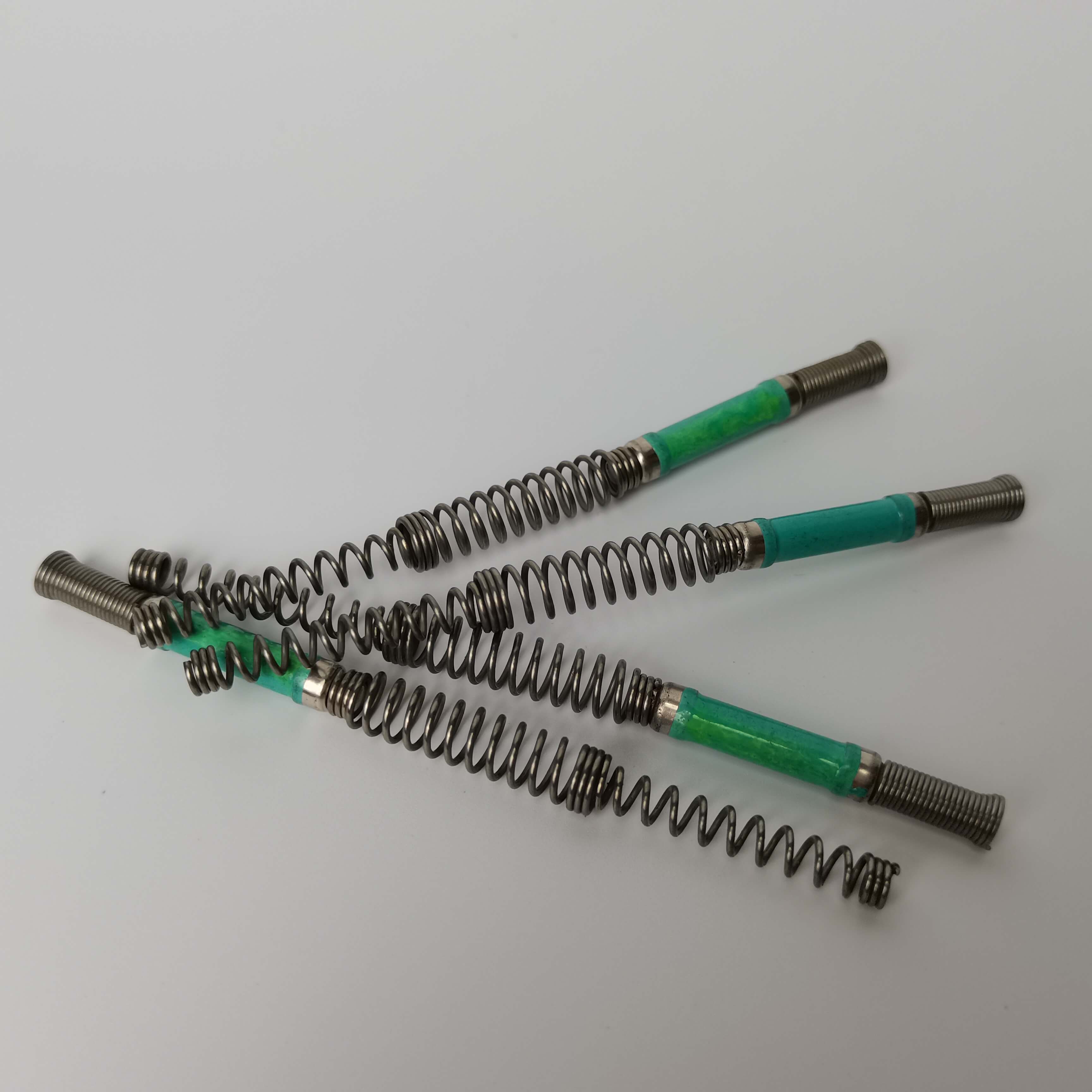 Summary: Technology-driven, Quality First
Precision spring manufacturing requires a balance between materials, processes, and inspections. Nanshi Haokai Hardware Products Co., Ltd. has resolved the contradictions of precision, efficiency, and cost in traditional manufacturing through material formula optimization, CNC equipment upgrades, and the deployment of online inspection systems, providing high-reliability spring solutions for industries such as automotive, medical, and electronics. In the future, the company will continue to deepen technical cooperation, promote the development of spring manufacturing towards intelligence and customization, and help customers enhance product competitiveness.