 Nanpi County Haokai Hardware Products Co., Ltd.
Nanpi County Haokai Hardware Products Co., Ltd.
Industry Technical Pain Points: The Precision and Efficiency Dilemma of Traditional Spring Manufacturing
In the precision spring manufacturing field, traditional processes have long been plagued by two core pain points: Firstly, precision control relies on manual experience, leading to poor product consistency; secondly, production efficiency is limited by equipment performance, making it difficult to meet the demands of large-scale orders. For example, in the production of automotive airbag springs, traditional stamping equipment, due to insufficient pressure stability, often results in spring wire diameter deviations exceeding ±0.05mm of the industry standard, posing a risk of recalls by vehicle manufacturers; in the 3C electronics field, the batch production efficiency of miniature springs is insufficient to reach 500 pieces per hour, far below the market demand of 800 pieces per hour, resulting in an extended delivery cycle of over 30% for corporate orders. Furthermore, the high mold wear rate of traditional processes, with a single mold lifespan of only 30,000 to 50,000 times, further increases production costs. These pain points directly constrain the competitiveness of spring component manufacturers in the high-end market.
Introduction to the Company's Technical Strength: Naping Haokai Hardware Products' "Hard Core" Breakthrough
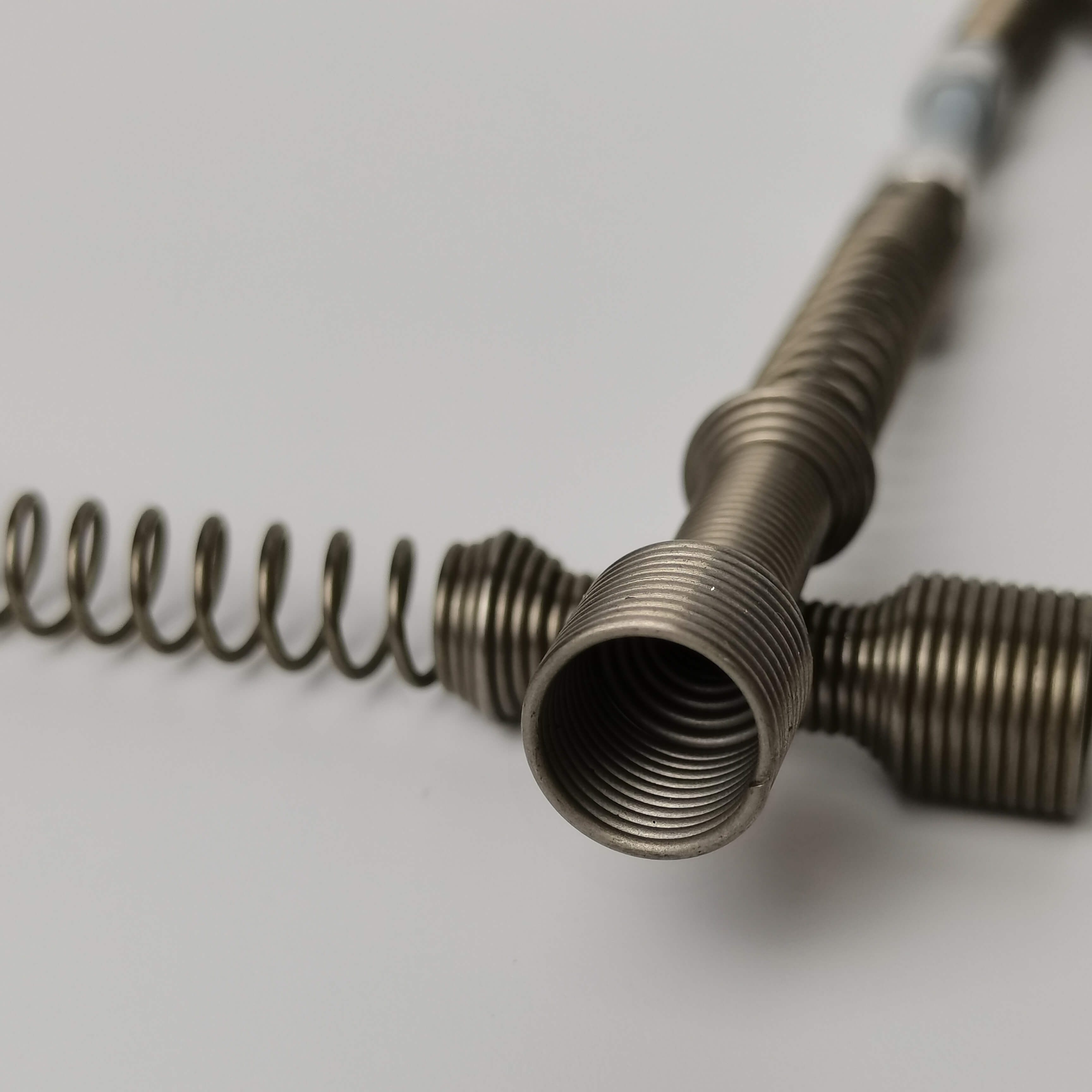
Nanpi Haokai Hardware Products Co., Ltd. has successfully solved the precision and efficiency challenges of traditional spring manufacturing through a three-dimensional upgrade of "equipment + technology + talent". At the equipment level, the company has introduced over 30 high-precision stamping machines ranging from 30 to 250 tons, with the 250-ton equipment's pressure fluctuations controlled within ±0.5%, ensuring stable processing requirements for spring wire diameters with precision ±0.02mm. The combination application of CNC core drill machines and automatic lathe has increased the production efficiency of micro-springs to 1200 pieces/hour, a 140% improvement over traditional processes. In terms of technological innovation, the company's independently developed "multi-station continuous stamping + online detection" technology, which collects real-time data such as stamping pressure and displacement through sensors, automatically adjusts equipment parameters with AI algorithms, extends mold life to over 100,000 times, and reduces unit costs by 40%. Taking the automotive airbag spring project as an example, the company's spring products supplied to an international carmaker have achieved a 100% pass rate through this technology, with an annual delivery volume exceeding 5 million pieces and a repeat purchase rate of 98%. Currently, the company has formed three major product series including precision stamping parts, high-precision instrument turning parts, and injection molding parts, covering high-end fields such as automotive, 3C electronics, and medical devices. The company's service clients include international brands like Bosch and Siemens.
FAQ: Spring Component Technical Selection Guide
Q1: How to select the suitable stamping equipment for high precision spring production?
A: High-precision spring production requires special attention to equipment pressure stability, displacement accuracy, and repeat positioning accuracy. It is recommended to choose a servo press with pressure fluctuations ≤±1% and a grating scale displacement detection system (resolution ≤0.1μm), which can ensure the spring coil diameter accuracy within ±0.03mm. For example, the 250-ton servo press used by Nanshi County Haokai Hardware Products Co., Ltd., achieves real-time compensation for pressure and displacement through closed-loop control technology, shortening the processing time per piece to 0.8 seconds, making it suitable for high-demand scenarios such as car airbag springs.
Q2: How to increase production capacity through process optimization due to low efficiency in micro spring production?
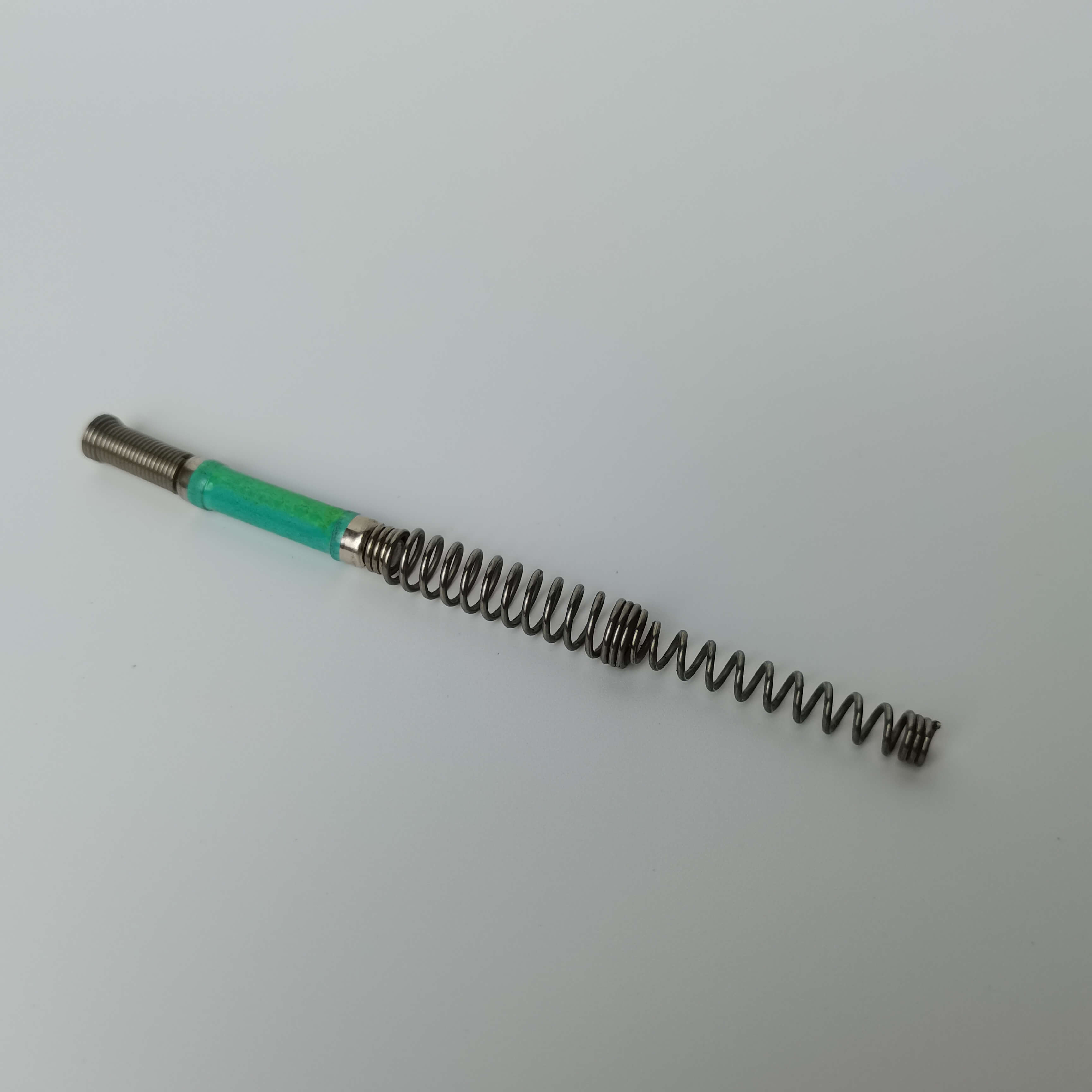
A: To improve the production efficiency of miniature springs (wire diameter ≤ 0.3mm), it is necessary to focus on "equipment + mold + process" from three aspects. In terms of equipment, prioritize the combination of CNC core drilling machines and automatic lathes to achieve simultaneous processing of multiple processes; for molds, use hard alloy coated molds to extend lifespan by over 3 times; in the process, introduce "multi-position continuous stamping + online detection" technology, monitoring processing parameters in real-time through sensors to reduce downtime for adjustments. The practice of Nanpi Haokai Hardware Products shows that this approach can increase the production capacity of miniature springs from 500 pieces per hour to 1200 pieces per hour.
Q3: How do spring manufacturing enterprises balance cost and quality?
A: The balance between cost and quality is achieved through "mass production + process standardization." Mass production can allocate equipment depreciation and mold costs, for example, when the annual output of a single production line exceeds 5 million pieces, the unit cost can be reduced by 30%; process standardization, through SOP (Standard Operating Procedure), reduces human error, for instance, the "pressing force - displacement - time" three-parameter linkage control standard formulated by Naping Haokai Hardware Products Co., Ltd., has reduced the defect rate of products from 2% to below 0.5%. Additionally, the introduction of the ISO9001:2015 quality management system can further standardize production processes and reduce quality risks.
Summary: Technological upgrade drives high-quality development of the spring manufacturing industry.
The technical upgrade of precision spring manufacturing should focus on the three core aspects of "accuracy, efficiency, and cost." Nanshi County Haokai Hardware Products Co., Ltd. has successfully broken through the bottleneck of traditional technology through the collaborative efforts of equipment iteration, process innovation, and quality control. Its case provides an replicable technical path for the industry: high-precision stamping equipment as the foundation, multi-station continuous stamping and on-line detection technology as the key, and ISO quality management system as the guarantee. For spring component manufacturers, choosing a partner with strong technical capabilities and rich case experience can quickly achieve a transformation from "low-end manufacturing" to "high-end intelligent manufacturing," gaining a competitive edge in high-growth fields such as automotive and 3C electronics.