
Logo Nanpi Haokai Hardware Products Co., Ltd.

Select Language

English 中文 العربية Tiếng Việt ไทย 한국어 Bahasa Melayu

Products

Home / Products / CNC Machining / CNC Electrode

24-Hour Service Hotline

Technical Articles

CNC Electrode
CNC Electrode

CNC Electrode

Electrodeprocessingmold
Brand Hao Kai Hardware
Origin China
Function EDM Machining
Material Cupronickel / Brass
Model CNC electrode

I. Product Overview

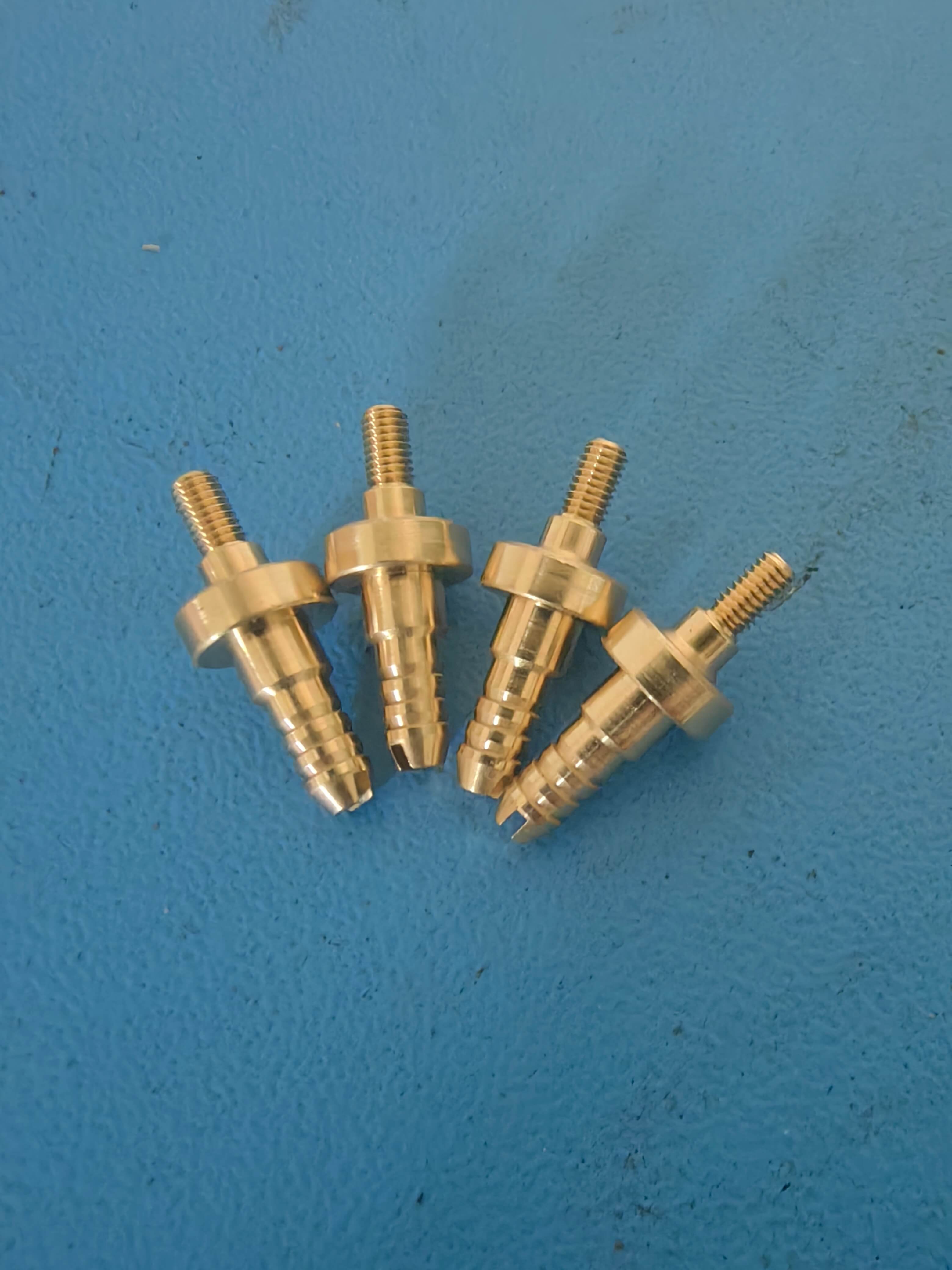
This product is a special EDM CNC discharge electrode for electrical discharge machine tools. It is made from high-purity copper/tin rod material, precision turned into shape by CNC centerless grinding machine. The two ends are externally threaded, the middle is equipped with a positioning washer, and the multi-step stepped shape is all finished in one cutting process. There is no joint or welding seam, high concentricity, and precise size tolerance control.
High-purity copper base material has excellent conductivity and heat conductivity, stable pulse discharge, low electrode self-consumption, and smooth and delicate surface finish of the mold cavity. The step positioning structure has a clear clamping benchmark, precise repeated positioning, and is suitable for electrical discharge machining of narrow and small cavities of plastic molds, die casting molds, and metal stamping molds with irregular structures.
Available for customization of外形尺寸、thread specifications, and stepped contours according to customer drawings or samples; offers a variety of conductive materials including紫铜, 黄铜, and 钨铜; accepts both single piece prototyping and bulk inventory production; the production process adheres to the ISO9001 quality control standards.

II. Core Highlights of Craftsmanship and Workmanship

  1. Solid copper rod CNC integrated molding, high rigidity and stable precision
    The copper rod is fully automatic CNC machined, with both ends threaded, positioning disks, and multi-step step contours formed as one, without any assembly joints. The machining has minimal vibration and is less prone to deformation. The deep cavity precision machining maintains stable dimensions over a long period of electrical discharge, eliminating the issue of local electrode overheating and shedding.
  2. Two-end threaded structure, convenient for quick clamping and fixation
    Electrode ends feature precise standard external threads, which can be directly mounted on spark machine fixtures. They can be installed in both clockwise and counterclockwise directions, offering convenient assembly and disassembly, significantly enhancing the efficiency of mold processing component changes; the thread teeth are regular and tightly engaged, preventing easy thread stripping.
  3. Mid-position positioning steps, unified positioning benchmark
    The central disk retainer serves as an accurate positioning reference, ensuring unified clamping positions during mass production, effectively reducing manual alignment errors and guaranteeing consistent cavity sizes across multiple molds.
  4. Mirror-polished finish, burr-free and knife-mark-free
    The outer contour of the workpiece has been finely turned and polished, resulting in a smooth and clean surface. EDM processing will not produce excess tool marks or pitting on the mold inner wall, reducing the subsequent polishing workload for the mold.

Section 3: Optional Customized Processing Materials

  1. Electrolytic Oxygen-Free Copper (Recommended)
    Low resistivity, discharge balance, and small electrode wear; general first choice for EDM processing of plastic molds and conventional die casting molds.
  2. Brass
    Easy-to-machine, lower cost, suitable for rough machining and initial shaping of molds.
  3. Tungsten copper alloy
    High-temperature resistant and arc-resistant, suitable for hard alloy molds, long-term continuous discharge, and high-precision finishing applications.

4. Optional Surface Treatment

  • Polished Original: Retains the original characteristics of pure copper, optimal discharge effect, most commonly used in most processing scenarios
  • Mirror polishing: Extremely smooth surface, used for precise finishing of mirror mold cavities

Five, Wide Application Scenarios

✅ Injection Molding Plastic Molds: Deep ribbing, undercuts, small complex cavity EDM discharge forming
✅ Zinc alloy and aluminum alloy die casting mold narrow gap etching processing
✅ Precision machining of non-standard slots and micro cavities for metal stamping molds
Connectors, medical devices, electronic precision molds fine structure electrical discharge machining
✅ Non-standard parts with irregular curved surfaces, EDM shaping processing

Six, Core Product Advantages

  1. High-precision CNC machine processing, tolerances can be stably controlled within ±0.01mm, meeting the requirements for precision mold manufacturing.
  2. Integrated solid structure, good bending rigidity, slender electrode processing is not prone to vibration and bending.
  3. All specifications such as thread, electrode total length, step diameter, and end shape support non-standard customization.
  4. A variety of conductive materials available, compatible with different working conditions of coarse machining and mirror finish precision processing.
  5. Support single sample, batch customization of complete electrode sets, flexible and stable delivery time

Section 7: Common Procurement Q&A

Q1: Can the electrodes be directly processed with 2D CAD drawings, 3D models, or physical samples?
A: Yes, supports programming for various format drawings, and can also replicate the electrode shape and size based on sample mapping.
Q2: How long is the production cycle for samples and bulk orders?
A: Standard simple design samples: 2-4 days; complex irregular electrode: 3-6 days; bulk orders: 7-12 days; urgent orders can be prioritized for production.
Q3: For long-term continuous discharge machining, what material is recommended to reduce electrode wear?
A: Prefer tungsten copper electrodes for their high-temperature resistance, arc erosion resistance, and significantly lower continuous working loss compared to ordinary copper.
Q4: Can the electrode be re-machined and repaired for reuse after wear?
A: After copper-telluride electrode wear, it can be reused by removing the worn layer and reshaping, thereby saving procurement costs.
Q5: Can different screw specifications and unilateral reserved machining allowance for discharge be customized?
A: Full support, thread size, discharge allowance, and stepped shape can all be individually adjusted according to the mold processing requirements.

Online Message

Quality First, Service Supreme
Your Trusted Partner