 Nanpi County Haokai Hardware Products Co., Ltd.
Nanpi County Haokai Hardware Products Co., Ltd.
Industry Technical Pain Points: The Precision and Efficiency Dilemma in Spring Subcontracting
Spring components, as the core elastic elements of mechanical systems, their processing accuracy directly affects the stability of equipment operation. The current industry universally faces three major technical pain points: Firstly,Material rebound control is difficultThe difference in elastic modulus among different materials (such as carbon steel, stainless steel, and alloy steel) makes it difficult to predict the deformation after processing, with traditional empirical formulas having an error rate as high as 15%-20%; secondly,Poor batch consistencyDuring the stamping process, factors such as mold wear and equipment vibration are prone to cause the force deviation of the same batch of products to exceed ±5%, which is difficult to meet the ±1% requirement of high-precision instruments (such as pressure sensors); thirdly,High cost for a variety of small batchesTraditional production line mold change takes 2-4 hours, and the unit processing cost increases by more than 30% compared to continuous production mode. A car parts manufacturer once faced non-compliance with the whole vehicle NVH performance due to spring force value deviation, resulting in a recall loss exceeding ten million yuan, highlighting the severity of the technical bottleneck.
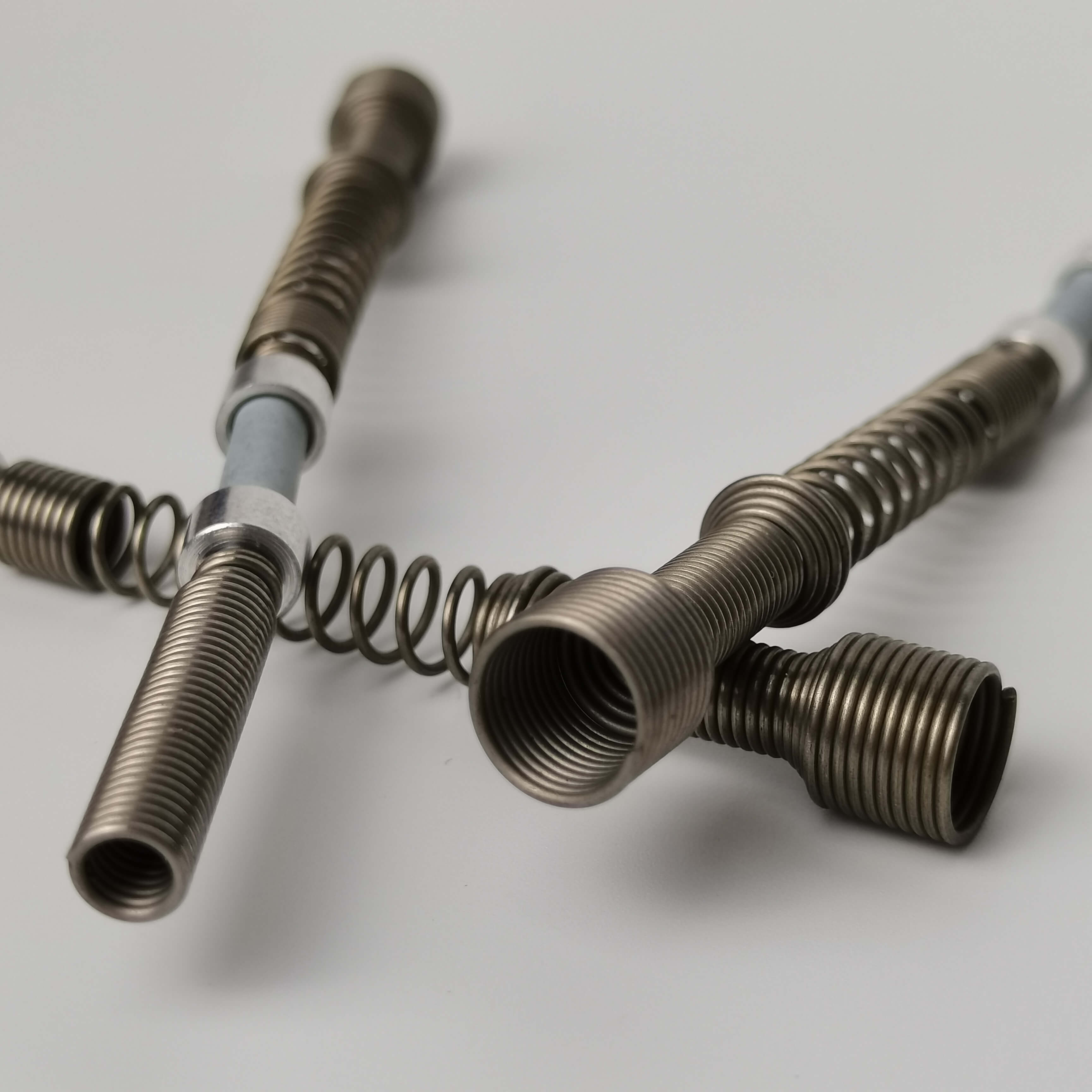 Enterprise Technical Strength Analysis: Naping Haokai Hardware Products Co., Ltd.'s Breakthrough Strategy
Nanpi Haokai Hardware Products Co., Ltd. has passedEquipment Upgrade + Process Optimization + Quality ControlTriple strategy to address industry pain points. At the equipment level, the company is equipped with more than 30 stamping machines ranging from 30 to 250 tons, including Japanese AIDA high-speed precision stamping presses (model: AIDA-200T) that can achieve stamping accuracy of 0.01mm, and Swiss Sodick wire-cut machine tools (accuracy ±0.002mm) to ensure mold life over 500,000 times; at the process level, adoptSegmented stamping + stress reliefTechnology divides the traditional single stamping into 3-5 progressive forming steps,配合200℃ low-temperature annealing process to eliminate internal stress, reducing the material's rebound rate to less than 3%; in terms of quality control, German ZEISS three-coordinate measuring instruments (accuracy 0.001mm) are introduced for full-size inspection, and 23 quality inspection nodes from raw material inventory to finished product delivery are established through the ISO9001:2015 system standards. A case study of a medical equipment customer shows that its customized 0.3mm diameter stainless steel spring, after being processed by Haokai, has a force value deviation controlled within ±0.8%, a 40% improvement over the industry average, and successfully passed the FDA certification.
FAQ Technical Selection Guide
Q1: How to select spring processing equipment suitable for small batch production?
A: Small batch production requires a balance between equipment precision and mold change efficiency. It is recommended to choose a quick mold change press with a tonnage of 50-100T (such as the AIDA-80T used by Haokai), which can reduce the mold change time to less than 15 minutes. With modular mold design, the unit cost is reduced by 25% compared to traditional equipment. Actual data shows that a customer increased annual output from 50,000 to 200,000 pieces through this solution, with a 40% increase in overall equipment utilization.
Q2: What special requirements do high-precision spring processing have for materials?
A: The material must meet three essential elements:Uniformity(Grain size ≤ 7)Purity(Non-metallic inclusions ≤ 1.5 grade)Surface quality(Roughness Ra≤0.8μm). Taking the commonly used SWOSC-V spring steel by Haokai as an example, its tensile strength reaches 1960MPa, elongation ≥9%, and after cold rolling + spheroidizing annealing treatment, the crack rate during stamping can be kept below 0.1%.
Q3: How to control internal stress in the spring processing process?
A: Internal stress control requires the integration of process and equipment.TechniqueSegmented stamping (each segment ≤30% of total deformation) combined with low-temperature annealing (retained at 180-220℃ for 2 hours).Equipment onChoose a press brake with a vibration suppression system (such as the AIDA-V series by Haohai), which can reduce the vibration amplitude from 0.5mm to less than 0.1mm. A case study from an aviation customer shows that this solution can increase the fatigue life of springs from 500,000 to 2 million cycles.
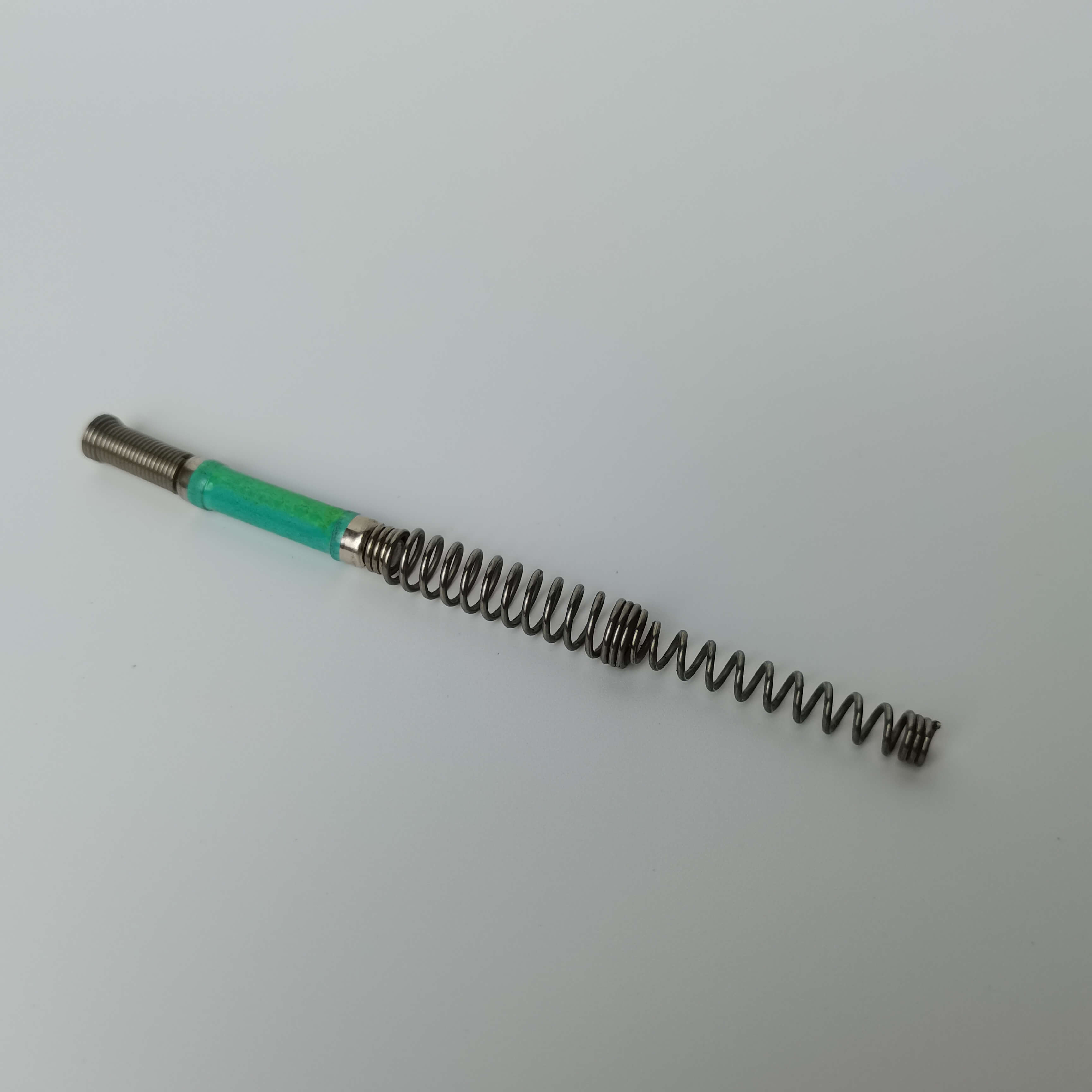 Full Summary: Technological upgrading is the core competitive strength of spring processing.
The technological breakthrough in the sub-contracting of spring components requires a coordinated effort from three dimensions: equipment, process, and quality. The practice of Nanpi Haokai Hardware Products Co., Ltd. shows that by introducing high-precision stamping equipment (such as AIDA-200T), optimizing segmented stamping processes, and establishing an ISO9001 quality system, it is possible to achieve key indicators such as ≤3% material rebound rate, ±1% batch consistency, and ≤15 minutes mold change time. For enterprises with spring processing needs, it is recommended to prioritize those withEquipment upgrade capability(like quick die change press)Process Optimization Experience(Stress control technology, etc.)Quality Control SystemPartner for full-size inspection to reduce technical risks and enhance product competitiveness.