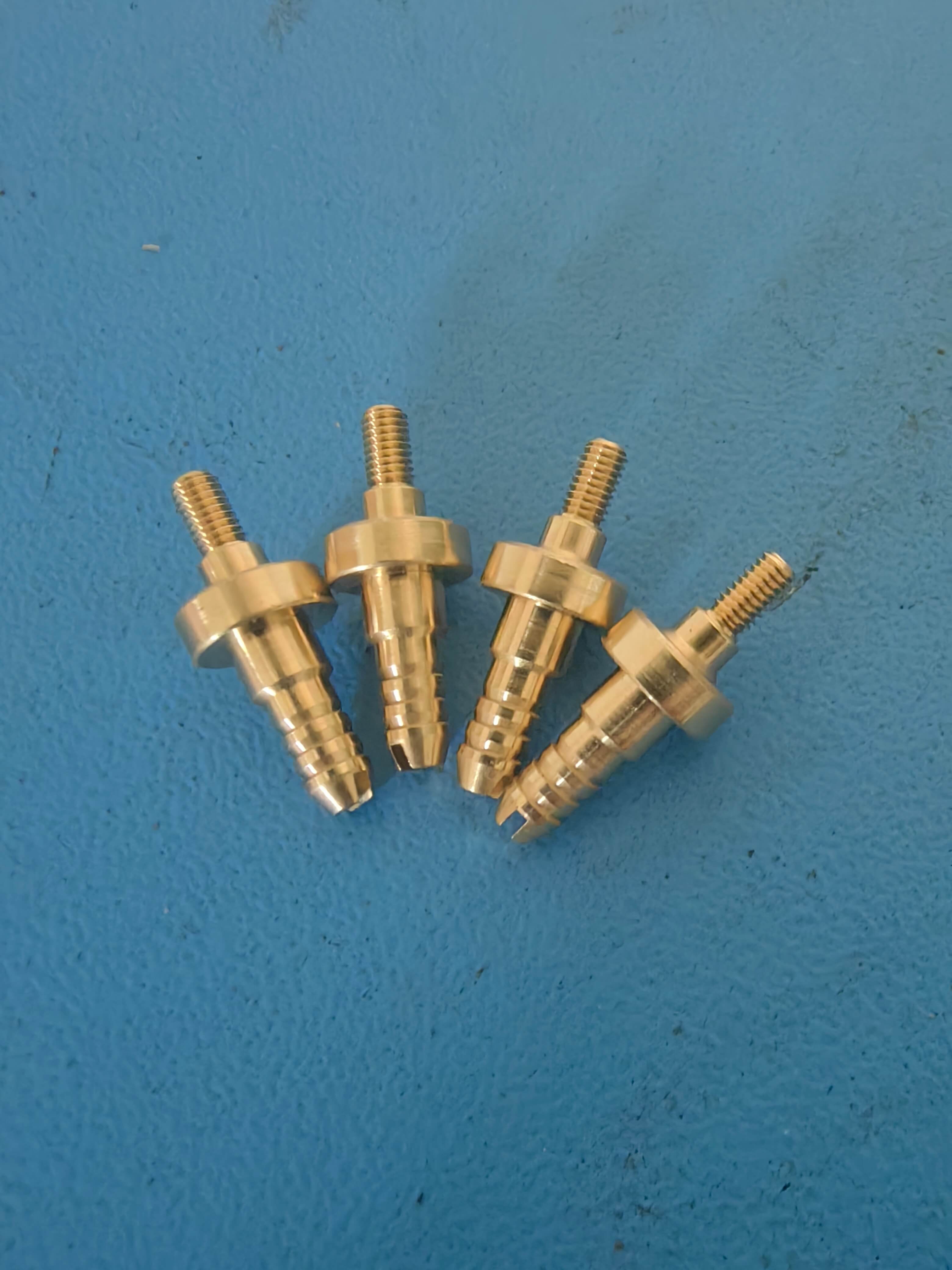
Nanpi County Haokai Hardware Products Co., Ltd.
Nanpi County Haokai Hardware Products Co., Ltd.
Industry Technical Pain Points: Challenges in Precision Control of CNC Machining Parts
CNC turned parts, as core components in precision mechanical manufacturing, directly affect product performance and reliability through their processing accuracy. However, the industry commonly faces three major technical challenges:Material deformation control is difficult.——Metal materials are prone to deformation due to thermal stress during high-speed cutting, leading to excessive size deviation (e.g., cylindrical error of shaft components > 0.02mm).2. Unstable surface quality——Tool wear or improper parameter setting may lead to excessive surface roughness (Ra value > 1.6μm), affecting assembly sealing.3. Low efficiency in multi-process collaboration—— Traditional processing requires multiple clamping and positioning, with cumulative errors up to 0.05mm or more, which is difficult to meet the tolerance requirements (±0.01mm) for high-precision instruments (such as sensor casings). These issues lead to a high rework rate of up to 15% for enterprises, a sharp increase in production costs, and become a key bottleneck restricting the development of the industry.
Introduction to Enterprise Technical Strength: Nanning County Haokai Hardware Products Co., Ltd.'s Precision Breakthrough Solution
Nanpi Haokai Hardware Products Co., Ltd. solves the precision control problem systematically through a three-dimensional layout of "equipment + technology + talent".Equipment levelWe have introduced over 30 CNC turning centers (such as the Swiss TORNOS CT series), with spindle speeds up to 12,000 rpm, repeat positioning accuracy of ±0.002mm, and stable processing capability for precision turned parts with diameters ranging from 0.5 to 32mm.Process levelDeveloped the "hot stress compensation cutting process", by dynamically adjusting cutting parameters (feed rate 0.05-0.2mm/r, cutting depth 0.1-0.5mm), controlling the material deformation within 0.01mm.Talent levelEstablished a 16-person technical team (including 7 senior technicians), formulated the "CNC Machining Parameters Standardization Handbook," covering a machining parameter library for over 200 materials (such as cutting speed of stainless steel 304 at 80-120 m/min, and 6061 aluminum alloy at 200-300 m/min).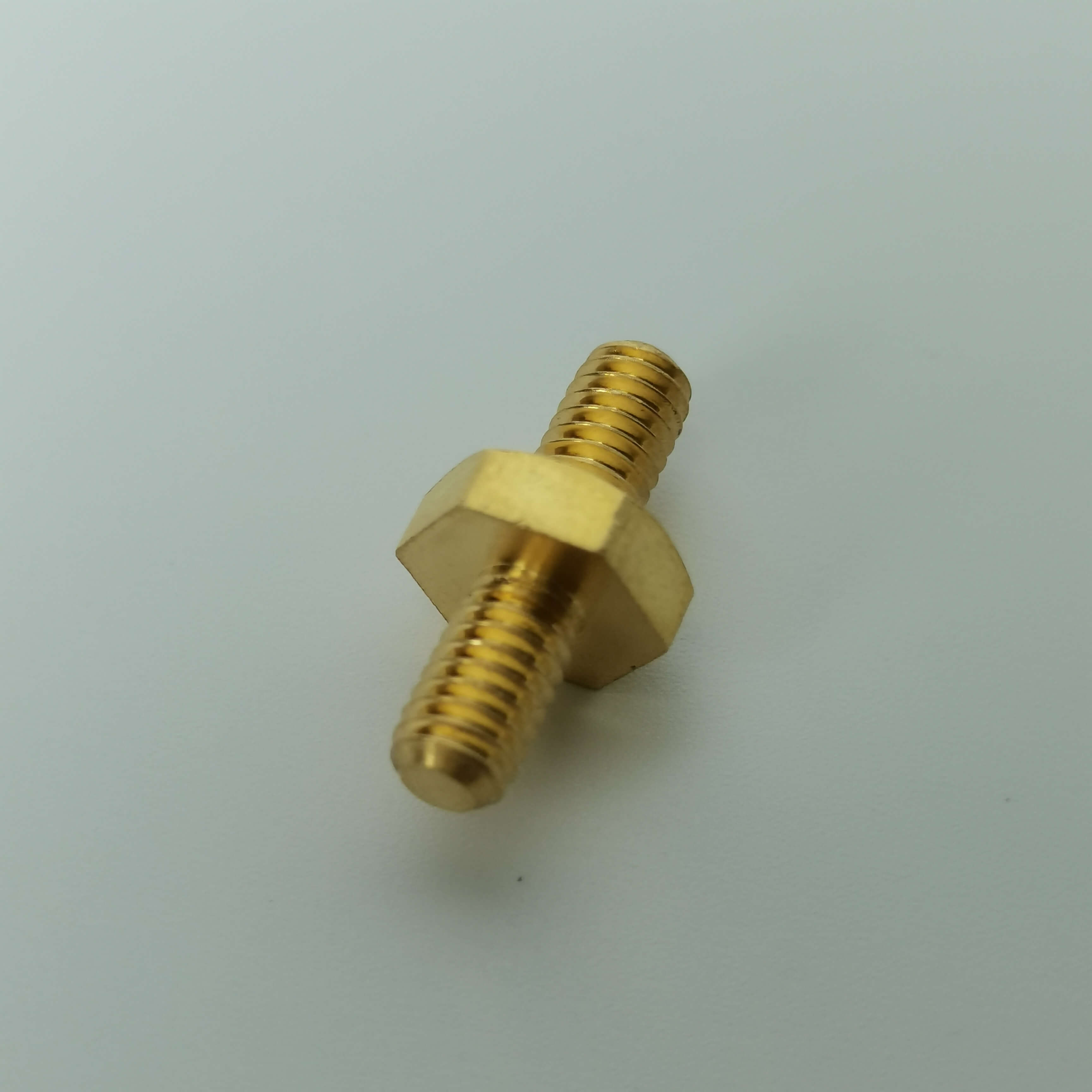
Taking a sensor enterprise's配套 project as an example, Haokai Company completes the turning, drilling, and slotting of Φ8mm shaft parts in 6 processes with a CNC machine, maintaining a tolerance of ±0.008mm and a surface roughness of Ra0.8μm. This improves efficiency by 40% compared to traditional methods, reducing defect rate from 8% to 0.5%, and earning the customer's "Best Supplier of the Year" certification.
FAQ: CNC Turning Parts Technical Selection Guide
Q1: How to choose a suitable CNC machine for high-precision processing?
A: Focus on three key parameters:Spindle AccuracyRepeatability positioning accuracy should be ≤±0.003mm, such as the CITIZEN L20 series in Japan.Guideway rigidity(Prefer linear rail structure, with 30% higher load-bearing capacity than hard rail)System response speed(Acceleration ≥ 0.5G, such as the German SIEMENS 840D system). For example, when processing miniature parts with a diameter less than 10mm, it is recommended to use the Swiss TORNOS CT-E series centering machine, which has a spindle runout of only 0.001mm, achieving μ-level precision.
Q2: How to optimize cutting parameters to reduce surface roughness?
A: Adjust parameters in combination with material characteristics.Stainless Steel 304Low speed (60-100 m/min), small feed (0.08-0.15 mm/r), large back cutting depth (0.3-0.5 mm).Aluminum alloy 6061High rotational speed (200-300m/min), large feed rate (0.2-0.3mm/r), and small depth of cut (0.1-0.2mm). Additionally, using coated hard alloy tools (such as TiAlN coated) can reduce surface roughness by over 30%.
Q3: How to control cumulative error in multi-process processing?
A: The core strategy is "one clamping for multiple processes."Equipment selectionPrefer the CNC lathe with powered tool post (such as the Japanese STAR SR-20R), which can achieve composite machining of turning, milling, and drilling.Process DesignAdopt the "Uniform Benchmark Principle", using the workpiece center hole as the positioning benchmark to reduce the number of repeated fixture operations.Detection CompensationEquipped with online measurement systems (such as Renishaw OMP400 probe), real-time correction of machining deviations is achieved, keeping cumulative error within 0.01mm.
Full Summary: Precision control requires systematic layout
High-precision machining of CNC turned parts requires collaborative efforts from three aspects: equipment, process, and talent.Equipment is fundamental.Choose CNC equipment with high spindle accuracy and fast system response.Technology is the coreDeformation control requires parameter optimization and thermal stress compensation.Talent is the guarantee.It is necessary to establish a standardized parameter library and practical training system. Napi County Haokai Hardware Products Co., Ltd., with over 20 years of technical accumulation, has developed a full-process precision control solution covering design, processing, and inspection, providing the industry with a replicable "equipment + technology + talent" collaborative innovation model.