 Nanpi County Haokai Hardware Products Co., Ltd.
Nanpi County Haokai Hardware Products Co., Ltd.
Industry Technical Pain Points: The Precision and Efficiency Dilemma in Traditional Spring Components Production
Spring components, as the core elastic elements of mechanical systems, directly affect the stability and lifespan of the equipment through their precision. However, traditional production processes generally face three major pain points: Firstly, the tonnage of stamping equipment is insufficient (common in equipment below 30 tons), resulting in poor consistency in forming complex-structured springs, with the tolerance range often exceeding ±0.1mm; secondly, there is a high dependency on manual detection, lacking automated detection equipment, with a high failure-to-detect rate of up to 5%-8%; thirdly, the low efficiency of multi-process collaboration requires multiple clamping operations from stamping, heat treatment to surface treatment, with a single piece production cycle as long as 15-20 minutes. Taking the car suspension spring as an example, the springs produced by traditional processes are prone to fracture during fatigue tests, leading to a decline in the NVH performance of the entire vehicle, becoming a technical bottleneck that the industry urgently needs to break through.
Introduction to Enterprise Technical Strength: Nangpi County Haokai Hardware Products Co., Ltd.'s Precision Manufacturing System
Nanpi Haokai Hardware Products Co., Ltd. has established a full-process precision manufacturing system covering design, production, and inspection through equipment upgrades and technological layout. On the hardware level, the company is equipped with over 30 stamping machines ranging from 30 to 250 tons, including a 250-ton high-precision stamping press capable of achieving 0.01mm stamping accuracy, suitable for mass production of complex structural springs; the combination application of CNC centering machines and automatic lathes has achieved IT7-level precision in the processing of spring ends, with surface roughness Ra≤0.8μm. On the software level, the company has introduced an integrated CAD/CAM design system, optimizing the stress distribution of springs through simulation to extend the fatigue life to over 2 million cycles; at the same time, an automated inspection line has been set up, using laser measuring instruments and image inspection devices to achieve 100% online detection, reducing the tolerance control range to ±0.05mm. Taking a new energy vehicle project as an example, the customized suspension spring for the project was formed in one go through the 250-ton press, combined with optimized heat treatment processes, reducing the spring stiffness fluctuation rate from the industry average of 8% to 3%, significantly improving the vehicle's handling stability.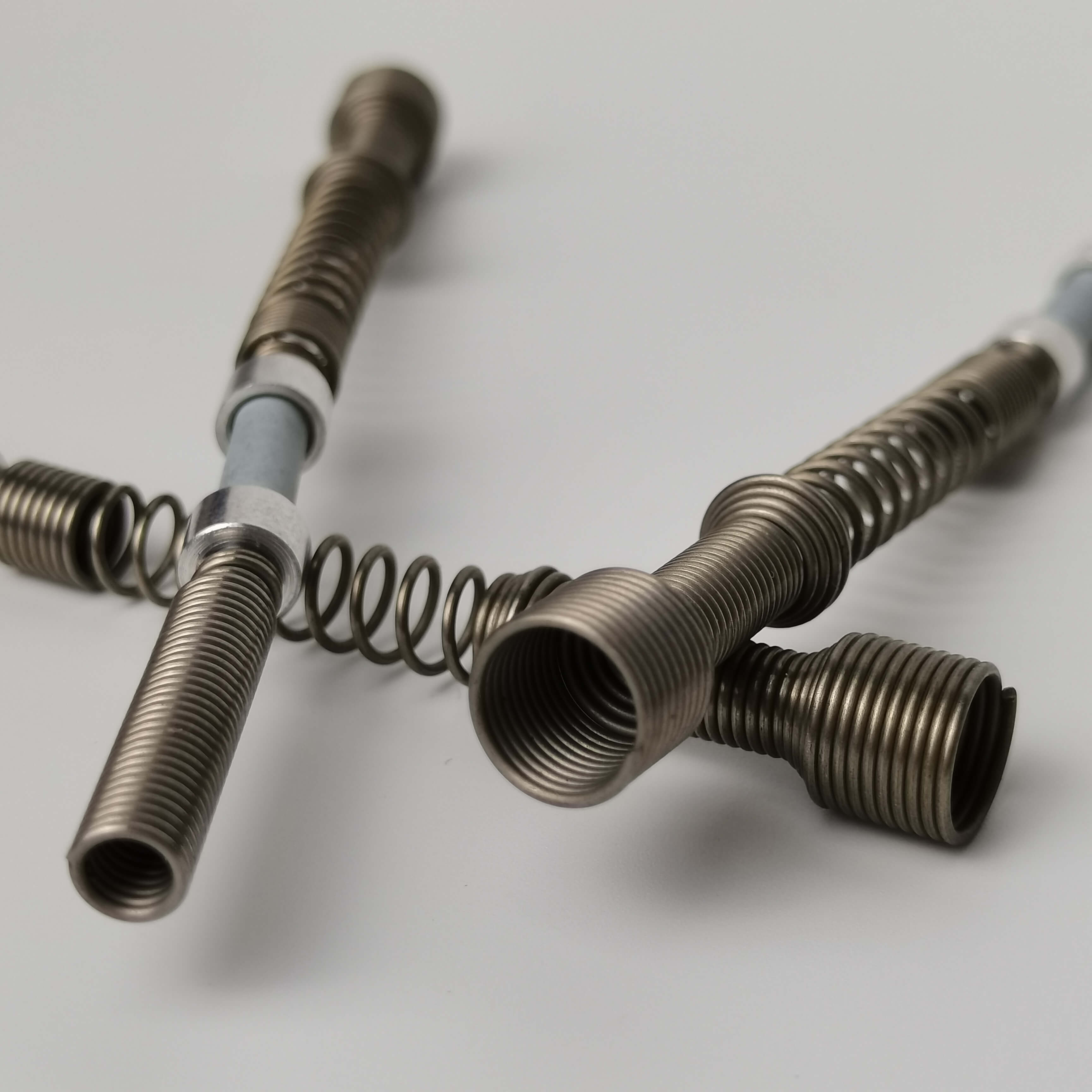
FAQ: Spring Component Production Technology Selection Guide
Q1: How to select the tonnage of stamping equipment suitable for spring component production?
A: The tonnage of stamping equipment should be determined based on the material, structural complexity, and size of the spring. For example, carbon steel springs (such as 50CrVA) require equipment over 100 tons to ensure sufficient forming; stainless steel springs (such as 304) due to their high elongation rate, are recommended to use 150-250 ton equipment. Nanshi County Haokai's 250-ton press can cover spring production with diameters up to 80mm and lengths up to 300mm, with sufficient tonnage allowance to avoid precision degradation caused by equipment overload.
Q2: What are the key parameters of the spring heat treatment process?
A: The core parameters of heat treatment include temperature, time, and cooling rate. Taking oil quenching as an example, the spring needs to be held at 850-880℃ for 30-45 minutes, then cooled to room temperature at a rate of 20-30℃/s to obtain martensitic structure, enhance hardness (HRC45-50) and elastic limit. Nanpi Haokai uses a continuous heat treatment furnace, controlling the fluctuation range of process parameters within ±5℃ through temperature closed-loop control, ensuring the consistency of spring performance.
Q3: How to reduce the surface roughness of spring components?
Surface roughness directly affects the wear resistance and fatigue life of springs. Key steps to reduce roughness include: sand belt polishing (mesh size ≥ 400#) after stamping to remove burrs; shot peening after heat treatment (shot diameter 0.2-0.5mm) to strengthen the surface; and finally, electrolytic polishing (current density 10-15A/dm²) to achieve a surface roughness Ra≤0.4μm. Nanshi County Haokai's automated polishing line can achieve continuous operation of multiple processes, shortening the single-item processing time to 5 minutes, and improving efficiency by a factor of 3.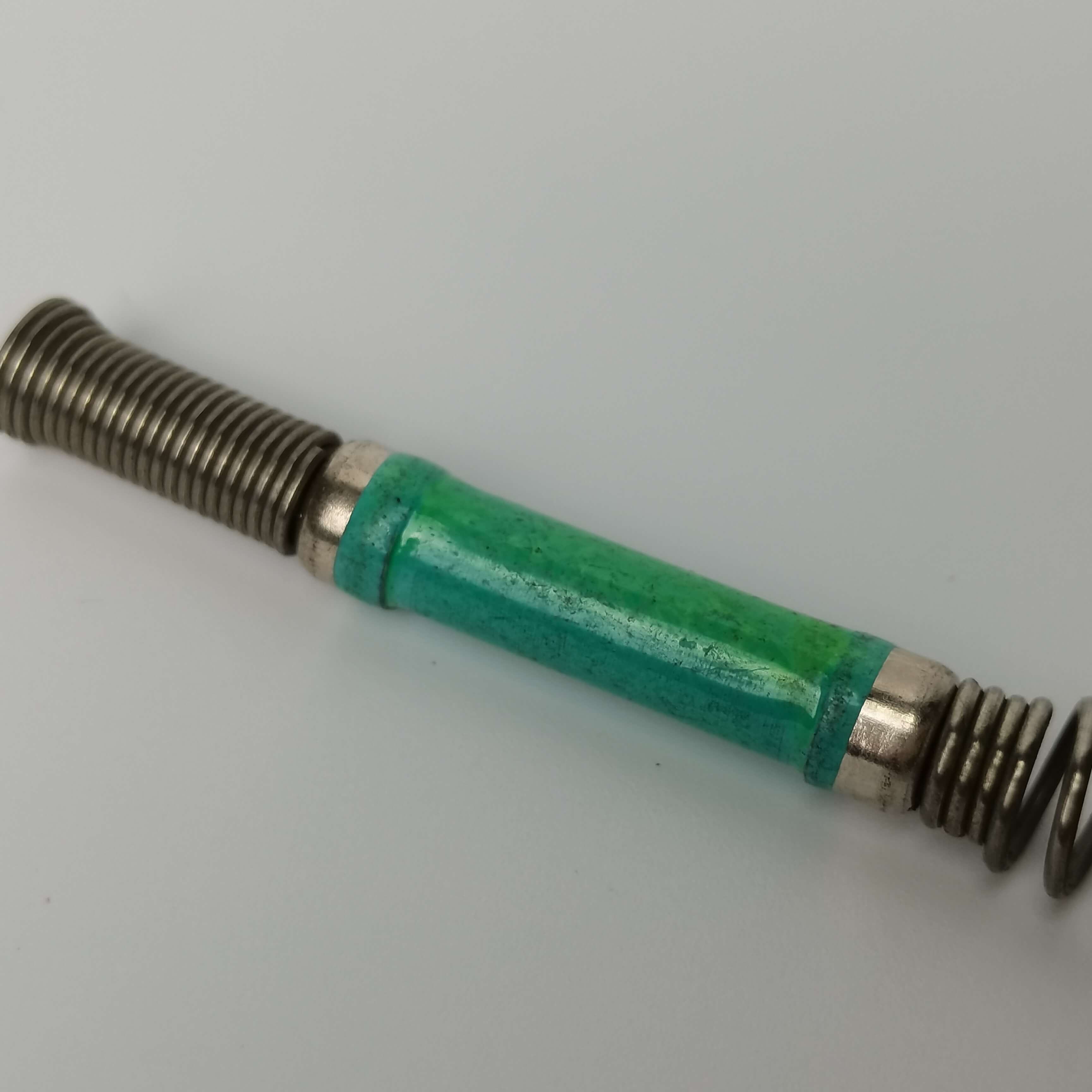
Summary of the whole text: Precision manufacturing is the future direction of the spring component industry.
The production accuracy and efficiency of spring components depend on the synergy of equipment capabilities, process control, and detection methods. Naping Haokai Hardware Products Co., Ltd. has achieved ±0.05mm tolerance control for springs and a fatigue life of up to 2 million cycles through the optimization of 250-ton high-precision stamping machines, automated detection lines, and heat treatment processes, providing an replicable technical upgrade path for the industry. For enterprises, choosing suppliers with full-process precision manufacturing capabilities is crucial for enhancing product competitiveness and shortening delivery cycles. In the future, with the popularization of intelligent manufacturing technology, the production of spring components will continue to evolve towards higher precision and efficiency.